Domestic help killed after SUV runs over her in Gurugram society parking
Source Entity
Latest News: Today's Latest News Headlines from India & World | Hindustan Times | Hindustan Times
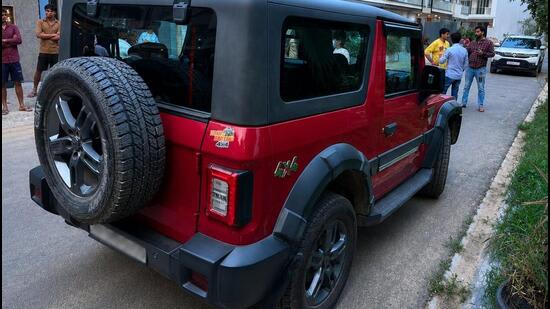
A domestic worker was tragically killed in a Gurugram residential society after being run over by a Mahindra Thar driven by a resident in the stilt parking area while the worker was resting.
Tragedy in Gurugram: Analysis of Fatal Residential Parking Accident
In a harrowing incident that underscores the perils of urban residential infrastructure, a domestic helper was killed in a Gurugram society after being run over by a sport utility vehicle (SUV). The victim was reportedly resting in the stilt parking area when a resident, operating a Mahindra Thar, accidentally drove over her. This event highlights a critical intersection of vehicle design, urban planning, and the socio-economic vulnerabilities of domestic staff in India's rapidly expanding metropolitan hubs.
The Mechanics of the Accident and Vehicle Visibility
The involvement of a Mahindra Thar in this accident is a significant detail from a safety perspective. The Thar is a rugged, high-clearance off-road vehicle characterized by a high bonnet and a commanding driving position. While these features are marketed as advantages for off-roading, they create substantial 'blind spots' directly in front of and around the vehicle. In the confined space of a stilt parking area—where visibility is often further hampered by pillars and other parked cars—a driver may completely fail to see a person resting on the ground. This mechanical reality transforms a routine parking maneuver into a lethal event, raising questions about the suitability of such large vehicles in tight, high-density residential complexes.
The Risks of Stilt Parking Infrastructure
Stilt parking has become the standard for high-rise developments in Gurugram to maximize land use. However, these areas are often multi-functional and poorly regulated. The fact that the victim was "resting" in the parking area suggests a lack of designated break zones or resting quarters for domestic workers within the society. When workers are forced to utilize transit areas like parking lots for respite, the risk of vehicular accidents increases exponentially. This incident exposes a failure in residential management to provide safe, segregated spaces for the workforce that maintains these luxury complexes, effectively turning a utility zone into a hazardous environment.
Socio-Economic Vulnerability of Domestic Staff
Beyond the immediate physical cause, this tragedy reflects a deeper socio-economic narrative. Domestic helpers in urban India often occupy a precarious position, operating in spaces they serve but do not truly belong to. The tendency to rest in stilt parking areas is often a symptom of the lack of dignity and basic infrastructure provided to support their well-being. This incident serves as a grim reminder that the invisibility of domestic labor often extends to their physical safety, where their presence in a parking lot is overlooked by those navigating the space in high-powered vehicles.
Legal Implications and Accountability
From a legal standpoint, the Gurugram police are tasked with determining whether this was a pure accident or a case of criminal negligence. Under Indian law, causing death by negligence involves assessing whether the driver exercised reasonable care. The investigation will likely scrutinize the driver's speed, the visibility conditions at the time, and whether the driver was distracted. This case may set a precedent for how liability is assigned in residential accidents involving high-profile vehicles, potentially prompting a dialogue on the responsibility of drivers to ensure clear paths in shared residential spaces.
Future Trends in Residential Safety
Moving forward, this event is likely to spark demands for stricter safety protocols within gated communities. We can expect a trend toward the implementation of speed governors in residential zones, the installation of convex mirrors in blind spots of stilt parking, and the mandatory creation of designated staff lounges. Furthermore, there may be a push for residential associations (RWAs) to implement stricter guidelines regarding the movement of large SUVs in pedestrian-heavy areas to prevent similar fatalities.
Conclusion
The death of the domestic helper in Gurugram is a preventable tragedy that resulted from a combination of poor spatial planning and the inherent visibility limitations of large SUVs. It underscores the urgent need for residential societies to prioritize the safety and dignity of their support staff by providing dedicated resting areas and enhancing parking lot safety. Until urban design accounts for the humans moving through these spaces—not just the vehicles—such risks will persist.
Verification Required?