From 'Islamic Republic of Japan' to 'Leon' Musk: List of Trump's latest verbal mix-ups
Source Entity
TOI WORLD DESK
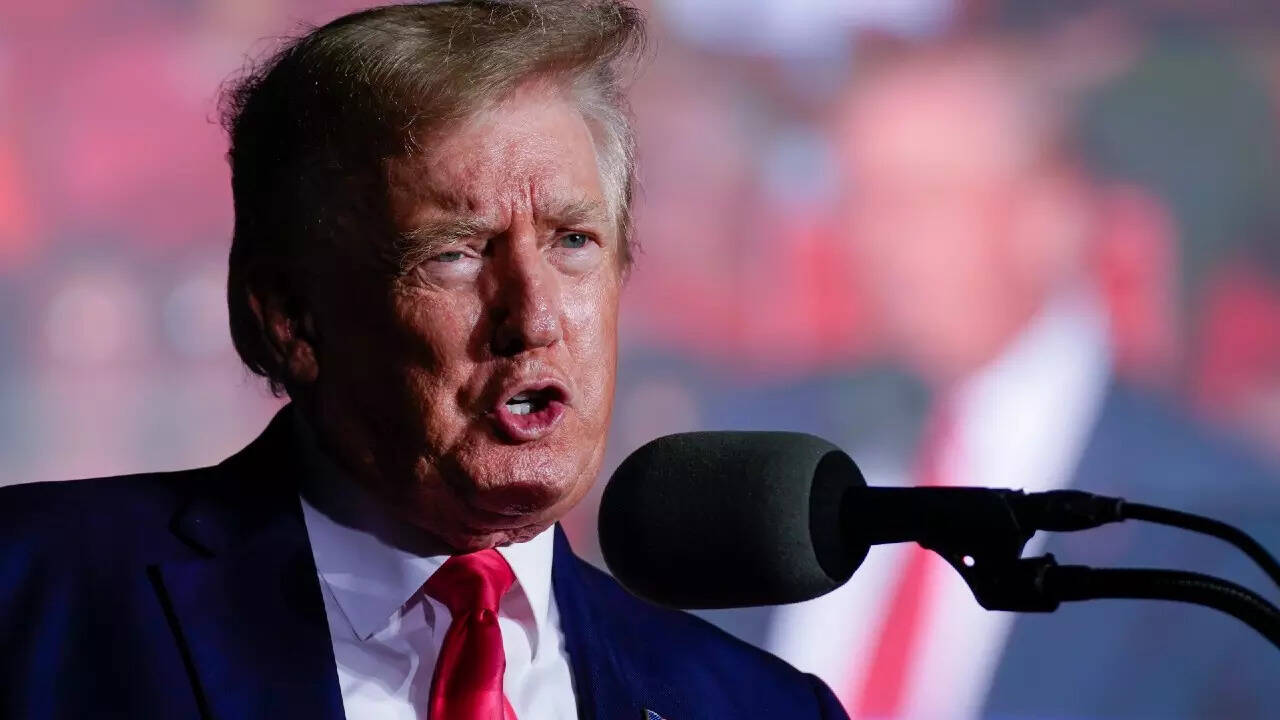
Donald Trump (AP file photo) A growing list US President Donald Trump has long made political capital out of his rivals' mistakes, however his recent mix-ups have now pointed his finger right back a...
The Rhetoric of Error: Analyzing Donald Trump's Recent Verbal Slips
In the high-stakes arena of American politics, the power of a single word can shift a narrative. Recently, Donald Trump has found himself at the center of a renewed conversation regarding his verbal precision following a series of notable gaffes. From referring to Japan as an "Islamic Republic" to misnaming his high-profile ally Elon Musk as "Leon," these slips are more than mere linguistic errors; they serve as flashpoints for broader debates regarding cognitive sharpness and the nature of political communication in the digital age.
The Anatomy of the Mix-ups
The specific nature of these errors reveals a spectrum of verbal slips. The reference to the "Islamic Republic of Japan" is particularly striking due to the profound geopolitical inaccuracy. Japan is a constitutional monarchy with a predominantly Shinto and Buddhist population, making the attribution of an "Islamic Republic" status a significant factual lapse. Conversely, calling Elon Musk "Leon" is a simpler phonetic slip. However, when combined, these instances create a pattern that critics argue suggests a lack of attention to detail or a disconnect from fundamental global facts, while supporters often dismiss them as incidental errors common to spontaneous public speaking.
The Paradox of Political Criticism
One of the most compelling aspects of this development is the political irony it presents. As noted in the reports, Donald Trump has built a significant portion of his political brand on the aggressive critique of his opponents' verbal stumbles. By weaponizing the "gaffes" of rivals to question their fitness for office, Trump established a precedent where linguistic precision is equated with mental acuity. The current focus on his own mix-ups represents a reversal of this dynamic, placing him in the same position of scrutiny that he has long utilized as a tactical weapon against others.
Communication Style and the 'Stream-of-Consciousness' Approach
To understand these errors, one must analyze Trump's unique oratorical style. Unlike traditional politicians who rely heavily on teleprompters and scripted talking points, Trump often employs a stream-of-consciousness delivery. This style is designed to project authenticity and spontaneity to his base, but it inherently increases the risk of verbal slips. When a speaker prioritizes cadence and emotional resonance over strict adherence to a script, the brain may occasionally substitute a word or conflate concepts, leading to the types of mix-ups seen in the "Islamic Republic" and "Leon" examples.
Cognitive Scrutiny and Public Perception
In the current polarized political climate, these verbal errors are rarely viewed as neutral events. For political detractors, these slips are framed as evidence of cognitive decline or an alarming lack of basic knowledge. In an era where every rally and interview is recorded and clipped for social media, a three-second slip can be amplified into a global narrative. This scrutiny reflects a broader trend in modern politics where the physical and mental health of candidates is subject to intense public speculation, turning linguistic mistakes into proxies for medical or intellectual evaluations.
Conclusion: The Enduring Cycle of Gaffes
Ultimately, the recent verbal mix-ups by Donald Trump highlight the precarious balance between a "man of the people" communication style and the rigorous demands of presidential-level discourse. While these errors may seem trivial in isolation, their accumulation provides ammunition for political opponents and fuels ongoing debates about the standards of leadership. As the political cycle continues, the tension between spontaneous rhetoric and factual accuracy will likely remain a central theme in the public's assessment of his communicative competence.