J&K admin seals Martyrs’ Graveyard; Omar, Mehbooba pay homage at party offices
Source Entity
TNN
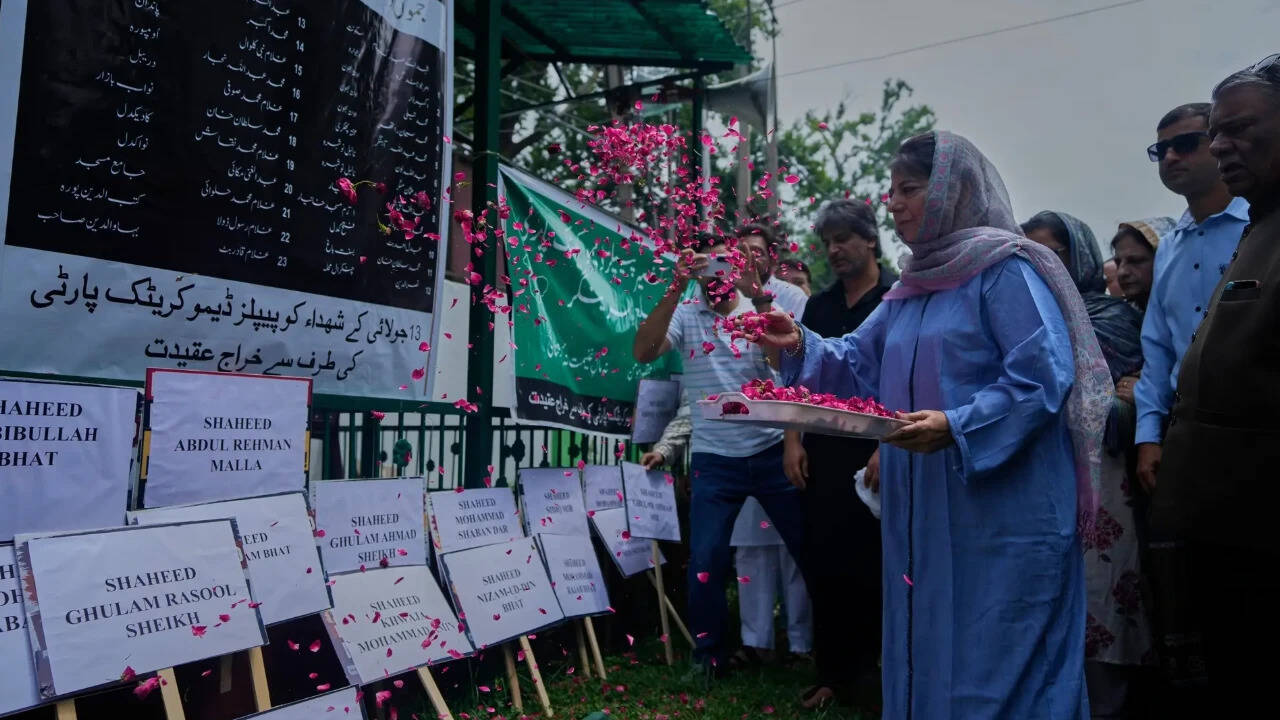
Authorities restricted access to Srinagar's Martyrs' Graveyard on Monday. Political leaders paid homage at their respective party offices instead. Last year, Omar Abdullah bypassed barricades to reach the graveyard. The administration removed July 13 and December 5 from public holidays. This action followed the abrogation of Article 370 in January 2020.
Analysis of the Restriction of Access to Srinagar's Martyrs' Graveyard
Introduction: A Symbol of Contested Memory
The recent decision by the Jammu and Kashmir (J&K) administration to seal the Martyrs' Graveyard in Srinagar marks a significant escalation in the management of political expression and collective memory in the region. By restricting access to a site of deep emotional and political resonance, the administration has effectively shifted the venue of commemoration from a public, symbolic space to the private confines of political party offices. The reaction of prominent leaders, specifically Omar Abdullah and Mehbooba Mufti, underscores a persistent tension between the state's security imperatives and the regional political leadership's desire to maintain historical continuity.
Historical Context and the Significance of the Dates
To understand the gravity of this event, one must examine the significance of the dates mentioned: July 13 and December 5. Historically, July 13 commemorates the 1931 uprising against the Dogra dynasty, an event often cited as the beginning of the modern political struggle in Kashmir. December 5 holds similar weight in the regional consciousness. The administration's decision to remove these dates from the public holiday list is not merely a clerical change but a deliberate attempt to dilute the public's engagement with these historical milestones. By removing the holidays and sealing the graveyard, the state is systematically altering the calendar of public remembrance.
The Shadow of Article 370
These administrative actions are inextricably linked to the broader political transformation that began in August 2019 with the abrogation of Article 370. The shift in governance toward a more centralized, security-driven approach has seen a gradual erosion of traditional symbols of autonomy and regional identity. The sealing of the graveyard and the removal of holidays are extensions of a strategy aimed at "normalizing" the region by decoupling the current administrative reality from the political narratives of the past. This transition reflects a state policy that views certain public commemorations as potential catalysts for unrest rather than expressions of cultural or political heritage.
Political Resistance and Symbolic Defiance
The behavior of regional political figures provides a window into the current state of resistance in J&K. Last year, Omar Abdullah's attempt to bypass barricades to reach the graveyard served as a high-profile act of defiance, signaling that the political class would not easily abandon symbolic spaces. This year, however, the total sealing of the site has forced a pivot toward party offices. While the homage continues, the shift in location represents a tactical retreat necessitated by the administration's tightening grip on public spaces. This transition from the streets to the office highlights the shrinking space for public political mobilization.
Broader Implications for Civil Liberties
From a governance perspective, the sealing of a graveyard—a space typically associated with peace and remembrance—raises critical questions regarding the balance between security and civil liberties. When the state restricts access to sites of mourning and memory, it risks alienating the local population and deepening the sense of disenfranchisement. The use of barricades and administrative orders to prevent homage suggests a governance model that prioritizes the prevention of assembly over the facilitation of traditional rites, potentially fueling long-term resentment among the youth and political activists.
Future Trends and Predictions
Looking forward, it is likely that the J&K administration will continue to prune the public sphere of symbols that contradict the current political narrative. We can expect further modifications to public holidays and stricter controls over sites of historical significance. Conversely, regional parties may increasingly rely on digital spaces and private gatherings to sustain their political narratives. The struggle over the Martyrs' Graveyard is a microcosm of a larger battle over who controls the history of Jammu and Kashmir and how that history is told to future generations.
Conclusion: The Erasure of Public Space
In summary, the sealing of the Martyrs' Graveyard is more than a temporary security measure; it is a manifestation of a deeper ideological shift. By removing the physical and temporal markers of historical struggle—the graveyard and the holidays—the administration is attempting to rewrite the social contract of the region. While leaders like Abdullah and Mufti continue to pay homage, the movement of these rituals behind closed doors signals a new era of constrained political expression in the valley.