ABVP wins 3 of 4 DUSU posts, Independent Shokeen takes VP
Source Entity
The Indian Express
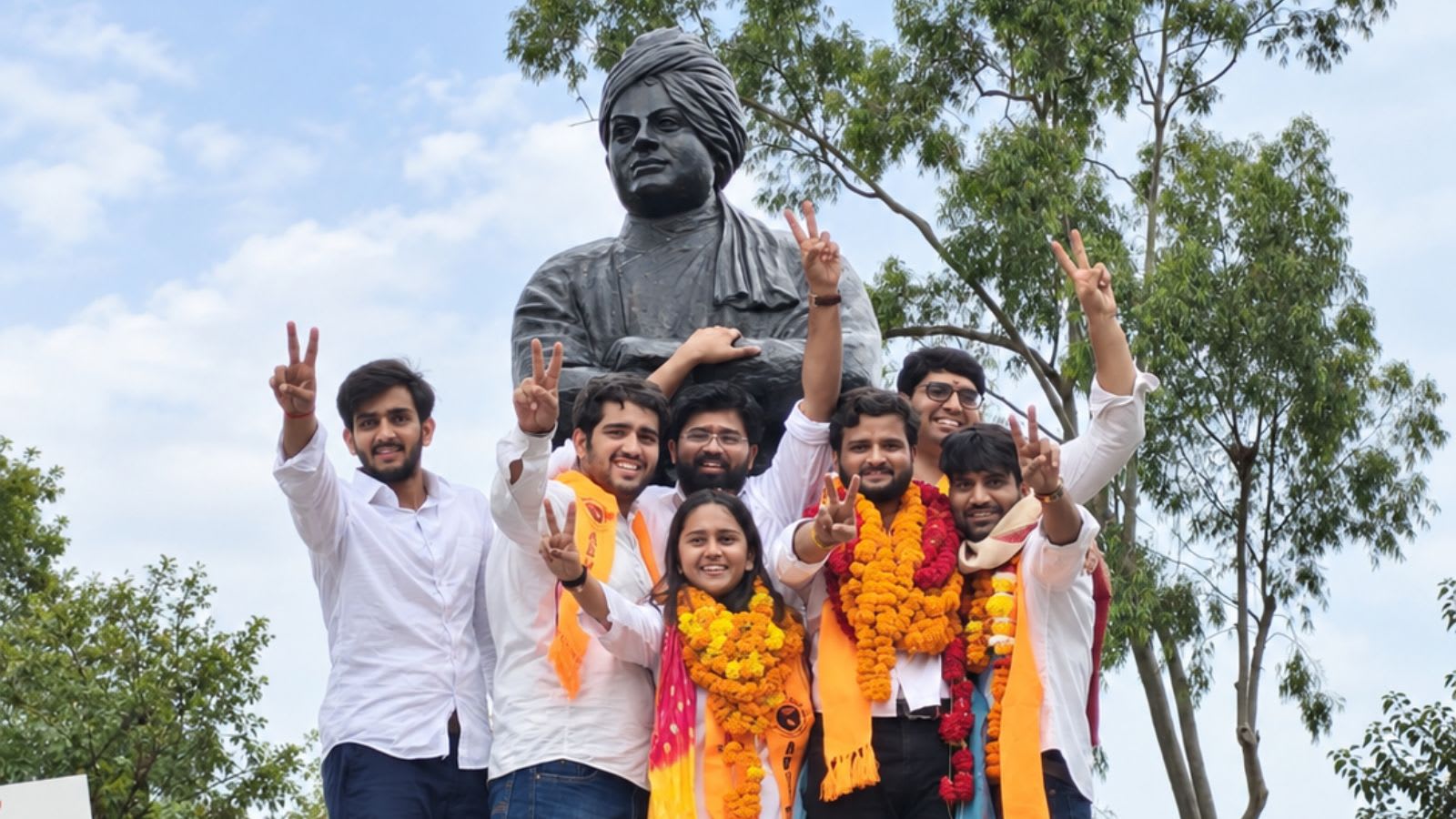
The DUSU 2026 election results are currently being tallied, with early trends showing a tight race between the ABVP, NSUI, and independent candidates. The election, marked by a 40.46% turnout, follows a period of student unrest regarding academic integrity and welfare.
The 2026 DUSU Electoral Landscape: A High-Stakes Contest
The Delhi University Students’ Union (DUSU) elections for the 2026-27 academic session have entered a critical counting phase, capturing significant attention due to the intense rivalry between major student political organizations. Following a voter turnout of approximately 40.46%, the process to determine the occupants of the four central panel posts—president, vice-president, secretary, and joint secretary—is currently underway. These results serve as a barometer for student sentiment across the university's diverse campus landscape.
Contesting Factions and Candidates
The electoral field is primarily dominated by the Rashtriya Swayamsevak Sangh-affiliated Akhil Bharatiya Vidyarthi Parishad (ABVP) and the Congress-backed National Students’ Union of India (NSUI). The ABVP has placed its hopes on candidates including Yash Dabas for president and Riya Chhawadi for secretary. Simultaneously, the NSUI has countered with a slate featuring Vijay Shankar Meena for the presidential race. The AISA-SFI left-leaning alliance has also mounted a significant campaign, nominating candidates such as Ananya Raturi for president, further diversifying the ideological spectrum of the contest.
Initial Trends and Shifting Dynamics
Early counting data suggests a highly competitive and fragmented outcome. While the ABVP initially showed strength in the presidential and secretarial races, subsequent rounds have highlighted a more volatile landscape. Notable developments include independent candidates gaining traction in the vice-presidential race, and a candidate from the Samajwadi Chhatra Sabha (SCS) emerging as a leader for the joint secretary position. This shift away from a binary ABVP-NSUI outcome indicates a potential realignment in student voting patterns compared to previous years.
Contextual Challenges: Protests and Academic Integrity
The 2026 elections are occurring against a backdrop of significant student activism. Recent protests at Jantar Mantar, triggered by concerns over alleged paper leaks and broader issues of academic integrity, have heavily influenced the campaign discourse. These protests, which culminated in notable resignations, have forced candidates to prioritize student welfare and administrative accountability in their manifestos, making this year’s election more than just a struggle for political representation.
Historical Significance and Future Implications
Historically, DUSU elections have often served as a launchpad for broader political careers in India. The performance of the ABVP, which secured three of the four seats in the previous cycle, is under particular scrutiny this year as they face a more concerted challenge from both the NSUI and smaller organizations like the SCS, which last held a central panel seat in 2009. The final composition of the DUSU panel will not only dictate the student union's advocacy agenda for the 2026-27 session but will also reflect the evolving political consciousness of the Delhi University student body in the face of recent institutional controversies.
Conclusion
As the remaining rounds of counting proceed, the DUSU 2026 results remain too close to call. With a mix of traditional party dominance and the rise of independent and alternative voices, the final tally will provide a definitive answer to the current political temperature on campus. The outcome will be pivotal in addressing the pressing grievances of the student population while setting the tone for student politics in the capital for the coming year.
Multiple Citing Sources