Musk accuses Zelenskyy of lying about Starshield restrictions in Ukraine
Source Entity
US Top News and Analysis
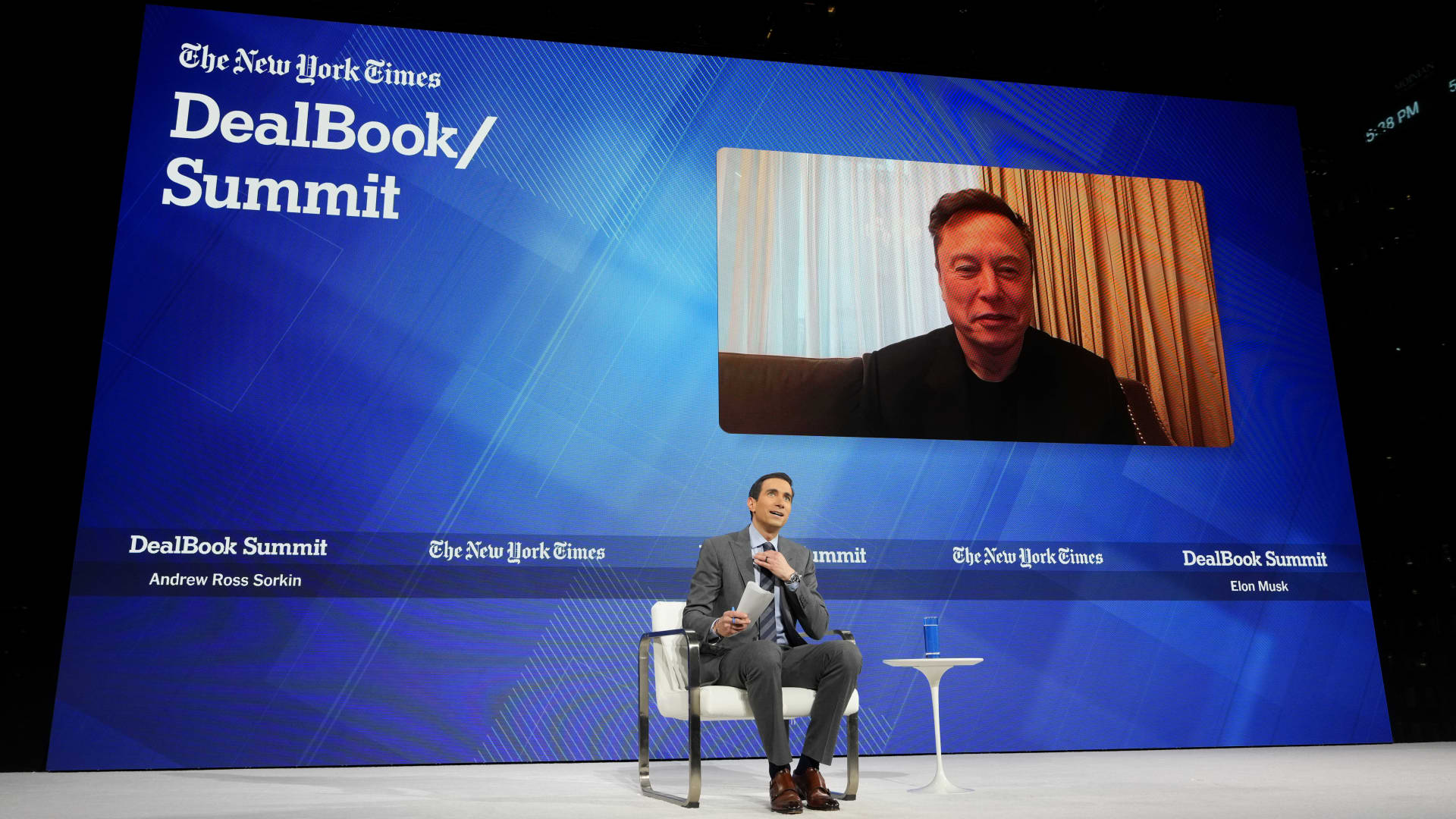
Elon Musk has distanced himself from the 'MAGA' label during the DealBook Summit while expressing regret over his midterm election spending. He also publicly challenged Ukrainian President Volodymyr Zelenskyy’s claims regarding Starshield network restrictions.
Musk’s Shifting Political and Geopolitical Stance
At the recent New York Times DealBook Summit, Elon Musk provided a series of provocative statements that highlight the complex intersection of his private business interests and his increasingly public political involvement. During a conversation with Andrew Ross Sorkin, Musk addressed his recent high-profile financial support for the Republican party, specifically noting that he felt "pretty foolish" for spending approximately $277 million during the U.S. midterm elections. This admission marks a notable moment of introspection for the billionaire, who had previously been a vocal supporter of Donald Trump’s 2024 presidential campaign.
The 'MAGA' Identity Crisis
Perhaps the most surprising aspect of the summit was Musk's attempt to redefine his political affiliation. Despite his public declaration of being "dark MAGA" during the 2024 campaign and his frequent appearances at the White House wearing a MAGA-themed hat, Musk claimed, "I’m not MAGA." He suggested that the term is ambiguous, stating he is unsure of its precise meaning. By distancing himself from "blind adherence" to Republican policies, Musk appears to be recalibrating his public image, potentially attempting to maintain a position of independent influence rather than being tethered to a specific partisan ideology.
Conflict Over Starshield and Ukraine
Beyond domestic politics, Musk addressed his controversial role in the ongoing conflict in Ukraine. He explicitly challenged President Volodymyr Zelenskyy’s assertions regarding the Starshield network. Zelenskyy had claimed that Starshield capabilities were being throttled, a charge Musk flatly denied. Musk suggested that the friction stemmed from Ukraine’s desire to utilize the satellite network for offensive military operations, which deviates from the system's intended humanitarian and defensive purpose. His blunt statement that "Zelenskyy is not always truthful" underscores the deepening rift between the tech mogul and the Ukrainian leadership.
The Intersection of Business and Diplomacy
Musk’s comments were delivered while he was reportedly in China for the APEC summit, joining President Trump. This setting is highly significant; it illustrates the degree to which Musk has become a de facto diplomat for the United States, despite holding no elected office. His ability to weigh in on sensitive military logistics in Ukraine while simultaneously participating in high-level economic summits in Asia highlights the unprecedented power held by private individuals who control critical global infrastructure.
Future Implications and Strategic Trends
Looking ahead, Musk’s attempts to distance himself from the "MAGA" label while remaining deeply embedded in the Trump administration’s orbit suggest a strategy of maintaining flexibility. As he manages companies that rely on international cooperation, such as SpaceX and Tesla, the tension between his personal political donations and his need to remain a neutral player in global conflicts will likely continue to create friction. The standoff over Starshield is a preview of the challenges that arise when private technology becomes the backbone of state-level geopolitical strategy, as stakeholders grapple with the reality that a private citizen holds the "on-off" switch to vital communications networks.
Multiple Citing Sources