Modi’s governance journey marked by coordination across govt departments, focus on citizen experience: P.K. Mishra
Source Entity
India Latest News: Top National Headlines Today & Breaking News | The Hindu
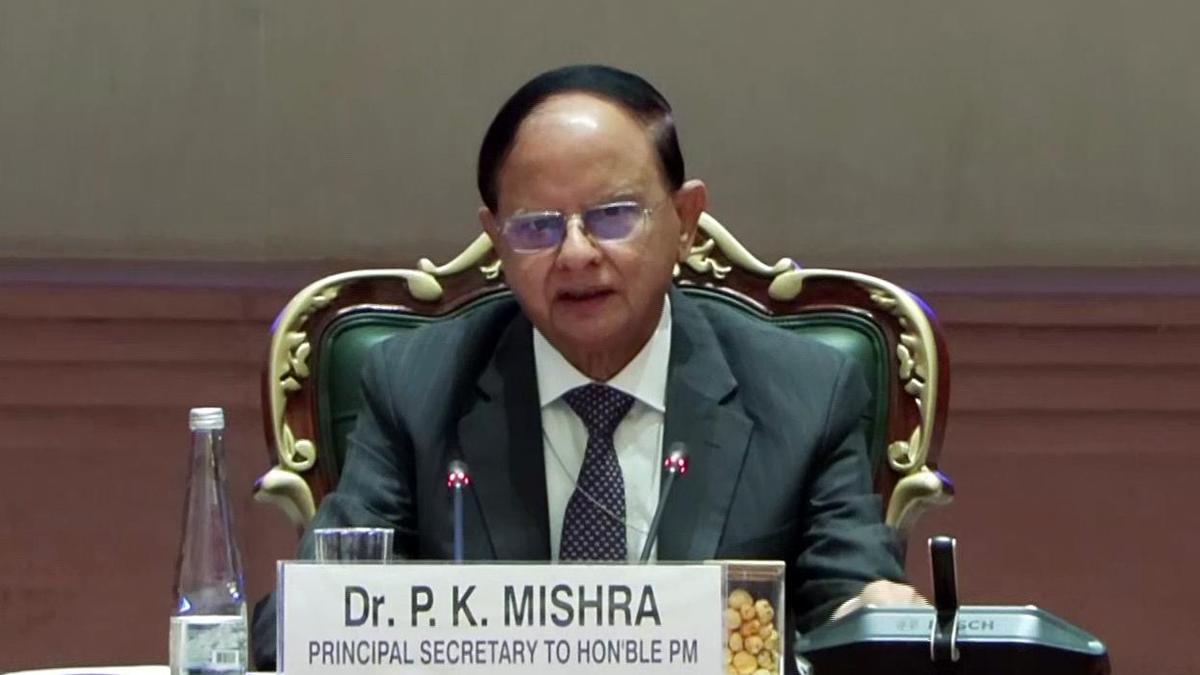
Principal Secretary P.K. Mishra highlighted Prime Minister Narendra Modi's 25-year governance legacy, emphasizing decisive leadership and inter-departmental coordination. The NITI Aayog workshop series marks the milestone since Modi first took office as Gujarat's Chief Minister in 2001.
The Evolution of Indian Governance: A Quarter-Century Perspective
Principal Secretary to the Prime Minister, P.K. Mishra, recently provided a comprehensive overview of India’s governance trajectory at a ‘National Workshop’ titled ‘Leadership as Mission.’ Organized by NITI Aayog, this event serves as the inaugural session in a series of five workshops dedicated to analyzing the 25-year administrative tenure of Prime Minister Narendra Modi, dating back to his initial appointment as Chief Minister of Gujarat in October 2001. The discourse centered on the shift from traditional bureaucratic output-based metrics to a more holistic, citizen-centric experience.
The Core Philosophy: Vision into Action
At the heart of the discussion was the concept of 'decisive leadership.' Mr. Mishra highlighted that the defining characteristic of this 25-year journey has been the ability to bridge the gap between abstract policy vision and tangible ground-level action. By prioritizing seamless coordination across disparate government departments, the administration has sought to eliminate the silos that historically hindered public service delivery. The emphasis is no longer merely on the volume of programs launched, but on the qualitative impact of these initiatives on the average citizen’s life.
Historical Milestones and Crisis Management
To illustrate the efficacy of this mission-driven governance, Mr. Mishra pointed to several pivotal moments that have defined the leadership style. From the rapid, organized response to the devastating 2001 Kutch earthquake in Gujarat to the large-scale, coordinated efforts during the global Covid-19 pandemic, these instances demonstrate the importance of responsive administration. Such crises served as catalysts for refining the government’s ability to mobilize resources and ensure that policy interventions reach the most vulnerable segments of the population.
Expanding Horizons: Space and Economic Empowerment
Beyond crisis management, the analysis touched upon India’s strategic growth in the global arena. The expansion of India’s footprint in the global space economy stands as a testament to the country's technological ambitions under current leadership. Simultaneously, social welfare initiatives like the 'Lakhpati Didi' program represent a localized, mission-driven approach to economic empowerment, aiming to transform the financial status of women through structured support systems. These examples underscore a governance model that balances high-level national ambition with grassroots economic development.
Future Trends and Administrative Outlook
Looking forward, the NITI Aayog workshop series signals an intent to institutionalize these governance learnings for future policy frameworks. By documenting the shift toward inter-departmental synergy, the administration is setting a standard for 'Mission-Mode' governance. This approach suggests that future Indian policy will likely continue to prioritize integrated digital delivery systems and data-driven feedback loops, ensuring that the focus remains firmly on the citizen's experience rather than administrative complexity.
Conclusion
The reflections offered by P.K. Mishra provide a structured look at the evolution of Indian governance over the last two and a half decades. By moving toward a model characterized by political will and administrative agility, the government aims to ensure that its long-term vision is consistently translated into meaningful change. As these workshops continue, they will likely serve as a blueprint for how state and central entities can better harmonize their efforts to meet the changing needs of a modern, aspirational India.
Verification Required?