US sellers drive Bitcoin crash, Jensen plots comeback: Hodler’s Digest
Source Entity
Cointelegraph by Andrew Fenton
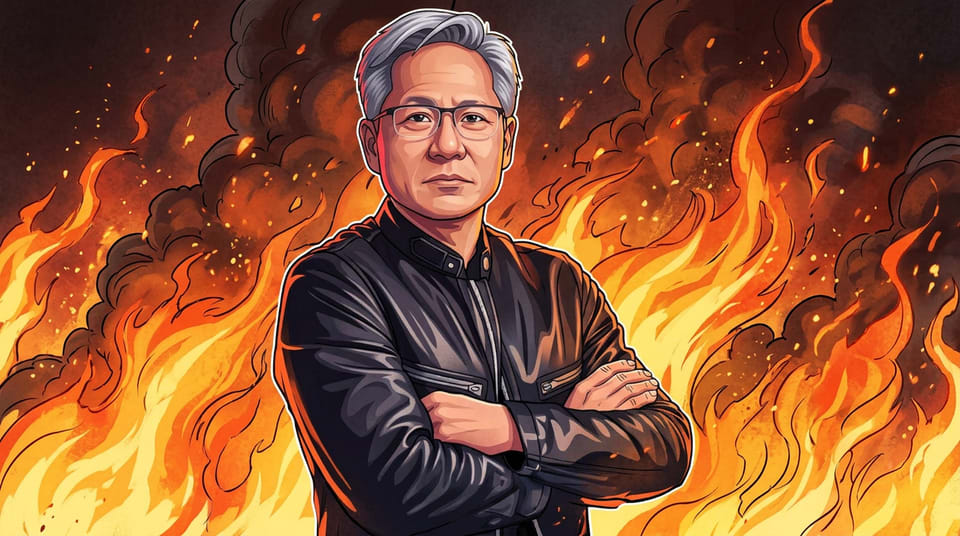
Elon Musk has warned that Nvidia faces a significant risk of losing critical supply chain deals following the ousting of CEO Jensen Huang. Musk argues that these partnerships were built on personal trust and handshakes rather than formal contracts, leaving the company's future stability in jeopardy.
The Fragility of Corporate Leadership: The Nvidia Crisis
The recent ousting of Jensen Huang, co-founder of Nvidia and the architect of its modern dominance in the semiconductor industry, has triggered a firestorm of speculation regarding the company's future. Elon Musk, a vocal observer of the tech landscape, has issued a stark warning: Nvidia’s precarious position is not merely a matter of executive transition, but a fundamental risk to its global supply chain operations. Musk’s assertion that many of Nvidia’s critical agreements are based on the personal trust established by Huang suggests that the company’s stability may be far more fragile than its market valuation implies.
The 'Handshake' Economy in Semiconductors
At the heart of this disruption is the unique methodology Huang employed for decades. In an industry where formal contracts are the standard, Huang reportedly prioritized personal relationships, particularly with semiconductor manufacturers and suppliers across Asia. Musk characterizes these as "handshake" agreements, where credibility and long-term commitments acted as the glue for business operations. This reliance on a single individual’s reputation creates a significant "key-person risk"—a scenario where the departure of a charismatic leader threatens to unravel years of strategic alignment.
The Identity Crisis: When the Founder is the Firm
Since co-founding Nvidia in 1993, Jensen Huang has become synonymous with the brand. The sentiment that "Jensen is Nvidia and Nvidia is Jensen" highlights a deeper corporate identity issue. When a company’s culture and external partnerships are so deeply intertwined with a single personality, the transition of power becomes inherently volatile. The board’s recent decision to rule out Huang’s return, despite mounting pressure from employees, executives, and even high-profile political figures like Donald Trump, signals an irreversible rift that could alienate key stakeholders who were loyal specifically to Huang.
Geopolitical and Ethical Complications
The situation is further complicated by the shadow of external accusations. Reports suggesting personal controversies, including allegations regarding his family members, add a layer of complexity to an already high-stakes corporate drama. These distractions, combined with the loss of the primary relationship-builder, create a perfect storm for competitors. As Nvidia navigates this transition, the board must reconcile the need for institutional stability with the reality that their primary competitive advantage—the supply chain network—may have been tied to a person rather than a process.
Future Trends and Market Implications
Looking ahead, the semiconductor industry is likely to watch Nvidia as a case study in the dangers of centralized leadership. If Musk’s predictions hold true and these critical deals begin to dissolve, the market may see a shift toward more formal, contract-heavy supply chain management to replace the reliance on individual trust. Conversely, if Nvidia fails to maintain these relationships, we could witness a significant redistribution of market share among competitors who are eager to capitalize on this leadership vacuum. Ultimately, the company is at a crossroads: it must either prove that its infrastructure can survive without its founder or face a period of sustained operational decline.
Multiple Citing Sources