What are the emerging problems associated with chemical disinfection of water?
Source Entity
The Indian Express
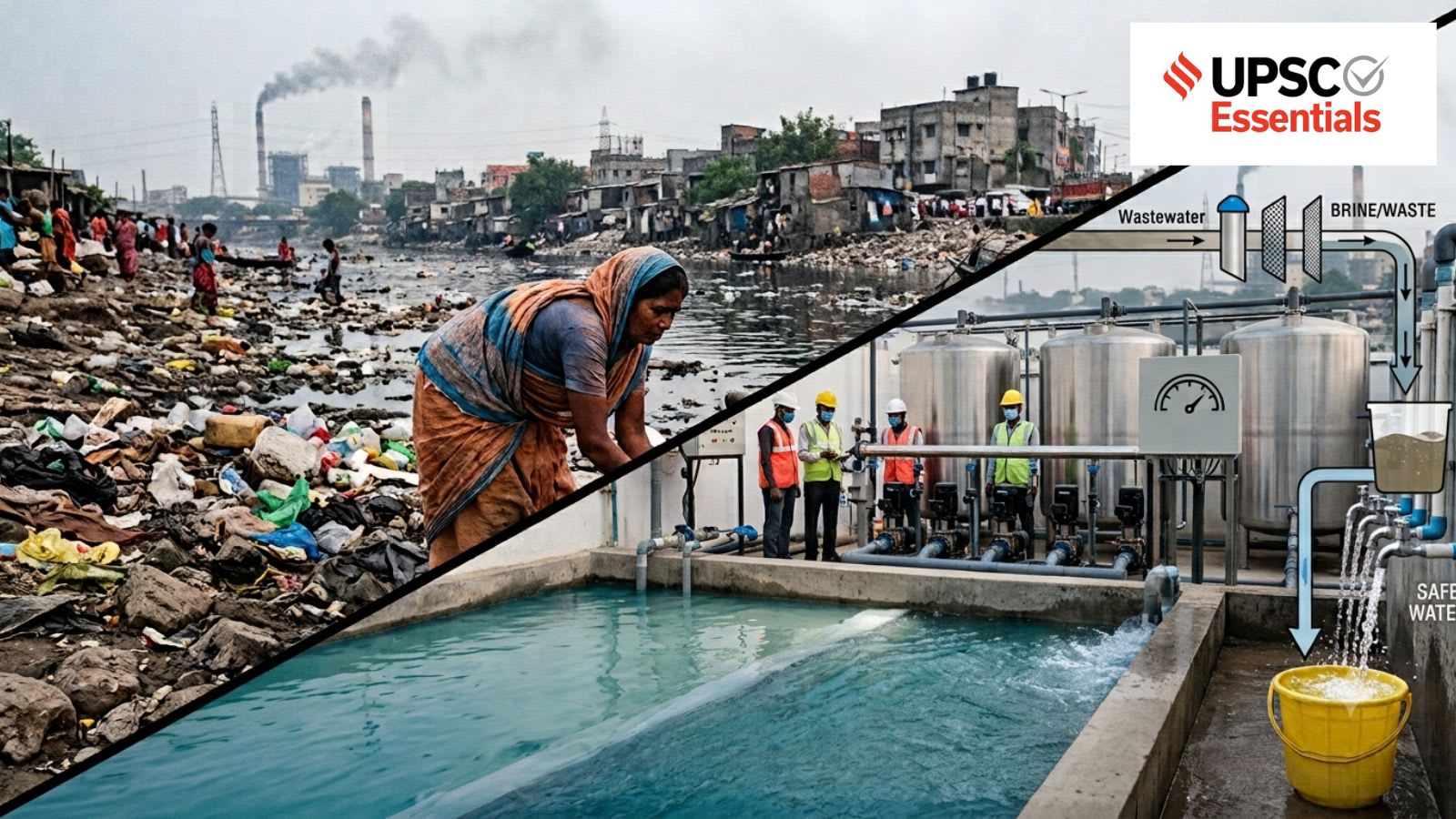
An analysis of the systemic failures and health risks associated with chemical water disinfection in Delhi and other Indian states, focusing on the emergence of disinfection by-products and infrastructure vulnerabilities.
The Crisis of Water Safety: Analyzing Chemical Disinfection in Urban India
Water contamination in major urban centers, most notably Delhi, has become a recurring public health crisis. While chemical disinfection—primarily chlorination—has been the gold standard for eliminating waterborne pathogens for decades, the emerging problems associated with these systems suggest a critical need for a paradigm shift. The recurring episodes of contamination mentioned in current reports highlight a systemic failure where the reliance on chemical additives is no longer sufficient to guarantee the safety of the municipal water supply.
The Paradox of Chemical Disinfection
Chemical disinfection is designed to neutralize bacteria, viruses, and other microorganisms that cause diseases like cholera and typhoid. However, the primary challenge lies in the creation of Disinfection By-Products (DBPs). When chlorine reacts with naturally occurring organic matter present in raw water sources, it forms harmful compounds such as trihalomethanes (THMs) and haloacetic acids (HAAs). Over long-term exposure, these DBPs have been linked to an increased risk of cancer and reproductive issues, creating a paradoxical situation where the process used to make water safe may introduce long-term chronic health risks.
Infrastructure Vulnerabilities in Delhi
In the specific context of Delhi and other Indian states, the efficacy of chemical disinfection is severely compromised by aging and dilapidated distribution infrastructure. Even if water is properly treated at the plant, the prevalence of leaky pipes and cross-contamination with sewage lines means that the "residual chlorine" intended to protect the water during transit is often depleted. This allows for the re-entry of pathogens into the supply chain, explaining why contamination episodes recur despite the continued use of chemical disinfection systems.
The Challenge of Emerging Contaminants
Beyond traditional pathogens, modern water supplies are increasingly plagued by emerging contaminants, including pharmaceuticals, pesticides, and industrial chemicals. Standard chemical disinfection is largely ineffective against these complex organic molecules. As industrialization increases around the peripheries of urban hubs, the chemical load in raw water increases, which in turn increases the volume of DBPs produced during chlorination. This creates a cycle of diminishing returns where more chemicals are added to combat higher pollution, leading to poorer water quality.
Transitioning Toward Sustainable Alternatives
To address these emerging problems, there is an urgent need to integrate advanced oxidation processes (AOPs) and physical disinfection methods. Technologies such as Ultraviolet (UV) irradiation, ozonation, and membrane filtration (reverse osmosis and ultrafiltration) offer the ability to neutralize pathogens and remove organic pollutants without producing harmful chemical by-products. While the initial capital investment for these technologies is higher than simple chlorination, the reduction in public health costs and the increase in water reliability provide a strong economic justification for their implementation.
Conclusion: A Holistic Approach to Water Security
The recurring water crises in Delhi serve as a warning that chemical disinfection is a tool, not a total solution. Ensuring water safety requires a holistic approach that combines the upgrade of physical pipeline infrastructure with the adoption of non-chemical disinfection technologies. By moving away from a sole reliance on chemical additives and focusing on source protection and advanced filtration, urban centers can break the cycle of contamination and provide truly safe drinking water to their populations.