Europe’s heatwave has an important lesson for smartphone users across the world
Source Entity
TOI TECH DESK
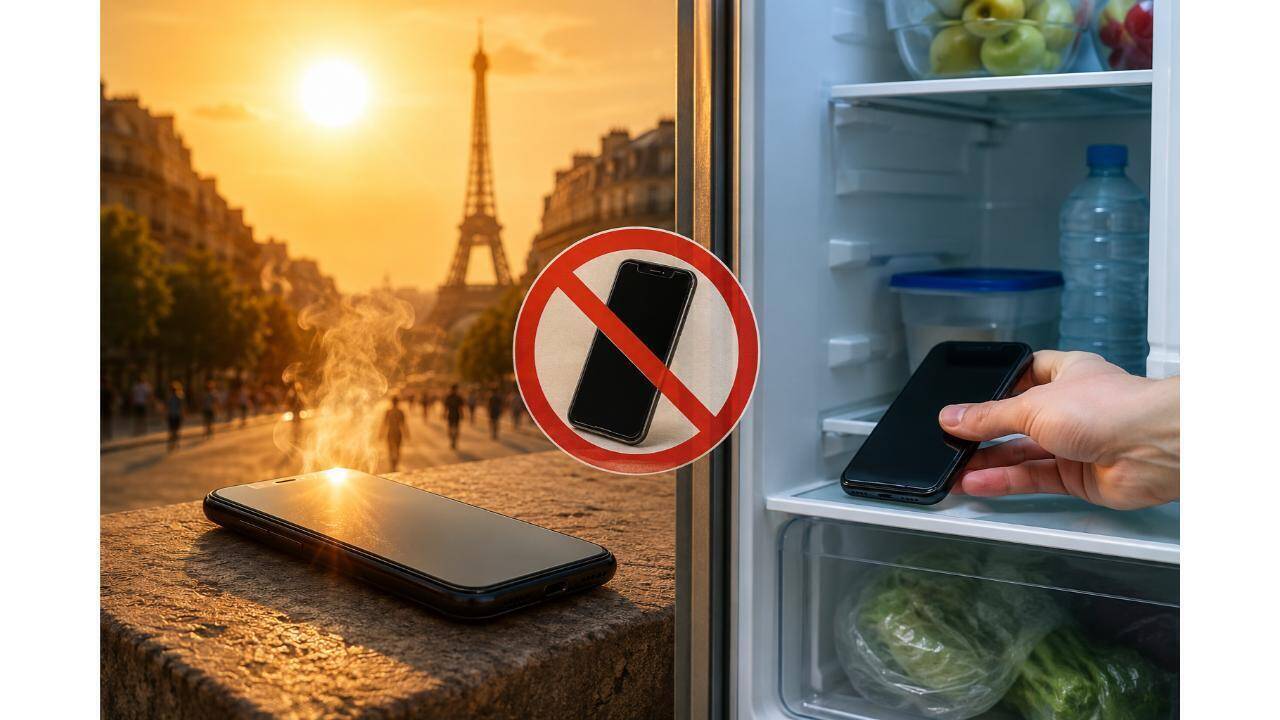
During severe heatwaves in Europe, users have been mistakenly placing overheating smartphones in refrigerators, leading to permanent moisture damage and battery failure. Experts warn against this practice and suggest safer alternatives like avoiding direct sunlight and disabling power-hungry features.
The Thermal Crisis: Smartphone Vulnerability During European Heatwaves
Recent severe heatwaves across Europe have highlighted a critical intersection between climate volatility and consumer electronics. As ambient temperatures soar, smartphones—which are essentially compact computers with high-density batteries—are reaching their thermal limits. This has led to a surge in users attempting "emergency cooling" methods, most notably placing their devices in refrigerators or freezers. While intuitively appealing, this practice reveals a dangerous gap in consumer knowledge regarding the physics of electronics and thermodynamics.
The Danger of Rapid Thermal Shifting and Condensation
Putting a hot smartphone into a cold refrigerator creates a phenomenon known as condensation. When a warm device is suddenly exposed to a cold environment, moisture from the air can condense into liquid water inside the chassis. Unlike external spills, internal condensation settles directly on the logic board and sensitive circuitry, leading to corrosion or immediate short-circuits. This internal moisture damage is often invisible until the device fails completely, making the refrigerator "fix" a high-risk gamble that frequently results in permanent hardware failure.
Battery Chemistry and the Risk of Swelling
Beyond moisture, the extreme temperature swing poses a significant threat to Lithium-ion (Li-ion) batteries. These batteries are chemically sensitive to both extreme heat and extreme cold. Rapid cooling can cause uneven contraction of the battery materials, and in some cases, the thermal stress can lead to the degradation of the internal separator. This can manifest as "swollen batteries," where the battery casing expands, potentially cracking the phone's screen or pushing the back panel open. Once a battery begins to swell, it becomes a safety hazard, increasing the risk of thermal runaway or leakage.
Understanding the Root Causes of Overheating
To prevent these issues, users must understand what actually drives smartphone heat. The primary culprits are the System-on-a-Chip (SoC) and the battery. Intensive applications—such as high-fidelity gaming, 4K video recording, or augmented reality (AR) tools—force the CPU and GPU to operate at peak frequencies, generating significant waste heat. When combined with direct sunlight, which adds external thermal energy through infrared radiation, the device's passive cooling systems (usually graphite sheets or vapor chambers) become overwhelmed, triggering the OS to throttle performance to prevent melting.
Expert-Recommended Mitigation Strategies
Experts suggest a more measured approach to thermal management. The most effective strategy is the removal of external heat sources, specifically keeping the device out of direct sunlight and removing thick protective cases that trap heat. Furthermore, reducing the internal workload by closing background apps and disabling power-intensive radios—such as Bluetooth, GPS, and 5G—can significantly lower the power draw and subsequent heat generation. These steps allow the device to dissipate heat naturally without risking the catastrophic internal damage associated with rapid cooling.
Future Implications for Hardware Design
As extreme weather events become more frequent due to global climate shifts, this trend underscores a growing need for more robust thermal management in mobile hardware. We are likely to see a shift toward more advanced cooling solutions in consumer devices, such as integrated vapor chambers in mid-range phones or improved thermal throttling algorithms that are more predictive than reactive. The European experience serves as a global warning: as the planet warms, the resilience of our essential digital tools must evolve to survive higher ambient thresholds.
Summary of Best Practices
- Avoid refrigerators or freezers to prevent internal condensation.
- Remove phone cases during extreme heat to improve airflow.
- Disable non-essential features like GPS and Bluetooth.
- Limit the use of high-performance apps in hot environments.
- Keep devices in the shade to prevent solar heating.