A Small Telescope That Surprised Me
Source Entity
Hacker News
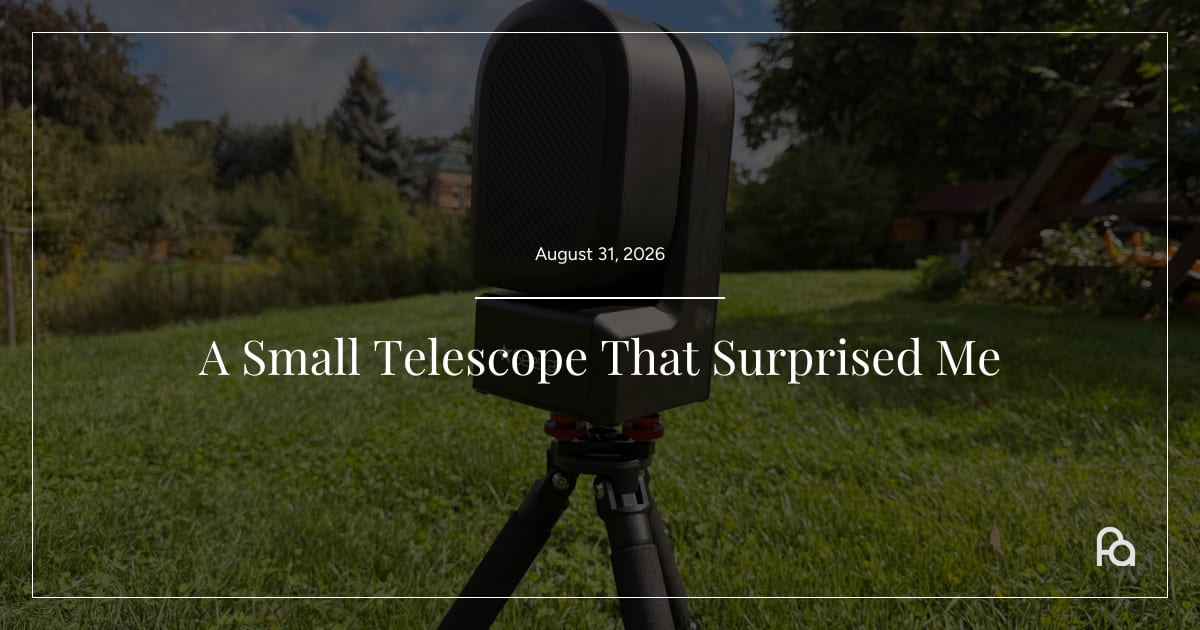
Modern smart telescopes have evolved from overpriced, cumbersome devices into accessible tools for amateur astronomers. By integrating digital imaging with automated tracking, these instruments are reshaping how enthusiasts observe the night sky.
The Evolution of Amateur Astronomy
The landscape of amateur astronomy has undergone a significant shift with the introduction of 'smart telescopes.' Historically, the hobby required a steep learning curve involving manual equatorial mounts, star charts, and the patience to locate faint celestial objects. The emergence of devices like the Unistellar eVscope and the Vaonis Stellina signaled a transition toward automation, though initial iterations faced harsh criticism from purists who valued the tactile, optical experience of traditional stargazing.
The Price-to-Performance Dilemma
Early smart telescopes were often viewed through a skeptical lens by the astronomy community. Priced in the range of several thousand euros, these devices were frequently compared to high-end conventional equipment. In the eyes of many seasoned observers, spending that amount of capital on a device that did not provide a direct optical view seemed counterintuitive. The value proposition was difficult to justify when compared to the superior light-gathering capabilities of traditional Newtonian or Schmidt-Cassegrain telescopes available at similar price points.
The Problem with Digital Eyepieces
One of the most contentious design choices in early smart telescopes was the inclusion of digital displays inside the eyepiece. By projecting a camera feed onto a tiny screen rather than allowing the user to view photons directly from the source, manufacturers created an 'awkward middle ground.' This design failed to satisfy those who wanted a traditional visual experience, while simultaneously failing to offer the full post-processing power of dedicated astrophotography rigs.
Advancements in Accessibility
Despite the initial skepticism, the technology behind these devices has matured. Modern smart telescopes are increasingly focused on the 'observational experience' rather than just technical specifications. By leveraging plate-solving software and automated tracking, they have lowered the barrier to entry for urban dwellers who previously found traditional astronomy impossible due to light pollution and the complexity of manual setup.
The Future of Stargazing
As the industry moves forward, the trend suggests a move away from the 'middle ground' towards specialized imaging platforms. These devices are shifting the focus from 'looking through' to 'capturing and analyzing.' While they may never fully replace the romanticism of a high-quality optical eyepiece, they are undeniably opening up the cosmos to a new generation of users who value convenience, speed, and digital integration over traditional methods.
Conclusive Summary
In summary, the journey of the smart telescope has been one of adaptation. While early models struggled to find their identity, the shift toward streamlined, automated imaging has proven that there is a significant market for accessible astronomy. The evolution of these tools reflects a broader trend in consumer technology: the automation of complex hobbies to make them more inclusive and efficient.