Ex-chief secretary’s son posed as IPS, RAW and army officer, swindled lakhs; arrested
Source Entity
Latest News: Today's Latest News Headlines from India & World | Hindustan Times | Hindustan Times
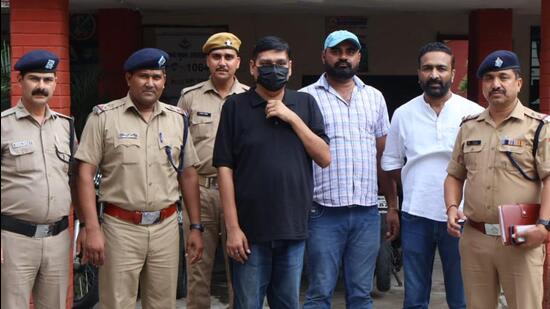
Yashovardhan, the son of a retired IAS officer and former chief secretary, has been arrested for impersonating high-ranking officials from the IPS, RAW, and the Indian Army to defraud individuals of lakhs of rupees after failing the UPSC civil services exams multiple times.
The Façade of Authority: Analysis of the Yashovardhan Impersonation Case
In a startling case of fraud and identity theft, Yashovardhan, the son of a retired IAS officer and former chief secretary, has been arrested for orchestrating a sophisticated scam. By posing as an officer of the Indian Police Service (IPS), the Research and Analysis Wing (RAW), and the Indian Army, the accused managed to swindle victims of lakhs of rupees. The investigation reveals a disturbing pattern of deception fueled by a desperate desire for the status and power associated with India's most prestigious administrative and security services.
The Psychological Toll of the UPSC Pursuit
At the heart of this criminal trajectory lies a common yet intense pressure point in Indian society: the UPSC Civil Services Examination. The details indicate that Yashovardhan attempted the exam multiple times without success. In India, clearing the UPSC is often viewed not just as a career milestone but as a gateway to ultimate social prestige and systemic power. When an individual is born into a family of high-ranking bureaucrats—such as the son of a former chief secretary—the psychological burden to maintain that legacy can be overwhelming. This failure likely created a cognitive dissonance that Yashovardhan attempted to resolve by fabricating a reality where he had already achieved the status he craved.
Strategic Impersonation and the Modus Operandi
The choice of identities—IPS, RAW, and Army—was not accidental. These specific roles are characterized by high levels of authority, secrecy, and public respect. By claiming to be part of RAW (India's foreign intelligence agency), the accused could easily excuse gaps in his documentation or avoid detailed scrutiny by citing 'national security' or 'classified operations.' This strategic use of 'institutional secrecy' is a classic tactic in high-level impersonation scams, as it intimidates victims and discourages them from verifying the suspect's credentials through official channels.
Societal Implications and the Erosion of Trust
This incident highlights a critical vulnerability in how the general public perceives government authority. The fact that multiple individuals were swindled of significant sums suggests a deep-seated tendency to trust the 'uniform' or the 'title' without demanding empirical proof of identity. Such crimes do more than just cause financial loss; they erode the trust between citizens and the state. When the prestige of the IPS or the Army is weaponized for fraud, it tarnishes the perceived integrity of these institutions and warns of the dangers of 'authority bias,' where people are more likely to comply with requests from those they perceive as being in power.
Legal Ramifications and Future Trends
From a legal standpoint, Yashovardhan faces severe charges under the Indian Penal Code (IPC), specifically regarding cheating, forgery, and impersonating a public servant. The irony of his lineage—being the son of a man who once headed the state's bureaucracy—will likely make this a landmark case in terms of social commentary. Moving forward, this event may prompt a push for more robust digital verification systems for government officials to prevent such impersonations. As digital footprints become more permanent, the ability to maintain a fake persona for extended periods is diminishing, suggesting that future fraudsters may shift toward more complex cyber-enabled identity theft.
Conclusion
The arrest of Yashovardhan serves as a cautionary tale regarding the intersection of ambition, failure, and fraud. What began as a quest for professional validation ended in criminal activity, proving that the allure of power can lead to a complete breakdown of ethical boundaries. This case underscores the need for increased public vigilance and a shift away from blind deference to authority, ensuring that the prestige of India's civil and security services is not exploited for personal gain.
Verification Required?