Four killed, one injured after car crashes into tree in Kannur
Source Entity
India Latest News: Top National Headlines Today & Breaking News | The Hindu
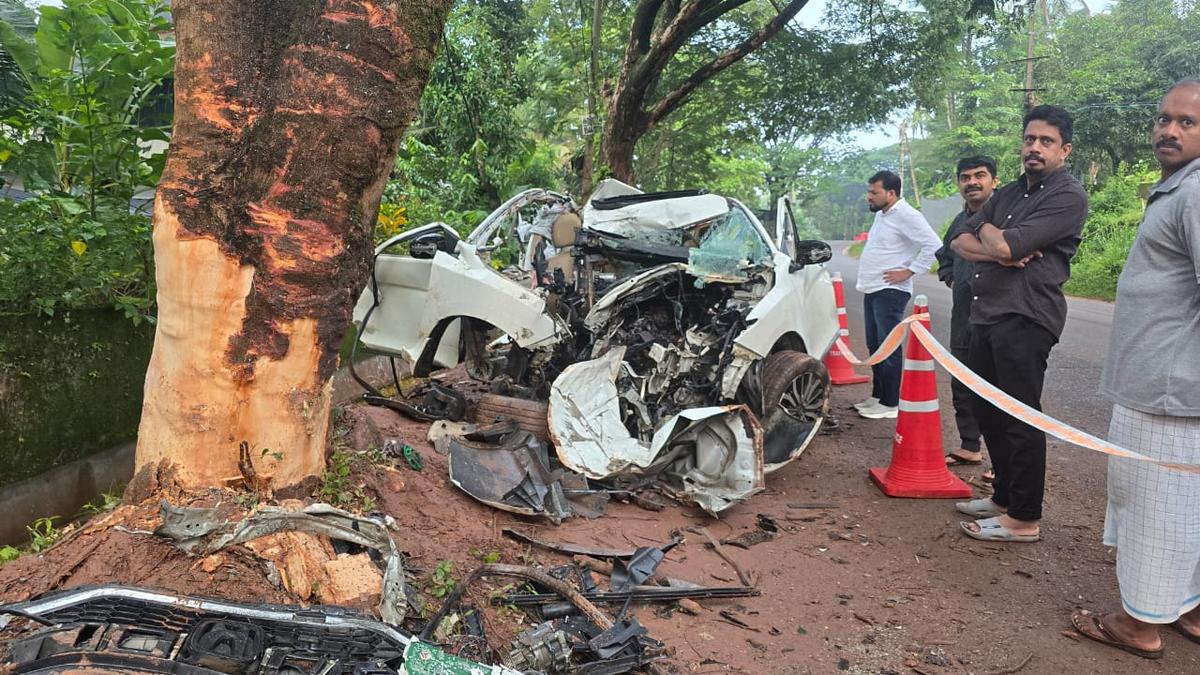
Preliminary findings suggest that speeding may have caused the accident Four people were killed and one person was injured after a car crashed into a tree at Chalode in Kannur around midnight on Frid...
Tragedy in Chalode: An Analysis of the Fatal Kannur Road Accident
In a devastating incident that has shaken the local community, four individuals lost their lives and one person sustained injuries following a high-speed vehicular collision in Chalode, Kannur. The accident occurred around midnight on Friday, when a car veered off the road and crashed violently into a tree. Preliminary investigations by local authorities suggest that excessive speeding was the primary catalyst for the loss of vehicle control, leading to the catastrophic impact.
The Dynamics of High-Speed Collisions
The severity of this accident highlights the lethal nature of high-speed impacts against fixed objects. When a vehicle strikes a stationary object like a tree, the deceleration is almost instantaneous, transferring an immense amount of kinetic energy directly into the vehicle's chassis and its occupants. In this specific case, the midnight timing suggests that factors such as reduced visibility and potential driver fatigue may have compounded the risks associated with speeding, making it nearly impossible for the driver to react in time to avoid the obstacle.
Road Safety Challenges in the Region
This incident underscores broader road safety challenges prevalent in the Kannur district and across Kerala. The region's roads are often characterized by a mix of narrow stretches and winding curves, where maintaining high speeds is inherently dangerous. The presence of large roadside trees, while environmentally beneficial, often acts as a "fixed-object hazard" in the absence of modern crash barriers or guardrails. This accident serves as a grim reminder of the gap between vehicle performance—where modern cars can reach high speeds easily—and the infrastructure's ability to mitigate the results of a crash.
The Danger of Late-Night Transit
Driving around midnight presents a unique set of risks that likely played a role in the Chalode tragedy. Nocturnal driving often leads to a false sense of security due to lower traffic volumes, encouraging drivers to exceed speed limits. However, the lack of ambient light and the physiological impact of sleep deprivation significantly impair reaction times. When speeding is combined with these factors, the margin for error vanishes, turning a minor steering correction into a fatal trajectory.
Implications for Traffic Enforcement
Following this tragedy, there is an urgent need for enhanced traffic monitoring in the Chalode area and similar corridors. The reliance on preliminary findings of "speeding" suggests a need for more consistent speed-calming measures, such as rumble strips, better signage, or the installation of speed cameras. Local authorities must address whether this specific stretch of road has a history of accidents, which would indicate a systemic design flaw rather than just driver error.
Future Trends and Preventative Measures
Looking forward, the integration of Advanced Driver Assistance Systems (ADAS), such as automatic emergency braking and lane-keep assist, could potentially prevent such tragedies. However, since these technologies are not yet universal, the focus must remain on public awareness campaigns regarding the dangers of midnight speeding. There is a pressing need for community-led safety initiatives that educate drivers on the physics of speed and the critical importance of adhering to limits, regardless of the time of day or traffic density.
Conclusion
The loss of four lives in Chalode is a heartbreaking event that emphasizes the fragility of life on the road. While the immediate cause appears to be speeding, the event reflects a wider intersection of human error, environmental hazards, and infrastructural limitations. Only through a combination of stricter enforcement, improved road safety engineering, and a cultural shift toward responsible driving can such tragedies be minimized in the future.
Verification Required?