Watch: Clean up begins after French riots but police remain
Source Entity
BBC News
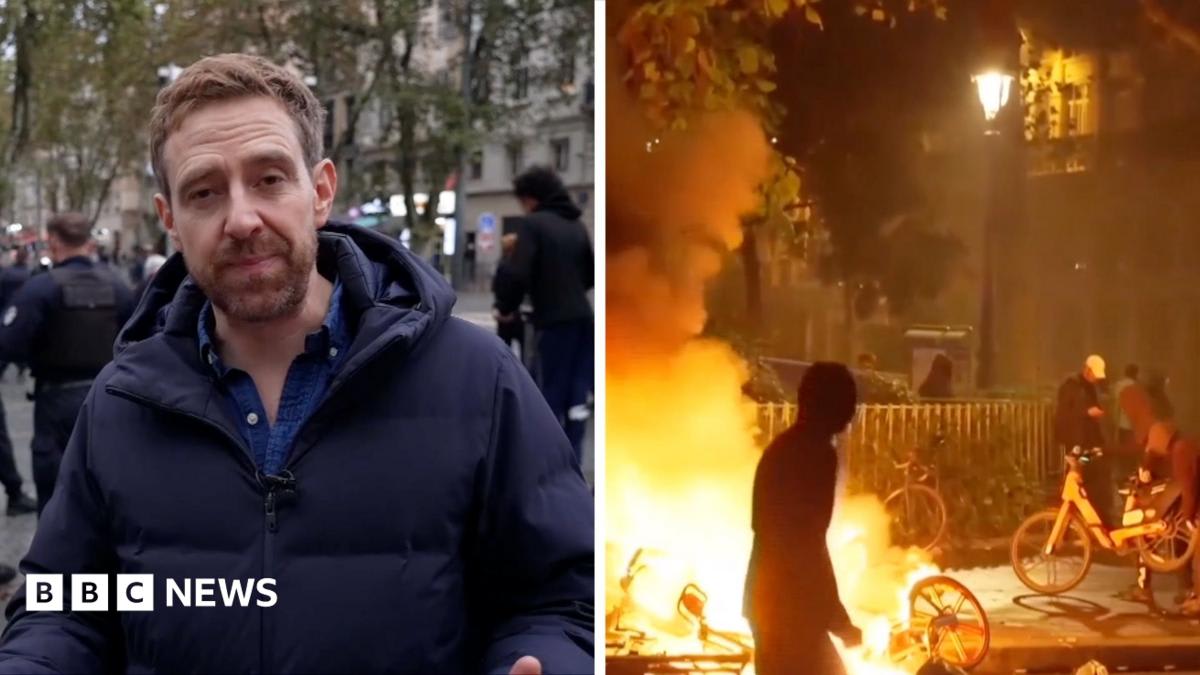
France faces nationwide unrest as over 600 demonstrations against rising living costs descend into violence and looting. With more than 270 arrests reported, the resurgence of the 'yellow vest' movement signals deepening public frustration.
Nationwide Unrest Grips France Over Economic Hardship
France is currently grappling with a significant wave of social volatility as more than 600 demonstrations have been organized across the country. What began as a collective outcry against the escalating costs of living—specifically surges in gasoline, energy, and food prices—has rapidly devolved into widespread violence. The scale of the mobilization, which includes students, labor unions, and a resurgent 'yellow vest' movement, highlights a profound disconnect between the government's economic policies and the daily realities of the French citizenry.
Escalation of Violence and Public Order
The situation on the ground has deteriorated rapidly, with the Interior Ministry reporting a sharp increase in violent incidents nationwide. Reports confirm that protesters have engaged in the destruction of public property, including the burning of vehicles and the looting of commercial shops. In Paris, the intensity of the clashes reached a point where police were compelled to deploy tear gas and water cannons to disperse crowds near major protest squares, while footage emerged of demonstrators scaling public statues to hang banners.
The Resurgence of the 'Yellow Vest' Movement
Central to this current wave of unrest is the revival of the 'yellow vest' movement, which first gained international attention in 2018 as a symbol of resistance against social and economic injustice. By utilizing social media to coordinate, protesters have successfully tapped into long-standing grievances regarding stagnant wages and inflation. The involvement of students and labor unions further complicates the government's response, as the coalition of protesters represents a broad spectrum of the population unified by economic anxiety.
Government Response and Security Measures
The French government, through the office of Interior Minister Laurent Nuñez, has acknowledged the gravity of the situation, citing numerous assaults on police officers and the systematic damaging of town halls and other public buildings. With at least 272 arrests made thus far, the state is attempting to regain control of the streets. However, the sheer number of planned demonstrations suggests that the security apparatus faces a persistent challenge in maintaining order while simultaneously addressing the root causes of the public’s fury.
Historical Context and Future Implications
France has a long historical precedent for using mass street protest as a primary vehicle for political expression. The current climate mirrors previous cycles of unrest where economic pressure acts as a catalyst for deeper systemic questioning. If the government cannot effectively stabilize the rising cost of fuel and essential goods, the trajectory suggests that these protests may continue to gain momentum, potentially leading to further political instability and a protracted period of civil disobedience that could strain the nation's social contract for the foreseeable future.
Multiple Citing Sources