Connections vs Organisation: France vs Spain a battle of football philosophies
Source Entity
Shuvaditya Bose
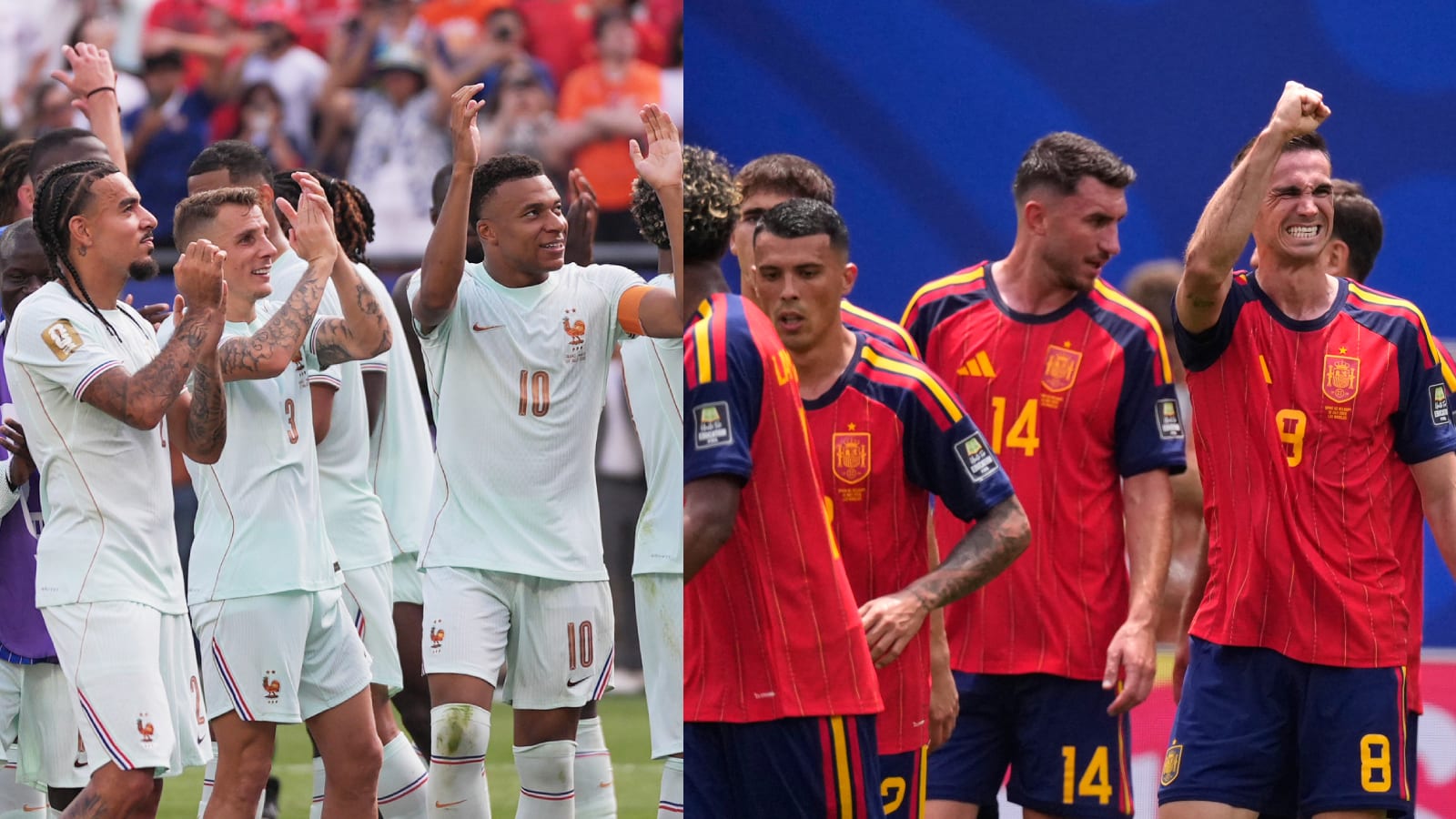
On Tuesday, hence, football will not witness merely another game of 22 men chasing a ball. It will witness a battle of two contrasting philosophies. And, only one will prevail. (AP) The beauty of foo...
A Clash of Ideologies: France vs. Spain
When France and Spain meet on the football pitch, the encounter transcends a mere sporting event; it becomes a profound dialogue between two of the most influential schools of thought in modern football. The upcoming Tuesday fixture is framed not just as a contest of skill, but as a definitive battle between 'Organisation' and 'Connections.' This duality represents the core of European football's tactical evolution, pitting a system of rigid discipline and physical dominance against one of fluid movement and technical synchronicity.
The French Blueprint: The Power of Organisation
France's approach to the game has historically been rooted in a sophisticated sense of organization. This philosophy emphasizes structural integrity, defensive solidity, and the clinical exploitation of space. By focusing on 'Organisation,' the French side leverages its immense athletic depth to create a fortress-like defensive block that is difficult to penetrate. Their tactical framework is designed to absorb pressure and launch devastating counter-attacks, relying on a disciplined hierarchy where every player understands their specific spatial responsibility. This organized approach allows them to neutralize opponents' strengths while maximizing the efficiency of their own individual talents.
The Spanish Art: The Strength of Connections
In stark contrast, Spain embodies the philosophy of 'Connections.' This approach is less about rigid positions and more about the relationship between players. Rooted in the legendary 'tiki-taka' heritage, the Spanish game focuses on the creation of passing triangles and the constant movement of the ball to manipulate the opponent's shape. For Spain, the ball is the primary tool for control; by maintaining high-frequency connections through short, precise passing, they aim to tire the opposition and create gaps through collective intelligence rather than raw power. This philosophy views the team as a single, breathing organism where the connection between the midfield and the attack is seamless and intuitive.
Historical Context and Tactical Evolution
Historically, these two philosophies have clashed in several high-stakes tournaments, often serving as a barometer for the prevailing trend in global football. In previous decades, Spain's dominance of possession often stifled the more direct styles of their opponents. However, France has evolved to counter this by refining their organizational transition—the ability to move from a defensive shell to an offensive strike in a matter of seconds. The tension between these two styles reflects a broader historical debate in sports science: whether a game is won through the mastery of a system (Organisation) or the mastery of the relationship between the participants (Connections).
Broader Implications for the Modern Game
The outcome of this match carries implications beyond the immediate result. A victory for France would validate the modern trend toward 'functionalism,' where physical superiority and tactical discipline are seen as the ultimate keys to success. Conversely, a Spanish victory would reaffirm the enduring value of technical proficiency and positional play. As football moves toward an era of high-pressing and intense physical demands, the ability to maintain 'connections' under extreme pressure is becoming the ultimate test of a team's psychological and technical fortitude.
Conclusion: The Verdict of the Pitch
Ultimately, the clash between France and Spain is a reminder that football is as much a mental game as it is a physical one. Whether the disciplined organization of the French will be able to withstand the relentless, interconnected passing of the Spanish remains to be seen. This match will serve as a definitive case study in tactical efficiency, proving which philosophy is better equipped to handle the pressures of elite competition. Regardless of the score, the encounter promises to be a masterclass in the contrasting ways the beautiful game can be interpreted and executed.