Friend re-launches its AI pendant with a speaker that talks to you, for twice the price
Source Entity
David Imel
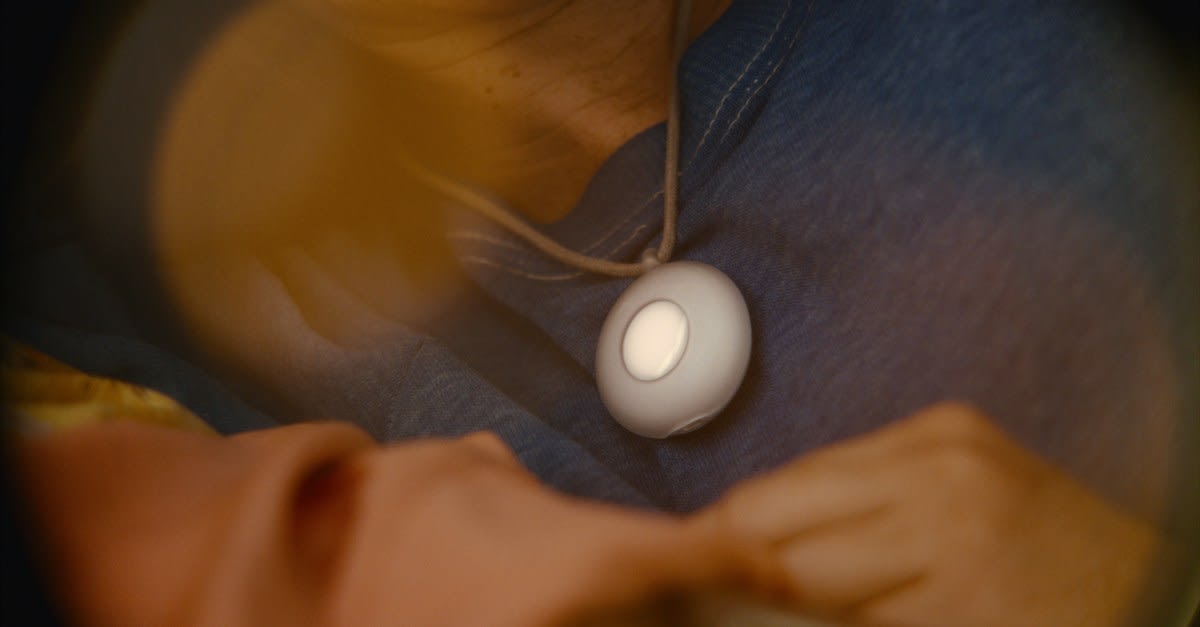
The AI pendant 'Friend' has returned with a new version featuring a built-in speaker and a significantly higher price tag. Founder Avi Schiffmann aims to combat loneliness by offering a device that provides consistent, verbal artificial companionship.
The Evolution of Artificial Companionship: Friend 2.0
The AI hardware landscape is witnessing a peculiar resurgence with the re-launch of 'Friend,' an AI pendant initially marketed as a solution to human isolation. After an aggressive marketing campaign that included a $1.8 million expenditure to secure the friend.com domain and extensive out-of-home advertising in New York City, the company has returned to the market with a pivot. This new iteration, dubbed 'Friend 2.0,' attempts to address previous limitations by introducing a hardware upgrade that fundamentally changes the user interaction model.
Hardware Upgrades and Pricing Shifts
The most significant change in this iteration is the integration of a built-in speaker, allowing the device to communicate verbally with the user. Previously, the pendant functioned primarily through text-based interactions, limiting the intimacy and immediacy of the 'companionship' it claimed to provide. By adding a voice, the developers are attempting to bridge the gap between a passive notification device and an active conversational partner. However, this shift comes with a significant financial adjustment, as the device is now priced at double its original cost, signaling a move toward a premium positioning despite the experimental nature of the product.
The Psychology of AI Intimacy
At the core of the Friend project is an attempt to address the growing epidemic of loneliness through artificial means. The promotional material highlights this mission, showcasing users discussing deeply personal topics—such as relationship struggles or professional ambitions—with their wearable devices. By providing a 'consistent personality' that responds to these emotional inputs, the device attempts to simulate the social support systems typically found in human relationships. This raises critical questions about the psychological dependency that might form when individuals turn to silicon-based peers for emotional validation.
Market Strategy and Branding
Founder Avi Schiffmann’s approach to the brand has been characterized by high-stakes marketing gambits. The acquisition of the friend.com domain for nearly three-quarters of the company’s initial seed funding demonstrates an 'all-in' strategy that prioritizes brand identity and accessibility over long-term hardware sustainability. This aggressive branding strategy is intended to normalize the concept of wearing an AI companion, positioning the device not just as a tool, but as a lifestyle accessory for the modern, socially fragmented individual.
Broader Implications for the Wearable Industry
The re-launch of Friend arrives at a time when the broader wearable market is debating the utility of 'AI pins' and pendants. While companies like Humane and Rabbit have faced significant criticism regarding the practicality of their devices, Friend differentiates itself by focusing explicitly on the social-emotional niche rather than productivity or task automation. Whether this focus on companionship can justify a higher price point remains to be seen, as the wearable market has historically shown limited tolerance for devices that do not offer clear, tangible utility beyond novelty.
Future Trends in Emotional Computing
Looking forward, the success or failure of Friend 2.0 will serve as a bellwether for the 'emotional computing' sector. If consumers embrace the ability to carry a verbal, AI-driven confidant, we may see a wave of similar devices integrated into fashion and jewelry. However, if the market rejects the higher price tag or finds the simulated companionship lacking, it may signal that users are not yet ready to replace human social structures with AI-driven hardware, regardless of how advanced the personality modeling becomes.