Ganga Water Treaty is ‘flawed’, needs to be updated: Bangladesh river expert
Source Entity
India Latest News: Top National Headlines Today & Breaking News | The Hindu
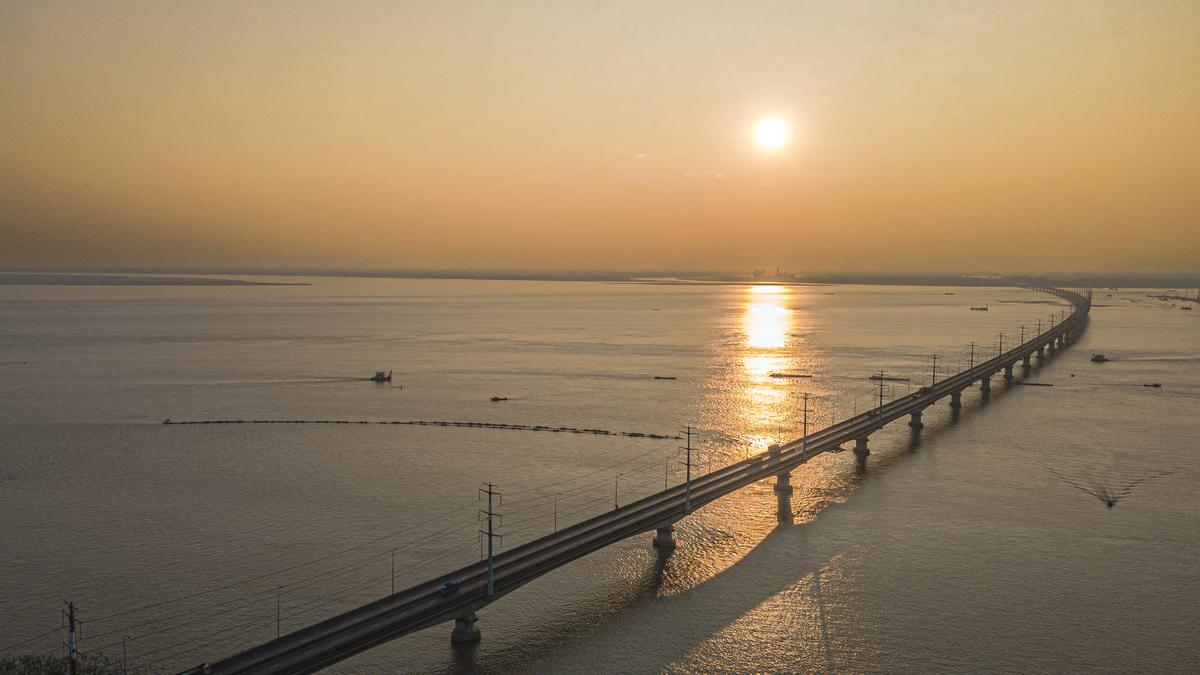
A Bangladeshi water expert has labeled the 1996 Ganga Water Treaty as flawed due to missing guarantee clauses and environmental considerations. He proposes a short-term renewal followed by a trilateral agreement involving Nepal to better manage Himalayan water resources.
The Impending Review of the 1996 Ganga Water Treaty
As the 1996 Ganga Water Treaty approaches its expiration in December 2026, the bilateral framework governing the sharing of transboundary water between India and Bangladesh has come under intense scrutiny. Manjur A. Chowdhury, the former Chairman of the National River Conservation Commission (NRCC) of Bangladesh, has publicly criticized the three-decade-old agreement as fundamentally flawed. His critique highlights significant structural deficiencies that have become increasingly apparent in the face of modern ecological and geopolitical realities.
The Core Structural Deficiencies
The primary concern raised by experts is the absence of a 'guarantee clause' within the original text. Without such a provision, downstream water security remains vulnerable to upstream fluctuations and diversion. Furthermore, the 1996 agreement predates the widespread institutional recognition of 'ecological flow' and 'environmental flow' requirements. As river health becomes a critical metric for sustainable development, the inability of the current treaty to mandate minimum flow levels to sustain local biodiversity has rendered it increasingly obsolete in the eyes of environmental policymakers.
Climate Change and Shifting Hydrology
Beyond the static text of the treaty, the impact of climate change has drastically altered the hydrological landscape of the Ganga basin. The original agreement did not anticipate the volatility caused by shifting monsoon patterns and the unpredictable melting of Himalayan glaciers. These climate-induced variables threaten the long-term viability of the current water-sharing arrangement, necessitating a more dynamic and data-driven approach that accounts for environmental degradation and extreme weather events.
The Case for a Trilateral Framework
A significant proposal emerging from this discourse is the expansion of the bilateral agreement into a trilateral one involving Nepal. Since a substantial portion of the Ganga’s water originates from Himalayan snowmelt within Nepalese territory, the exclusion of Nepal from the current treaty is viewed as a major oversight. By integrating Nepal into the negotiation process, stakeholders believe that a more comprehensive water management strategy could be developed, treating the river basin as an interconnected ecosystem rather than a series of segmented borders.
Path Toward Policy Reform
Chowdhury suggests that a prudent path forward would involve a short-term, three-year renewal of the treaty to maintain immediate stability. This transition period would serve as a crucial window for rigorous research and diplomatic negotiation. The goal is to move away from the rigid, aging structures of the past and toward a contemporary model that prioritizes scientific environmental flows and regional cooperation. As India and Bangladesh navigate this sensitive diplomatic juncture, the focus remains on ensuring that water-sharing remains a catalyst for regional stability rather than a point of friction.
Verification Required?