Trump isn't ‘completely wrong’: Hormuz disruption is Asia’s problem, says Singapore's foreign minister
Source Entity
US Top News and Analysis
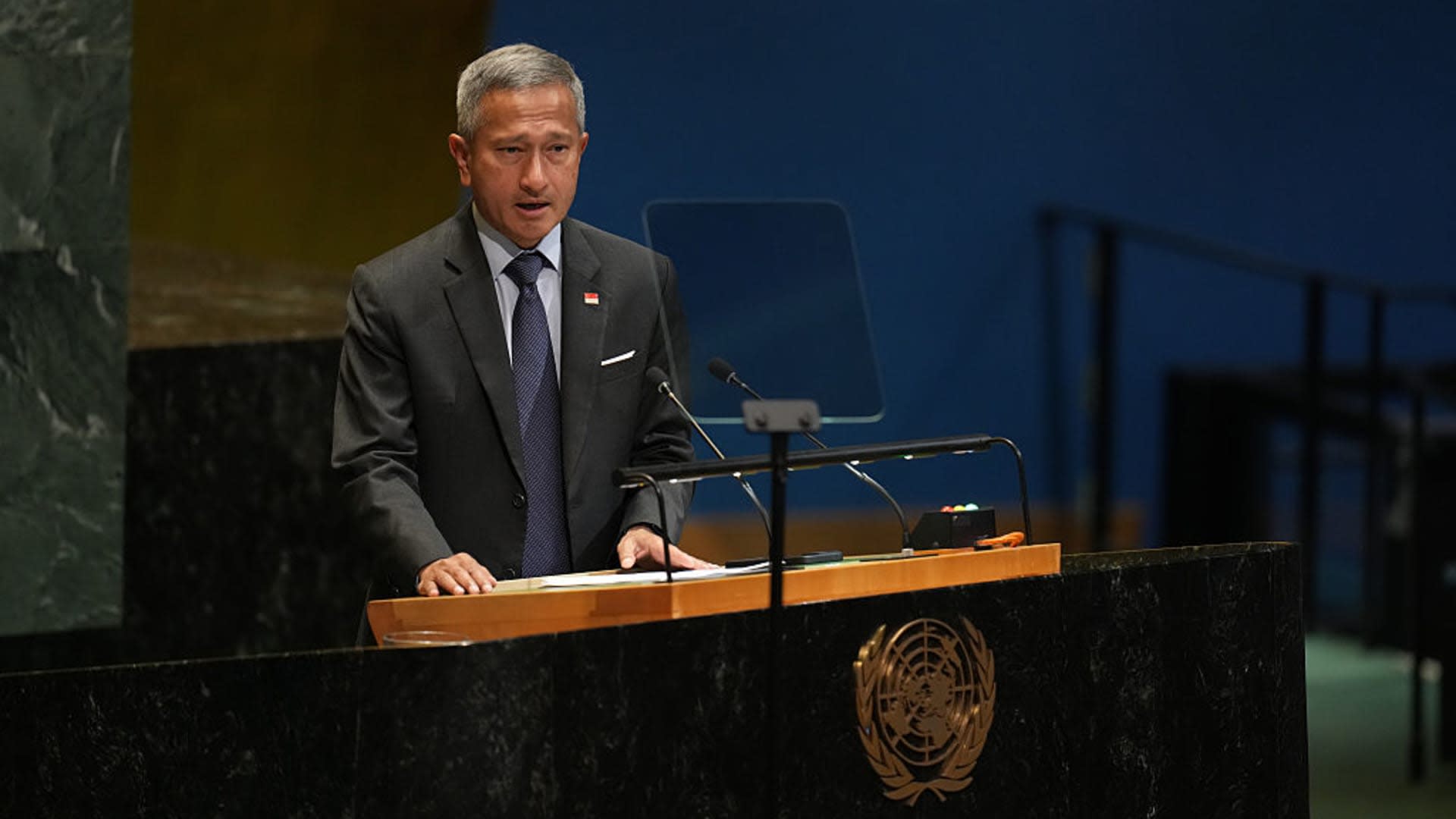
Singapore’s Foreign Minister Vivian Balakrishnan acknowledged the validity of Donald Trump’s assertion that Asian nations must take a larger role in securing the Strait of Hormuz. Given Asia’s heavy reliance on Middle Eastern energy, the region faces significant economic risks from any potential maritime disruptions.
The Geopolitical Stakes of the Strait of Hormuz
A Shift in Global Security Paradigms
Recent discussions regarding the security of the Strait of Hormuz have highlighted a growing divergence in global maritime policy. U.S. President Donald Trump’s assertion that Asian economies should bear a greater burden in protecting this critical waterway challenges the long-standing status quo where the United States acted as the primary guarantor of global energy transit. Singapore’s Foreign Minister, Vivian Balakrishnan, has noted that Trump is not 'completely wrong' in this assessment, signaling an acknowledgment among regional leaders that the era of relying solely on American military presence to secure global trade routes may be changing.
Asia’s Energy Dependence and Economic Vulnerability
The Strait of Hormuz serves as a vital artery for the global economy, connecting the Persian Gulf with the Arabian Sea. For Asian powers such as China, Japan, and South Korea, this narrow passage is not merely a geographic feature but an existential economic necessity. Because these nations are among the largest importers of energy from the Middle East, any disruption to the flow of oil and gas through the strait would have immediate and severe consequences for their domestic manufacturing, transportation, and energy sectors. The realization of this vulnerability is driving a new conversation about regional security cooperation.
Challenging the 'Free Rider' Narrative
President Trump’s rhetoric has centered on the idea that the United States, which has achieved a high degree of energy independence through its own domestic production, should not be the sole party responsible for safeguarding the interests of other nations. By framing the protection of the strait as a responsibility that should be shared by the primary beneficiaries—specifically Asian importers—the U.S. is effectively questioning the sustainability of its traditional role as the world's 'policeman' of maritime trade. Minister Balakrishnan’s cautious agreement suggests a recognition of this shifting geopolitical burden.
Navigating Diplomatic Complexities
While acknowledging the logic of Trump’s argument, Minister Balakrishnan also emphasizes the need for a balanced approach to international security. The prospect of Asian nations taking a more active role in maritime security is fraught with diplomatic challenges. It requires delicate coordination between regional powers that may have competing strategic interests, while also managing the risk of further escalating tensions in the Middle East. Security in the strait is a complex web of international law, naval capability, and diplomatic maneuvering that cannot be easily offloaded or restructured.
The Future of Maritime Security
Looking ahead, the debate surrounding the Strait of Hormuz is likely to serve as a bellwether for future international relations. As global power dynamics shift, we may see a transition toward multilateral security frameworks in which nations that consume the energy take a more direct role in protecting the transit corridors. Whether through increased naval patrols, intelligence sharing, or regional alliances, the pressure on Asian economies to secure their own energy lifelines is set to intensify. This evolution reflects a broader trend of decentralized global security, moving away from unilateral protection toward collective responsibility.