GLM-5.4: Toward Generalized Coding with Our First Loop Transformer
Source Entity
Hacker News
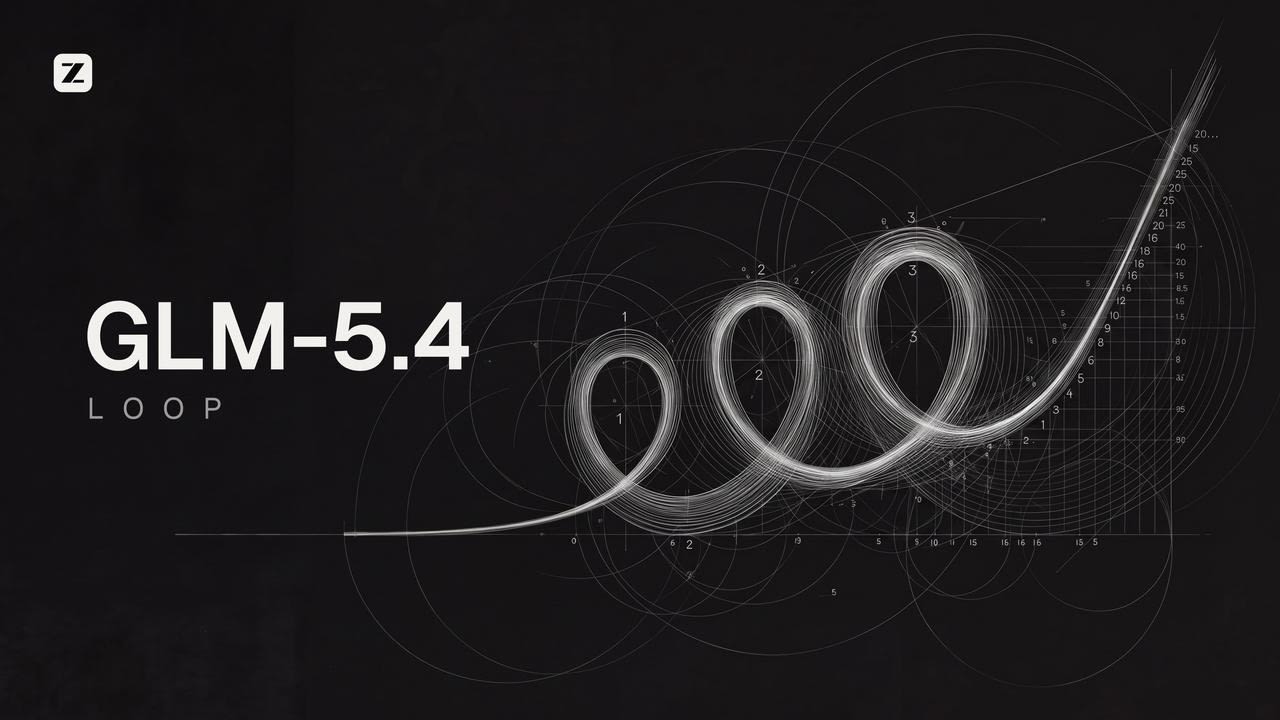
GLM-5.4 introduces the first 'Loop Transformer' architecture designed to enhance generalized coding capabilities. This innovation aims to improve how large language models handle iterative programming tasks and complex algorithmic reasoning.
The Evolution of Coding Models: Introducing GLM-5.4
The release of GLM-5.4 marks a significant milestone in the trajectory of Large Language Model (LLM) development, specifically focusing on the intersection of generative AI and software engineering. By introducing the 'Loop Transformer' architecture, the developers are directly addressing one of the most persistent hurdles in machine learning: the ability of models to perform reliable, iterative, and generalized coding tasks. Unlike standard transformer architectures that rely on static sequence processing, the Loop Transformer is engineered to handle the cyclic nature of programming logic more effectively.
Understanding the Loop Transformer Architecture
At the heart of the GLM-5.4 release is the Loop Transformer. Traditional transformer models often struggle with deep recursion or complex loops because they are constrained by fixed-length input and output sequences. By integrating a looping mechanism, GLM-5.4 aims to simulate the iterative nature of software execution. This allows the model to 're-evaluate' its output during the generation process, which is critical for debugging, optimizing code, and ensuring that complex logic flows remain consistent throughout the codebase.
Implications for Automated Software Development
The shift toward generalized coding suggests a move away from simple code completion toward autonomous software development. By leveraging the Loop Transformer, GLM-5.4 is positioned to better handle dynamic programming scenarios where the number of steps is not predetermined. This capability is essential for developers looking to automate the creation of complex algorithms, where the model must iterate until a specific functional requirement is met, rather than simply predicting the next token in a sequence.
Historical Context of GLM Models
The GLM series has historically focused on the General Language Model approach, often utilizing autoregressive blank-filling to balance natural language understanding with generative power. The transition to a specialized 'Loop' architecture for version 5.4 represents a pivot toward task-specific optimization. This mirrors broader trends in the AI industry, where general-purpose models are increasingly being augmented with specialized architectural components to solve domain-specific problems like formal verification and algorithmic synthesis.
Future Trends in Algorithmic AI
Looking ahead, the success of the Loop Transformer could lead to a new paradigm in how coding assistants operate. Future iterations of LLMs will likely prioritize 'reasoning-in-the-loop' capabilities, where the model doesn't just output text but actively checks its own logic against constraints before finalizing a code block. If GLM-5.4 proves successful in real-world benchmarks, we can expect to see a wave of similar architectural innovations across the industry, moving us closer to AI agents that can manage entire software development lifecycles.
Conclusion
In summary, GLM-5.4 is not merely an incremental update but a structural evolution in how AI models process programming tasks. By attempting to bridge the gap between static sequence prediction and dynamic code execution, the Loop Transformer sets a new standard for generalized coding. As the industry continues to refine these architectures, the reliability and utility of AI in engineering environments are poised to expand significantly, potentially transforming the daily workflow of software engineers globally.