How global heating supercharged floods in West Africa displacing thousands
Source Entity
Damien Gayle
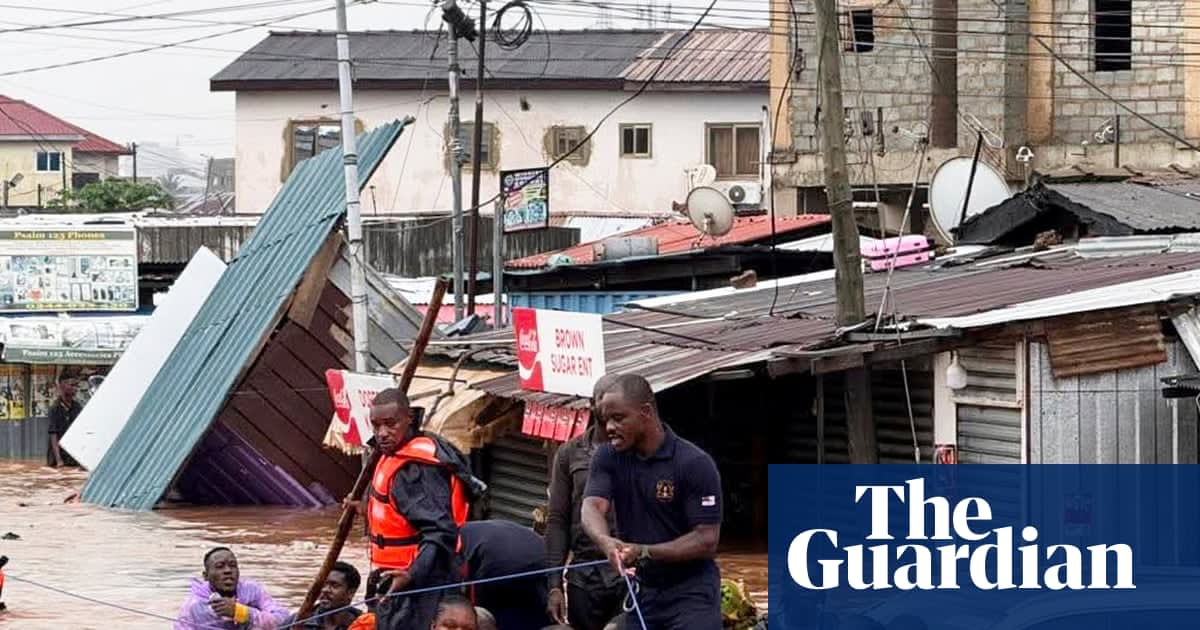
Scientists have determined that recent devastating floods in West Africa, which killed dozens and displaced thousands, were 'supercharged' by global heating, transforming a routine weather event into a major climate catastrophe.
Climate Breakdown and the West African Flood Crisis
Recent catastrophic flooding across the coastal regions of West Africa has served as a stark illustration of the tangible and immediate impacts of global heating. The events, which resulted in dozens of fatalities and the displacement of thousands of residents, were not merely isolated weather anomalies. Instead, scientific analysis indicates that these floods were "supercharged" by the ongoing climate breakdown, effectively turning what would have been a routine seasonal rain event into a humanitarian disaster. This escalation highlights a growing trend where the baseline for "normal" weather is shifting toward extremes.
The Science of "Supercharged" Rainfall
To understand how global heating supercharges floods, one must look at the fundamental thermodynamics of the atmosphere. As the planet warms, the atmosphere is capable of holding more water vapor—approximately 7% more for every degree Celsius of warming. In the case of West Africa, this increased moisture capacity means that when rain falls, it does so with significantly greater intensity and volume than in previous decades. This phenomenon transforms standard precipitation patterns into deluge events that overwhelm natural drainage systems and man-made infrastructure, leading to the rapid inundation of coastal cities and rural villages.
Regional Vulnerability and Socio-Economic Impact
The devastation in West Africa is compounded by the region's specific socio-economic vulnerabilities. Many coastal areas have experienced rapid, unplanned urbanization, where housing is often constructed in flood-prone lowlands or lacks adequate drainage infrastructure. When "supercharged" rains hit these areas, the lack of permeable surfaces and efficient water runoff systems ensures that flooding is both widespread and prolonged. The displacement of thousands of people creates a secondary crisis of homelessness and health risks, as stagnant floodwaters often lead to outbreaks of waterborne diseases, further straining the region's healthcare capacity.
The "Frightening New Normal" and Adaptation
Scientists have warned that the world must adapt to a "frightening new normal." Adaptation in the West African context requires a massive overhaul of urban planning and the implementation of climate-resilient infrastructure, such as advanced sea walls, sustainable urban drainage systems (SuDS), and more robust early warning systems. However, the challenge lies in the funding gap; many of the nations most affected by these climate-driven disasters are those that contributed the least to global greenhouse gas emissions, creating a profound climate injustice that complicates the ability to fund necessary adaptation measures.
The Imperative for Rapid Emission Reduction
While adaptation is necessary for survival, the scientific consensus emphasized in the reports is that adaptation alone is insufficient. There is a critical need to reduce global emissions "further and faster" to prevent the total destabilization of regional climates. If the global temperature continues to rise, the frequency and intensity of these "supercharged" events will likely increase, potentially reaching a tipping point where adaptation becomes impossible. The West African floods serve as a warning that the window for preventative action is closing rapidly, and the cost of inaction is measured in human lives and systemic displacement.
Conclusion and Future Outlook
In summary, the floods in West Africa are a direct manifestation of the climate crisis, where global heating acts as a force multiplier for natural weather patterns. The transition from routine rain to climate catastrophe is a harbinger of what other coastal regions may face if global warming remains unchecked. Moving forward, the international community must prioritize both the immediate humanitarian relief for the displaced and the long-term systemic changes required to mitigate carbon emissions. Without a dual approach of aggressive mitigation and strategic adaptation, the cycle of displacement and destruction in West Africa is destined to repeat with increasing severity.