"IT WoRKs BeTter in the App "
Source Entity
Hacker News
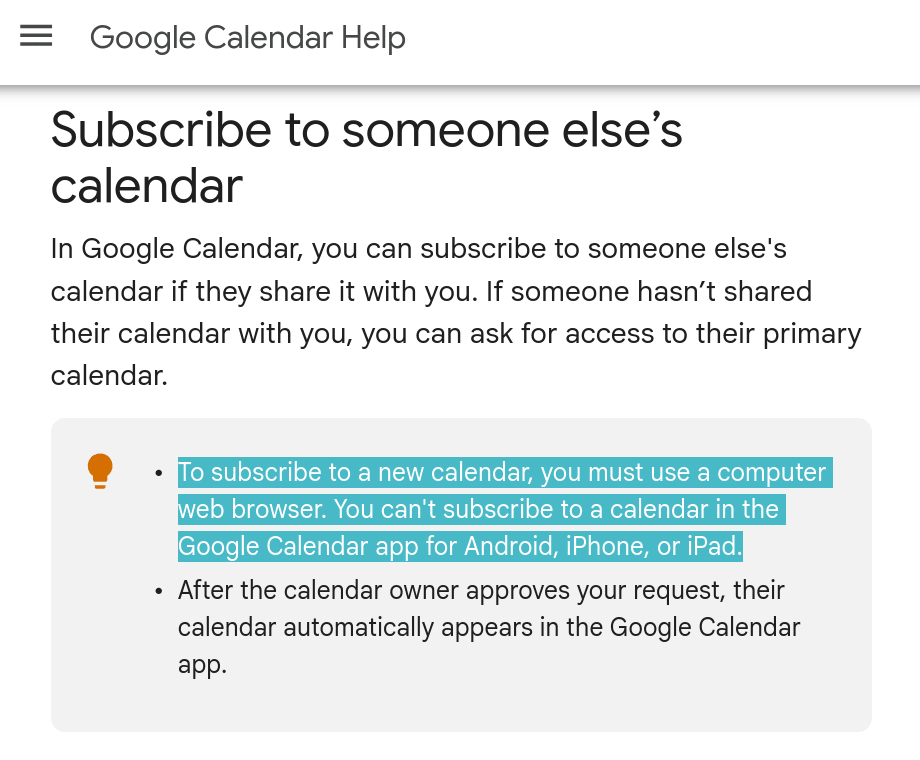
Users are reporting a frustrating inability to subscribe to external event calendars via URL within the Google Calendar mobile app on Android. This highlights ongoing concerns regarding feature parity and UX consistency across Google's software ecosystem.
The Persistent UX Gap in Google’s Ecosystem
Recent user feedback has highlighted a significant friction point within the Google Calendar mobile experience: the inability to directly subscribe to an events calendar via a URL. Despite the sophistication of modern mobile operating systems and the purported intelligence of current AI models, users find themselves unable to perform what is ostensibly a fundamental task. This issue underscores a recurring critique of Google’s software strategy, where core functionality often feels fragmented or incomplete across different platforms.
The Disconnect Between Desktop and Mobile
Historically, Google Calendar has provided robust support for URL-based calendar subscriptions on its web interface. However, the mobile application—specifically on Android devices—often lacks parity with these desktop features. This disparity forces users to navigate a convoluted workaround or abandon the task entirely, which contradicts the goal of a seamless, integrated mobile experience. When a user attempts to input a URL to sync an external calendar, the current application architecture fails to provide a native pathway for ingestion, leaving a critical functional void.
Software Engineering and Prioritization
From a technical perspective, adding a URL subscription feature is not an insurmountable challenge. The process involves basic input validation, parsing of the ICS or webcal protocol, and a database update to sync the event stream. The frustration expressed by users stems from the perceived simplicity of this implementation compared to the immense resources Google allocates to experimental features like generative AI. This creates a narrative of 'feature bloat' where new, flashy tools are prioritized over the refinement of essential, long-standing user needs.
The Role of AI in Software Maintenance
There is a growing irony in the current development landscape where companies like Google push advanced models—such as the Gemini series—for complex reasoning, yet struggle with the 'jagged edges' of basic user interface design. While large language models are increasingly capable of 'vibe coding' or generating boilerplate logic, the actual deployment of these solutions into a production environment requires a level of product stewardship that seems currently absent in this instance. The reliance on AI does not replace the necessity for rigorous UX testing and feature parity audits.
Broader Implications for Product Loyalty
When a flagship application on a flagship device (such as the Google Pixel) fails to handle a standard URL-based subscription, it erodes trust in the platform's reliability. For power users and those who rely on external calendar services for business, education, or personal organization, this deficiency is not merely a bug—it is a barrier to productivity. If Google intends to maintain its dominance in the productivity suite market, it must address these 'jagged edges' to ensure that the mobile experience is as comprehensive as the desktop counterpart.
Conclusion: Moving Toward Cohesion
Ultimately, the inability to add calendars via URL represents a missed opportunity for seamless integration. To resolve this, Google must pivot focus from iterative feature additions to the consolidation of basic utility. By closing these gaps, the company can restore user confidence and ensure that its mobile ecosystem remains a viable, high-functioning tool rather than a collection of disjointed, unfinished applications.