Google DeepMind’s new AI model can control a robot’s entire body
Source Entity
Emma Roth
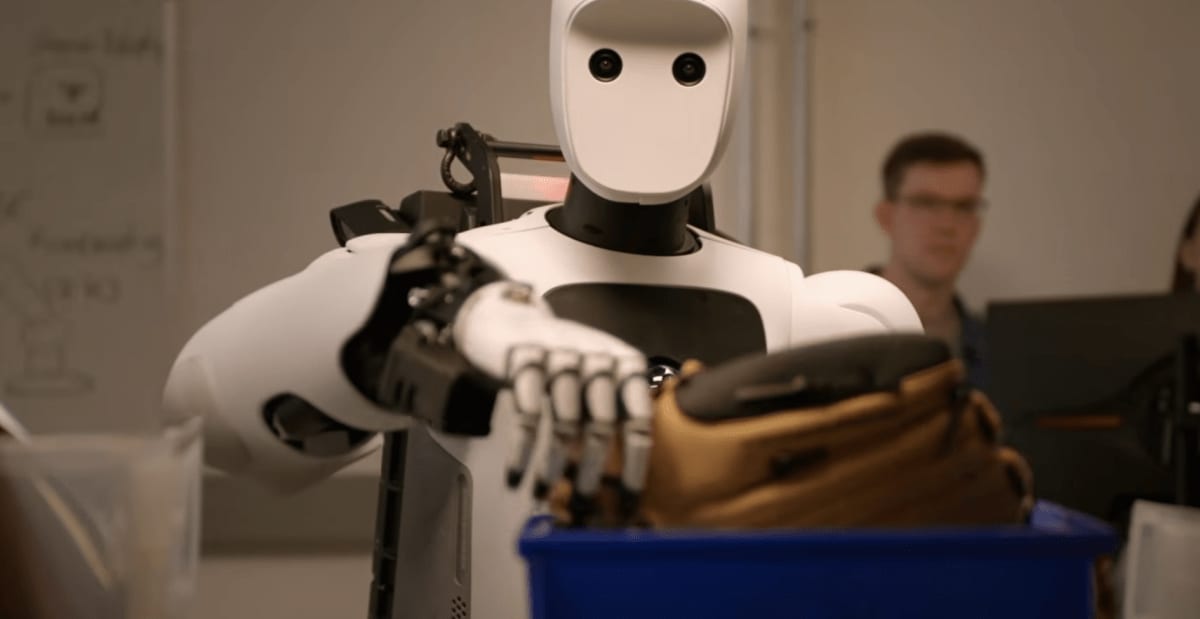
Google DeepMind has unveiled Gemini Robotics ER 2, an advanced 'embodied reasoning' model capable of whole-body control and complex task orchestration. This update allows humanoid robots to perform sophisticated movements from feet to fingertips while collaborating on multi-step tasks.
The Evolution of Embodied Intelligence: Gemini Robotics ER 2
Google DeepMind has officially unveiled Gemini Robotics ER 2, a significant leap forward in the field of artificial intelligence and robotics. By shifting the focus from simple spatial reasoning to what the company terms "embodied reasoning," this model serves as a high-level cognitive engine for robotic systems. Unlike previous iterations that were often restricted to specific upper-body movements or narrow, pre-programmed tasks, ER 2 acts as a central brain that allows robots to interpret the physical world, engage in human-like conversation, and execute complex, multi-step operations in real-time.
Whole-Body Control: Beyond the Upper Torso
A critical advancement in this release is the transition to whole-body intelligence. While earlier robotic models often struggled to integrate lower-body movement with fine motor skills, Gemini Robotics ER 2 enables humanoid robots to utilize their entire physical structure—from feet to fingertips. This allows for more natural and functional mobility, including walking, crouching, and stretching. By coordinating these movements, robots like Apptronik’s Apollo 2 can now interact with their environment with unprecedented dexterity, bridging the gap between static automation and fluid, human-like physical interaction.
Task Orchestration and Tool Utilization
Beyond physical movement, ER 2 excels in task orchestration. The model serves as a bridge, handing off specific motor execution commands to lower-level vision-language-action (VLA) models while maintaining high-level oversight. A defining feature of this intelligence is its ability to natively integrate external tools, such as Google Search or custom user-defined functions. This capability transforms the robot from a mere machine into an active problem-solver that can retrieve information on the fly to inform its next physical action.
The Challenge of Real-Time Reasoning
For robots to successfully integrate into human-centric environments, they must overcome the bottleneck of latency. Traditional robotics often suffered from delays between perception and action, making them unsuitable for dynamic, unpredictable settings. Gemini Robotics ER 2 is designed to address this by prioritizing "real-time speed" in its reasoning processes. The model enables robots to think about upcoming sequences while simultaneously executing current tasks, a crucial requirement for navigating the chaotic nature of the physical world.
Collaboration and Scalability
Perhaps the most ambitious aspect of the ER 2 model is its focus on multi-robot collaboration. Historically, transferring learned skills across different robotic platforms was a massive technical hurdle. By providing a generalized model for "whole-body intelligence," Google DeepMind is aiming to create a standardized framework that can be applied to robots of various shapes and sizes. This scalability suggests a future where robots do not just work in isolation but operate as a fleet, coordinating their efforts to solve complex, real-world problems that were previously beyond the reach of automated systems.
Future Implications and Conclusion
The introduction of Gemini Robotics ER 2 marks a pivotal shift in how we perceive the role of robotics in daily life. By moving away from rigid, pre-programmed sequences toward models that can "think" and adapt, we are witnessing the birth of a new era of general-purpose robots. While the technology is still evolving, the ability of these machines to reason, collaborate, and move with human-like fluidity sets the stage for a significant increase in robotic utility across industries, from logistics and manufacturing to domestic assistance.
Multiple Citing Sources