The Google Images homepage will recommend photos even before you search
Source Entity
Jay Peters
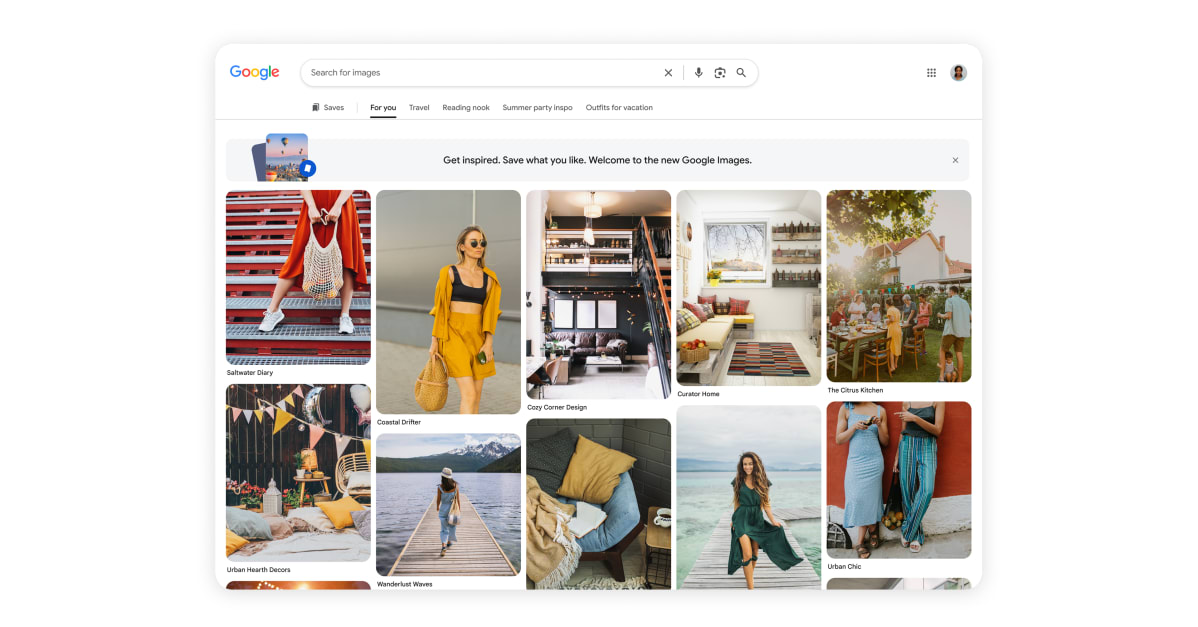
Google is transforming the Google Images homepage to feature personalized image recommendations before a user enters a search query, celebrating the platform's 25th anniversary by shifting from a utility-based search tool to a discovery-driven experience.
The Evolution of Visual Discovery: Google Images Reimagines Its Homepage
Google has announced a significant architectural shift for the Google Images homepage to coincide with the platform's 25th anniversary. For over two decades, the Google Images landing page has adhered to the company's core philosophy of minimalism—a stark, mostly blank page featuring a prominent search bar. This design prioritized intent, requiring the user to provide a specific keyword before any content was displayed. However, the new update introduces a proactive recommendation system, presenting users with a curated selection of images they might find interesting before a single character is typed into the search box.
From Intent-Based Search to Passive Discovery
This transition represents a fundamental pivot in user experience (UX) design, moving from an "intent-based" model to a "discovery-based" model. Traditionally, Google Images functioned as a digital library where the user was the librarian, directing the search. By introducing recommendations on the homepage, Google is adopting a behavior more akin to social media platforms like Instagram, Pinterest, or TikTok, where the algorithm anticipates user desires. This shift suggests that Google views the visual web not just as a resource to be queried, but as a stream of content to be consumed, thereby increasing user engagement and "time-on-site" metrics.
The Role of Machine Learning and Personalization
While the announcement focuses on the anniversary celebration, the underlying engine of this change is Google's sophisticated machine learning (ML) infrastructure. To populate the homepage with images a user "might like," Google will likely leverage a combination of search history, account preferences, and contextual data. This integration of the Knowledge Graph and personalized AI allows the platform to surface visually relevant content that aligns with a user's current interests or past behaviors. This move further blurs the line between a neutral search engine and a personalized content curator, signaling a deeper integration of AI-driven anticipation into the core Google experience.
Historical Context: 25 Years of Visual Indexing
Reflecting on the 25-year journey of Google Images provides critical context for this update. In its infancy, image search was a rudimentary process of indexing filenames and alt-text. Over the last quarter-century, it evolved into a powerhouse of computer vision, capable of identifying objects within images and performing reverse image searches. The decision to move away from the blank homepage now marks the end of the "Utility Era" of Google Images and the beginning of the "Curation Era." It acknowledges that the modern web user is as likely to browse for inspiration as they are to search for a specific fact.
Competitive Pressures and the Discovery Economy
This strategic move cannot be viewed in isolation from the broader competitive landscape. Platforms like Pinterest have long dominated the "visual discovery" space, where users go to find ideas rather than specific answers. By transforming its homepage into a recommendation feed, Google is directly challenging these discovery engines. By leveraging its massive index of the entire web—rather than just user-uploaded pins—Google can offer a breadth of visual recommendations that far exceeds its competitors, potentially capturing a larger share of the "inspiration-seeking" traffic.
Future Implications: Toward a Generative Visual Interface
Looking ahead, this update is likely a precursor to a more integrated generative AI experience. As Google continues to roll out Gemini and other multimodal AI capabilities, the recommended images on the homepage could evolve from static indexed photos to AI-generated visuals tailored to a user's specific mood or current project. We can predict a future where the Google Images homepage is a dynamic, living canvas that adapts in real-time to the user's context, potentially integrating shopping suggestions or creative prompts directly into the visual feed.
Summary of Impact
In summary, the update to the Google Images homepage is far more than a celebratory anniversary gesture; it is a strategic realignment of the platform's purpose. By replacing the blank slate with a personalized feed, Google is transitioning from a reactive tool to a proactive companion. This change reflects the broader trend of the internet moving toward algorithmic curation, ensuring that Google remains the primary gateway for both specific information retrieval and serendipitous visual discovery.