Google SWE points 48 AI agents at NASA Lidar, finds unmapped Maya pyramid in 72h
Source Entity
Hacker News
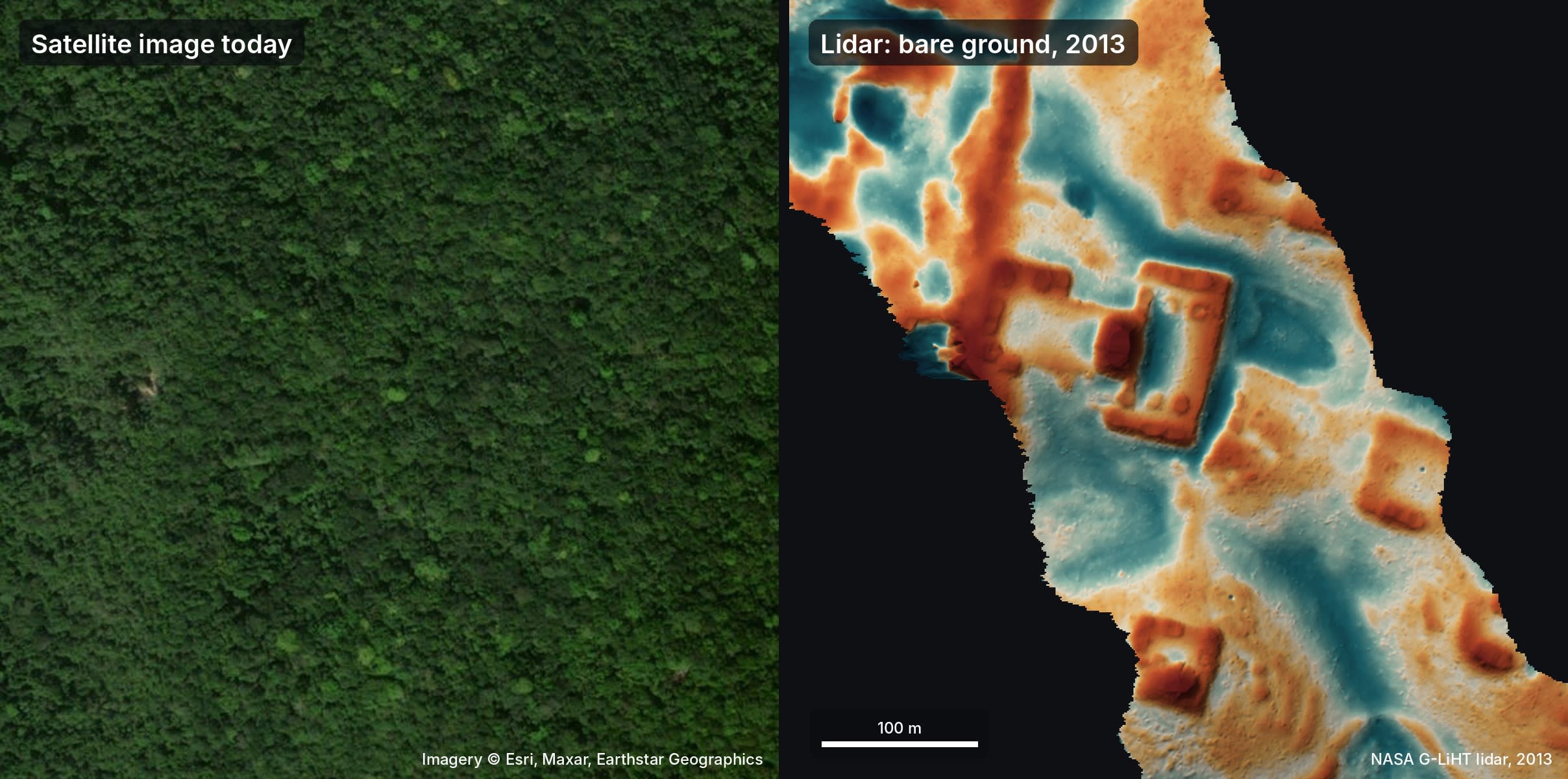
A Google software engineer utilized 48 autonomous AI agents to analyze NASA lidar data, identifying a previously unmapped Maya pyramid in Mexico within 72 hours. This project demonstrates the potential for AI-assisted archaeology to accelerate historical discovery by processing massive geospatial datasets.
The Convergence of AI and Archaeology: A New Discovery
A Google software engineer has successfully demonstrated the transformative potential of autonomous systems in archaeological research. By deploying 48 AI agents to scan vast datasets of NASA lidar imagery, the researcher identified a previously unmapped Maya pyramid hidden beneath dense vegetation in Mexico. This discovery, achieved in a mere 72-hour window, underscores a paradigm shift in how historical sites are identified and documented.
The Role of Lidar in Modern Exploration
Lidar (Light Detection and Ranging) has revolutionized archaeology by allowing researchers to 'see through' canopy cover. By emitting laser pulses that penetrate tree cover to map the bare ground, lidar creates high-resolution topographical models. In this specific instance, the researcher utilized these digital elevation models to contrast bare-ground lidar data with standard satellite imagery, which revealed the structural outline of the pyramid that remained invisible to conventional optical sensors.
The Efficiency of Autonomous Agent Swarms
The core innovation in this project was the use of 48 individual AI agents working in concert to analyze massive geospatial datasets. By automating the pattern recognition process, the agents were able to sift through terrain data that would typically require weeks of manual labor by trained archaeologists. This decentralized approach allowed for rapid hypothesis generation and validation, moving from a conceptual idea to an official government inquiry in less than three days.
Bridging the Gap: AI and Institutional Verification
One of the most significant aspects of this discovery is the speed of institutional engagement. Following the AI's identification of the structure, the researcher initiated contact with Mexican authorities to verify the findings. This rapid bridge between computational discovery and governmental oversight highlights the potential for AI to assist state-level cultural heritage management, provided that the findings are subjected to rigorous archaeological scrutiny.
Ethical Considerations and Future Trends
While the project is a testament to the speed of modern technology, it also raises important questions regarding the role of non-experts in archaeology. The researcher explicitly noted they are not an archaeologist, emphasizing the necessity of professional collaboration when dealing with sensitive cultural sites. Looking forward, the integration of swarm intelligence into environmental and historical surveys is likely to become a standard methodology, potentially uncovering thousands of sites currently obscured by forest cover across the Americas.
Conclusion
The identification of an unmapped Maya pyramid via AI-driven lidar analysis marks a milestone in computational archaeology. By combining NASA’s open-access data with advanced agent-based modeling, this project provides a blueprint for future discovery, suggesting that the most significant historical findings of the next decade may be uncovered through algorithms rather than traditional field excavation alone.