ASI’s burnt body found in car; woman cop held for killing her colleague-lover
Source Entity
TNN
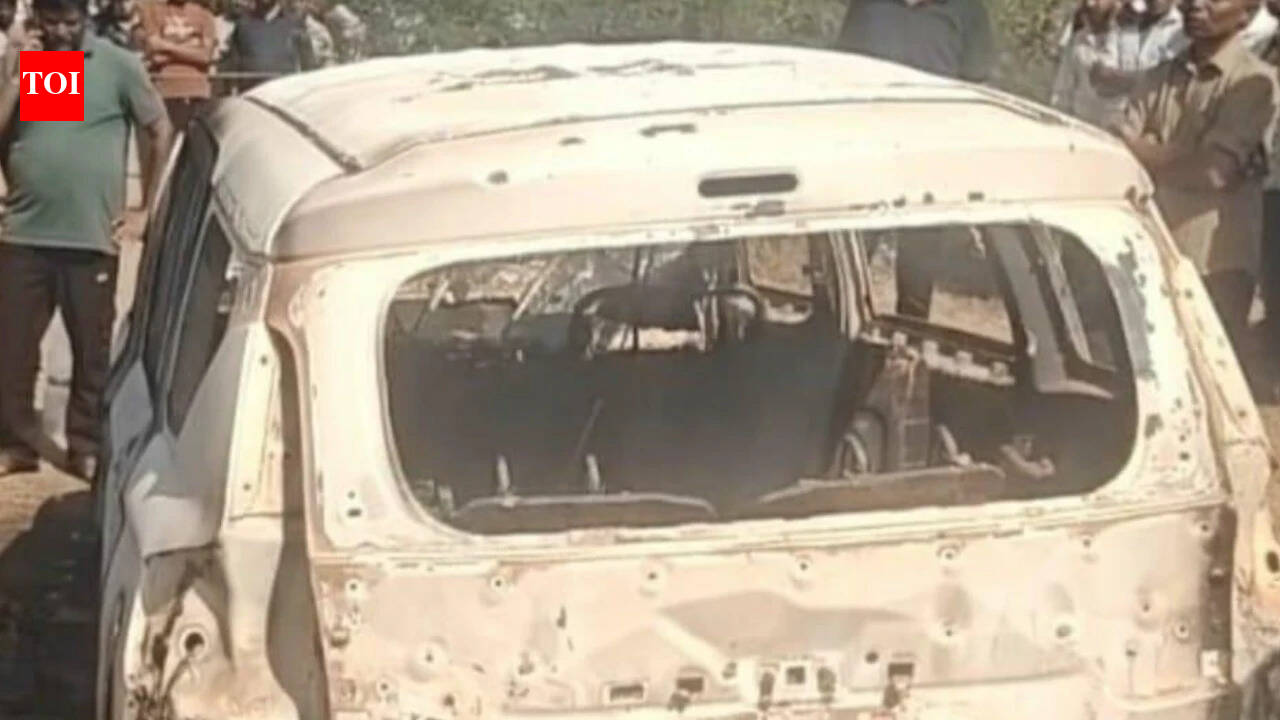
A female head constable has been arrested for the murder of her colleague, an assistant sub-inspector, in Gujarat. The victim's body was found in a charred car, and investigators used a ring and forensic evidence to solve the crime.
The Tragic Murder of ASI Ashwin Tabiyad
In a shocking case that has gripped the Aravalli district of Gujarat, the brutal murder of Assistant Sub-Inspector (ASI) Ashwin Tabiyad has unveiled a dark intersection of professional duty and personal conflict. Tabiyad, 45, disappeared on the night of Diwali, November 8, after leaving for duty from the Chithoda police station. His absence quickly turned into a criminal investigation when his vehicle was discovered incinerated just eight kilometers from his place of work, containing his charred remains.
The Investigation and Breakthrough
The identification of the victim presented a significant challenge for the Aravalli Local Crime Branch (LCB) due to the extent of the destruction caused by the fire. Investigators initially recovered fragments of police uniform, a 'Gujarat Police' monogram, and a silver star, but these items were insufficient for a definitive identification. The breakthrough came when authorities discovered a ring among the debris that was positively identified as belonging to Tabiyad, providing the crucial link needed to confirm the identity of the deceased.
Motivations and Complicity
Following the identification, the investigation turned toward the victim's social and professional circles. Authorities arrested Head Constable Alfa Kalasva (37), who was posted at the same station as the victim. According to initial reports, the two were in a relationship, and the motive for the murder appears to have been the suspect's desire to end the association. The brutal nature of the crime highlights the extreme measures taken, as Kalasva allegedly conspired with her brother and two other accomplices to carry out the killing.
Destruction of Evidence
The perpetrators attempted to cover their tracks by setting the victim's Maruti Ertiga on fire, hoping that the flames would destroy all forensic links to the crime. However, the plan went awry during the execution; the fire flared up unexpectedly, leaving Kalasva herself with burn injuries. This physical evidence, combined with technical analysis and a network of CCTV visuals, allowed investigators to piece together the movements of the suspects on that fateful night.
Legal and Societal Implications
All four suspects, including Kalasva, have been charged with murder, criminal conspiracy, and the destruction of evidence. They were recently produced before a court as the legal process begins. This incident serves as a grim reminder of the volatility that can arise within professional environments when personal boundaries are blurred. It also underscores the efficacy of modern forensic investigation—using small, identifiable artifacts like a ring to overcome attempts to obscure a crime scene through arson.
Conclusion
The swift resolution of this case by the Aravali police stands as a testament to the importance of forensic rigor and surveillance technology in modern law enforcement. While the legal proceedings are ongoing, the tragedy has left the local police force in shock, highlighting the need for better mental health support and conflict resolution mechanisms within high-pressure professional environments like the police department.