The billionaire 'Bond King' just compared Wall Street's $500 billion AI bet to a warehouse full of bananas
Source Entity
Yahoo Finance
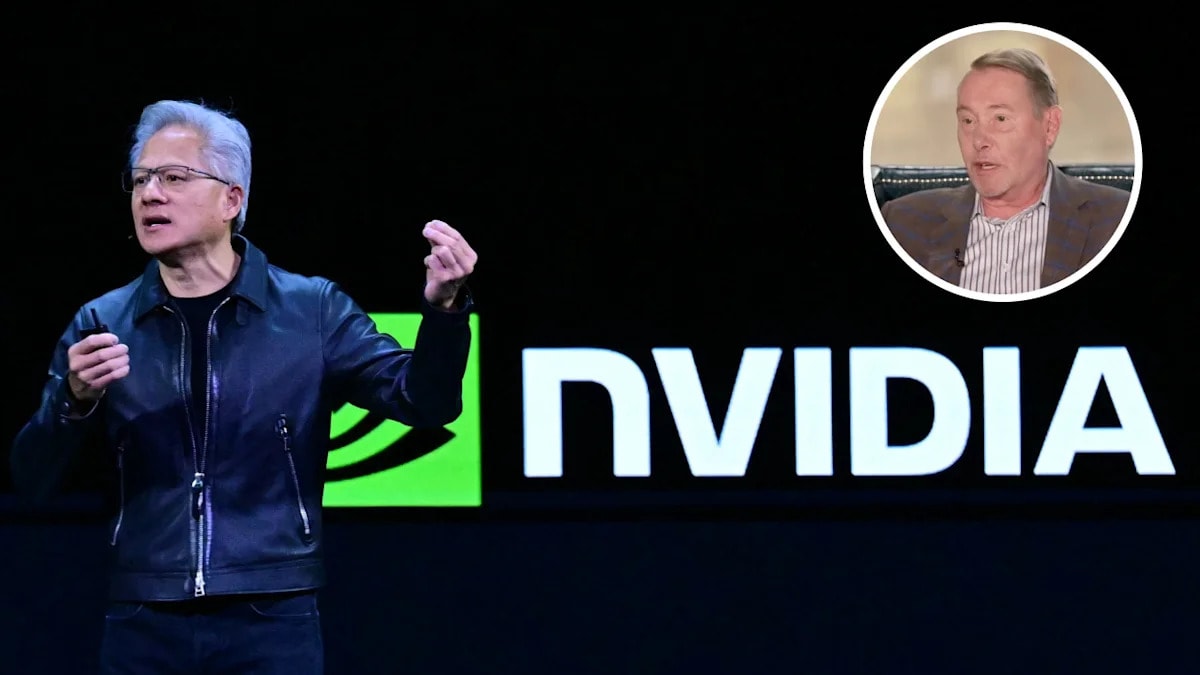
Billionaire investor Jeff Gundlach has criticized a $500 billion AI financing initiative, comparing it to volatile asset-backed securities. This skepticism mirrors broader market anxiety as AI-focused companies, including data center providers like WhiteFiber, accumulate significant debt.
The $500 Billion AI Gamble: A Financial Reckoning
In mid-August, the financial landscape was jolted by the announcement of a massive $500 billion initiative aimed at financing the burgeoning artificial intelligence sector. Spearheaded by chipmaking giant Nvidia in collaboration with major Wall Street investment banks, the effort is designed to fuel the infrastructure required for the AI boom. However, this capital injection has sparked significant debate regarding the long-term viability of the underlying assets being used to collateralize such massive funding.
The 'Bond King's' Skepticism
Jeff Gundlach, the founder and CEO of DoubleLine Capital, has emerged as a vocal critic of this arrangement. Taking to social media, Gundlach expressed deep skepticism, suggesting that the deal 'will not likely age well.' His primary concern lies in the nature of the collateral; he specifically questioned the logic of employing 'assets of unknown life' in a high-stakes financial arrangement. By characterizing these assets as inherently unstable, Gundlach has highlighted a significant disconnect between current market optimism and traditional risk assessment models.
The 'Banana' Analogy and Asset-Backed Security Risks
To illustrate his disdain, Gundlach drew a provocative comparison between the AI-backed debt and an asset-backed security (ABS) guaranteed by a 'warehouse full of bananas.' He argued that like perishable fruit, the high-tech equipment and AI models currently being funded are subject to rapid obsolescence. His assertion that these are merely 'newly engineered bananas of unknown life' serves as a stark warning about the potential for a speculative bubble, where the value of the underlying collateral may evaporate faster than the debt can be repaid.
Mounting Sector Debt and Market Anxiety
This skepticism is not occurring in a vacuum. Investor angst is currently reaching a boiling point as companies across the AI ecosystem pile up massive debt to sustain operations. The financial stress is evident in the performance of data center providers and cloud service firms. For instance, WhiteFiber (WYFI) saw its shares plummet by 25% following the announcement of a $270 million convertible debt offering, signaling that the market is becoming increasingly intolerant of high leverage in this sector.
The Broader Implications for Tech Infrastructure
The reliance on convertible debt and large-scale financing to build AI capacity poses a systemic risk. As companies like WhiteFiber struggle to justify the costs of data center expansion, the entire AI supply chain faces a reality check. If the demand for AI services does not materialize at a rate that justifies these massive capital expenditures, the debt loads could trigger a wider market correction. Investors are now forced to weigh the potential for revolutionary technology against the cold, hard reality of balance sheet sustainability.
Future Trends: A Shift Toward Caution
Looking ahead, the market is likely to demand greater transparency regarding how AI-related debt is structured and collateralized. The criticism leveled by figures like Gundlach suggests that the 'easy money' phase of the AI boom may be coming to a close. Future trends will likely favor companies that can demonstrate organic revenue growth rather than those relying solely on debt-fueled infrastructure expansion. The 'banana' analogy serves as a cautionary tale: unless the assets backing these deals have a proven, long-term shelf life, the financial foundations of the AI industry may prove to be far more fragile than proponents currently admit.