HAL hands over two LCA trainer plane to Air Force
Source Entity
India Latest News: Top National Headlines Today & Breaking News | The Hindu
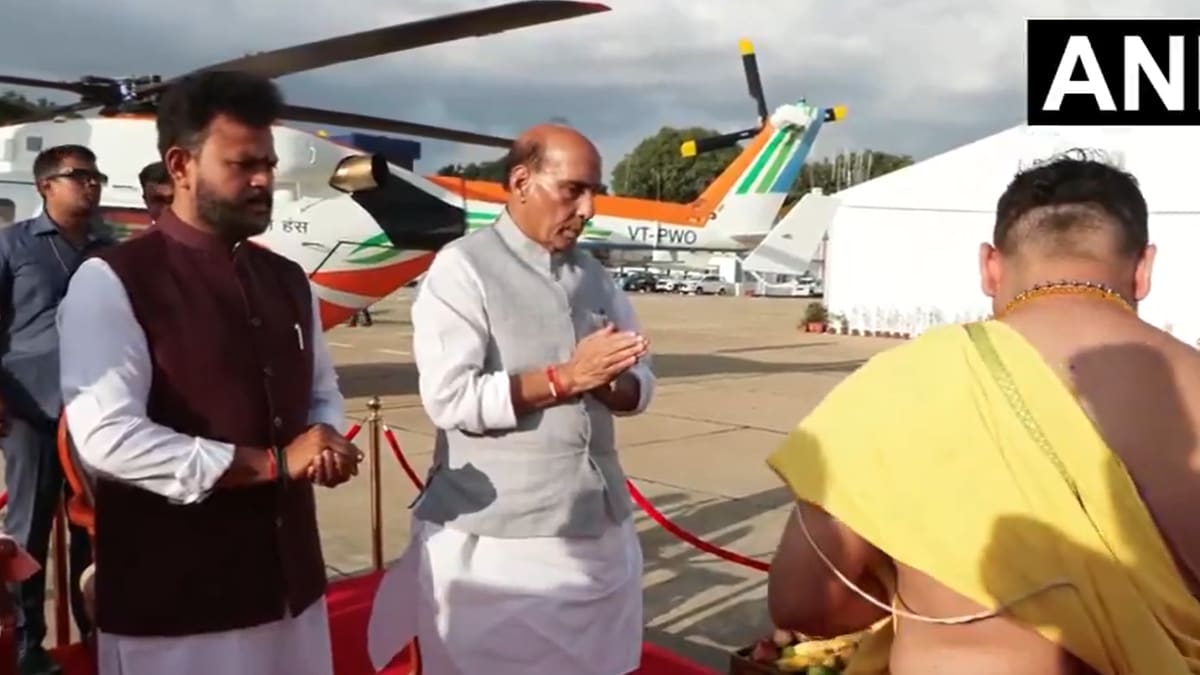
Defence Minister Rajnath Singh presided over the handover of indigenous aircraft and helicopters by HAL to the IAF and Pawan Hans. While celebrating milestones like the LCA trainer delivery, HAL is simultaneously addressing technical integration challenges with the Tejas Mk1A fleet.
Strengthening Indigenous Aerospace Capabilities
In a significant move toward the vision of an 'Atmanirbhar Bharat' (Self-Reliant India), Defence Minister Rajnath Singh recently oversaw a landmark event in Bengaluru. The ceremony marked the transfer of indigenously manufactured aviation hardware from Hindustan Aeronautics Limited (HAL) to the Indian Air Force (IAF) and Pawan Hans Limited (PHL). This event serves as a testament to India’s growing prowess in defense manufacturing and its strategic intent to reduce dependence on foreign military hardware.
The Milestone: LCA Trainer and Dhruv NG Induction
Central to this handover was the delivery of two Light Combat Aircraft (LCA) trainers to the IAF. This fulfills the remaining requirements of the Final Operational Clearance (FOC) contract initiated in 2010, which stipulated the delivery of 16 fighter aircraft and four twin-seaters. These trainers are vital for the IAF’s pilot training pipeline, providing a crucial bridge for trainee pilots to transition seamlessly into high-performance fighter cockpits. Furthermore, the induction of four Dhruv Next Generation (NG) helicopters into the civil aviation sector via Pawan Hans represents a successful expansion of military-grade technology into civilian utility.
Strategic Implications for Defense Autonomy
Minister Rajnath Singh characterized these developments as more than a routine ceremony; he framed them as a major milestone in India's technological self-confidence. By fostering an ecosystem where HAL can design, develop, and deliver complex platforms like the LCA and the Dhruv NG, India is insulating its national security apparatus from the volatility of global supply chains. This shift toward indigenous production is a core pillar of the broader 'Atmanirbhar Bharat' initiative, aimed at establishing India as a global aerospace manufacturing hub.
Navigating Technical Hurdles
Despite the celebratory atmosphere, the aerospace sector faces complex logistical and technical realities. HAL chairman and managing director Ravi K recently disclosed that while 27 airframes for the advanced Tejas Mk1A jet are ready, deliveries are currently stalled. The delay stems from integration challenges regarding the AESA radar and missile systems, alongside the ongoing receipt of engines from GE Aerospace. This highlights the intricate nature of modern combat aircraft production, where the airframe is only one component of a highly integrated digital and mechanical system.
Future Outlook and Conclusion
Looking ahead, the successful resolution of these integration issues for the Tejas Mk1A will be critical for the IAF’s modernization schedule. As HAL works through testing cycles to ensure radar and missile compatibility, the focus remains on scaling production to meet the total order of 180 units. The synergy between the government’s policy push and HAL’s technical execution suggests that while the path to full self-reliance involves inevitable engineering complexities, India’s trajectory in the aerospace domain remains firmly committed to indigenous advancement.
Multiple Citing Sources
Verification Required?