Mallikarjun Kharge ‘shuddhikaran’ row: Month later, Uttarakhand police file FIR
Source Entity
Vidheesha Kuntamalla, Asad Rehman
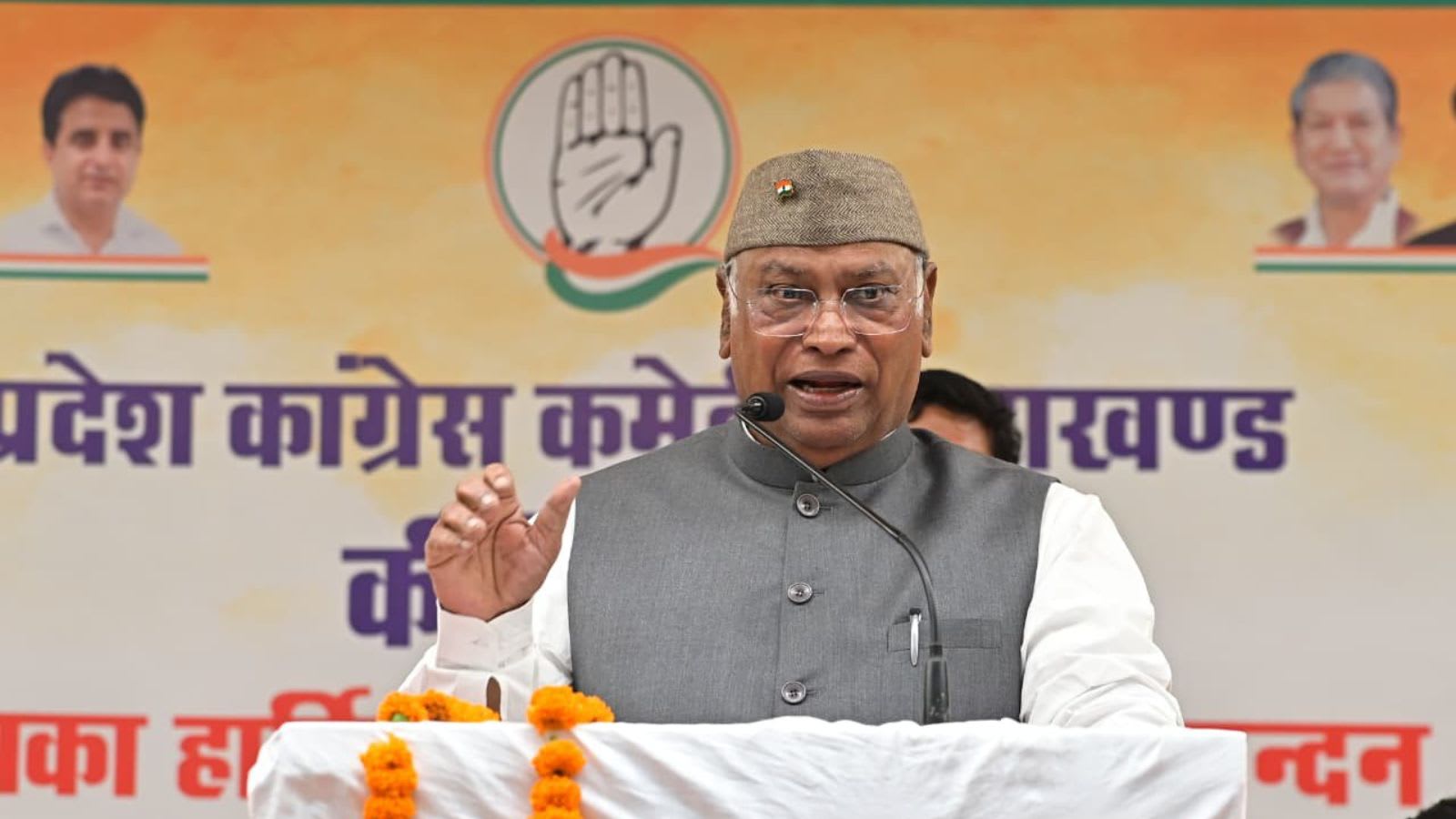
Uttarakhand police have registered an FIR against unknown individuals following the controversial 'purification' ritual performed at a Haldwani venue after a Congress rally. The move comes after widespread public complaints and persistent pressure from the Congress party.
The Haldwani Purification Controversy: An Overview
In a significant legal development, the Haldwani police in Uttarakhand have officially registered a First Information Report (FIR) against 'unknown persons' following the controversial 'shuddhikaran' (purification) ritual performed at the Ramlila Maidan. This event took place in the aftermath of a political rally addressed by Congress president Mallikarjun Kharge. The incident, which occurred on August 11, involved members of the Shri Ram Sena Dharmarth Seva Nyas Sangathan conducting a hawan ritual, purportedly to 'purify' the site, an act that triggered immediate political and social backlash.
The Catalyst for Legal Action
The decision to file an FIR was not an isolated police initiative but rather the culmination of substantial public and political pressure. The Nainital police confirmed they had received approximately 80 individual complaints and petitions from various organizations and political factions across the state. Among these, 19 complaints originated specifically from the Nainital district. The case was formally initiated at the Haldwani Kotwali following a complaint lodged by Anju, a local lawyer and social activist, who was the first to seek legal recourse regarding the incident.
Political Implications and Social Tensions
The act of performing a purification ritual at a public venue previously occupied by a national political leader carries heavy symbolic weight. By framing the presence of a political figure as a source of 'impurity,' the participants of the ritual signaled a deep ideological divide. The Congress party, viewing this as a targeted act of political intolerance, repeatedly demanded that law enforcement take punitive action. The viral nature of the video depicting the ritual amplified the controversy, turning a local incident into a broader debate regarding public decorum and political discourse in Uttarakhand.
Law Enforcement and Procedural Challenges
Nainital Senior Superintendent of Police (SSP) Manjunath TC highlighted the complexity of the investigation, noting that the sheer volume of petitions necessitated a formal inquiry. While the FIR currently names 'unknown persons,' the presence of video evidence showing participants performing the hawan provides investigators with a clear starting point. The challenge for the police will be to navigate the fine line between protected expressions of religious belief and actions that may incite communal tension or disrupt public order.
Broader Context of Political Rituals
This incident underscores a growing trend in Indian politics where physical spaces are increasingly subjected to symbolic 'cleansing' or ritualistic reclamation following the visits of political opponents. Such actions often serve to mobilize base support but carry the risk of deepening social fragmentation. The FIR serves as a cooling mechanism, shifting the conflict from the streets to the judicial system, thereby preventing immediate escalation in the Haldwani region.
Future Trends and Conclusion
Looking ahead, the outcome of this investigation will likely set a precedent for how public grounds are managed in the context of political rallies. If the legal process results in charges against the participants, it may deter future groups from using similar 'purification' tactics to protest political figures. Conversely, if the case languishes, it may embolden partisan actors to use ritualistic public shaming as a standard political tool. As the investigation progresses, the focus remains on whether the rule of law can effectively mediate these highly charged symbolic disputes.
Multiple Citing Sources