From Charlemagne to the Kitchen Boy: Reading the Hamburg Rathaus
Source Entity
Hacker News
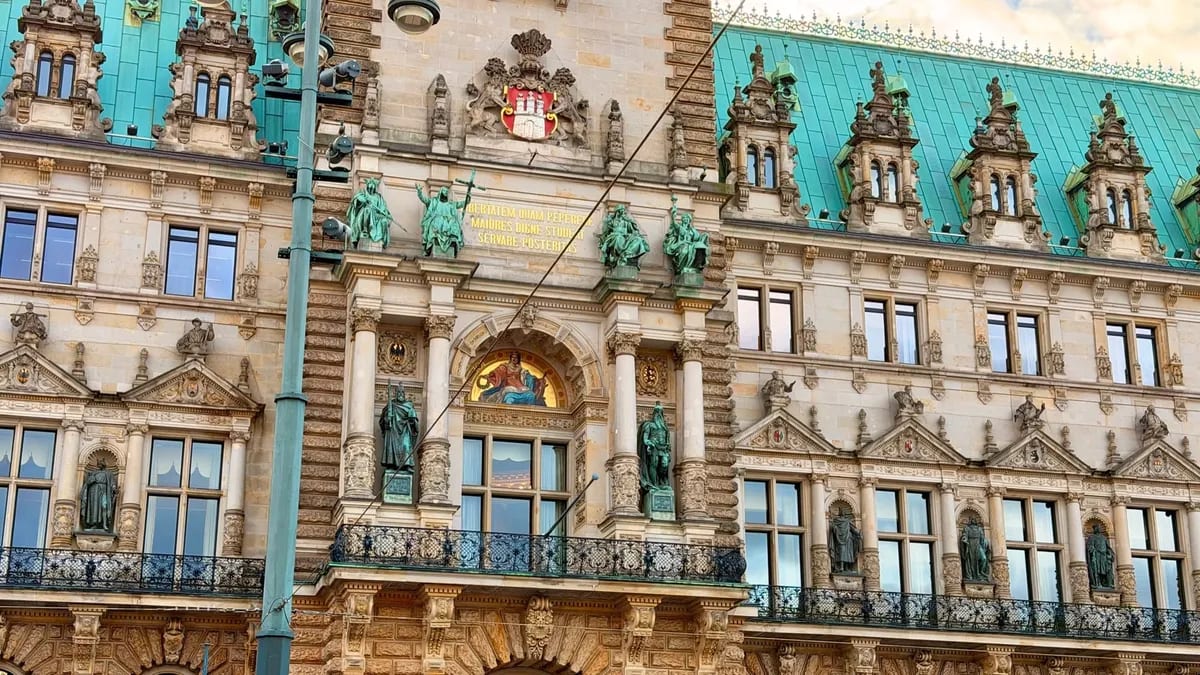
The Hamburg Rathaus serves as an architectural landmark reflecting the city's history through intricate details like its oxidized copper roof. This analysis explores the intersection of urban history, material science, and the personal discovery of Hamburg's iconic aesthetic.
The Architectural Narrative of the Hamburg Rathaus
The Hamburg Rathaus stands as a profound testament to the city’s civic history, serving not merely as an administrative center but as a repository of historical narratives etched into its very facade. For many, including the author, the initial encounter with this structure is defined by its overwhelming scale and commanding tower. However, a deeper engagement with the building reveals that its true significance lies in the accumulation of small, often overlooked details that mirror the broader evolution of Hamburg itself.
The Science of Aesthetics: The Copper Patina
Central to the Rathaus’s visual identity is its distinctive turquoise roof, a feature that invites curiosity regarding its origins. The transformation of this rooftop from a metallic sheen to a vibrant green is a direct consequence of atmospheric chemistry. As copper is exposed to oxygen, water, and carbon dioxide over decades, it undergoes a complex chemical process known as patination. This result is not a stylistic choice by the original architects, but a chronological record of the building's interaction with the Hamburg climate.
Historical Context and Urban Identity
This phenomenon of the 'green roof' is not isolated to the Rathaus; it is a recurring motif across the Hamburg skyline. The ubiquity of this patina suggests a shared material history, where the city’s architecture is unified by the chemical reactions of the materials chosen by builders in previous centuries. By examining the Rathaus, one gains insight into the architectural standards of the era and how material durability has allowed these structures to maintain their aesthetic integrity over generations.
The Personal Dimension of Civic Discovery
For the visitor or the intern, the Rathaus serves as an entry point into the city's cultural landscape. The author's journey, beginning with a simple photograph in 2017, highlights how modern digital documentation allows for a reflective process of discovery. The act of photographing the structure serves as a catalyst for deeper inquiry, bridging the gap between a superficial tourist perspective and a nuanced understanding of urban environmental history.
Broader Implications and Future Trends
Understanding the Rathaus through its materials allows us to appreciate the intersection of art and science in urban planning. As modern cities look toward sustainable architecture, the historical precedent set by buildings like the Rathaus provides valuable lessons on material longevity and the aesthetic value of aging structures. The 'living' nature of the copper roof reminds us that urban environments are constantly evolving entities, shaped by both human intent and natural chemical processes.
Conclusion
Ultimately, the Hamburg Rathaus is more than a landmark; it is a complex chronicle of time. From the grand ambition of its builders to the slow, steady reaction of copper to the elements, the building invites observers to look closer. By focusing on the 'kitchen boy' details alongside the grand historical figures, we achieve a more holistic understanding of the city's identity, proving that history is often hidden in plain sight, waiting for the right light and the right question to reveal its secrets.