Hazardous air quality hits FIFA World Cup 2026 final as smog engulfs New York-New Jersey
Source Entity
The Indian Express
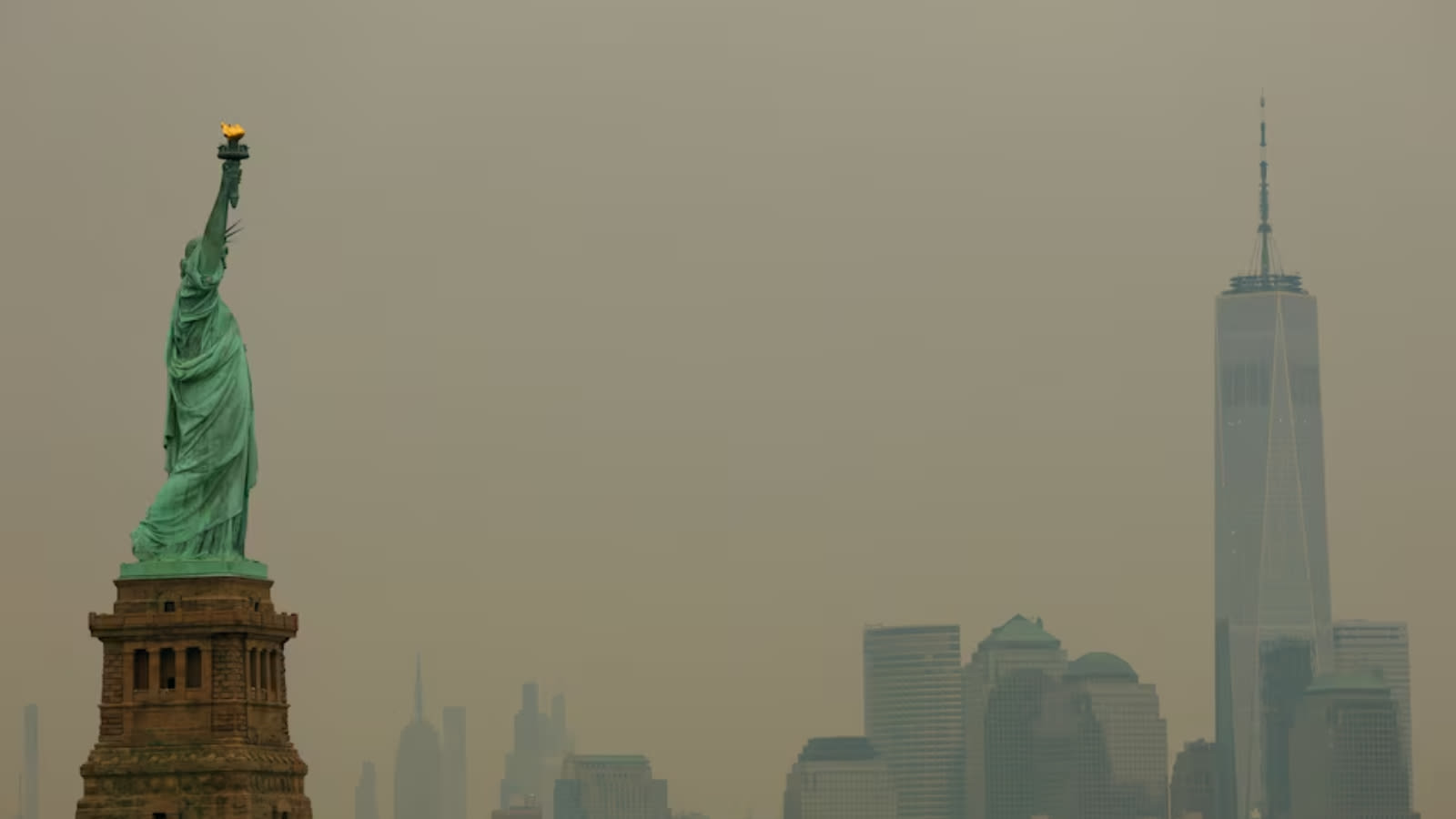
Hazardous smoke from Canadian wildfires has blanketed the New York-New Jersey region, raising health concerns ahead of the FIFA World Cup 2026 final. Despite the poor air quality, sources indicate the final match at the stadium remains unaffected and on schedule.
Environmental Crisis Meets Global Sport
The 2026 FIFA World Cup, a tournament defined by its expansive reach and logistical complexity, is currently facing an unexpected adversary: atmospheric pollution. As the world turns its attention to the final match, the iconic skylines of New York City and Jersey City have been obscured by a dense layer of wildfire smoke. This haze, visible from the New York Harbor, has transformed the backdrop of the Statue of Liberty and the One World Trade Center, signaling a severe environmental disruption that coincides with the sport’s most prestigious event.
The Source of the Smog
The root of this crisis lies far from the stadiums, stemming from an unprecedented series of wildfires currently raging across Canada. These fires have sent plumes of particulate matter drifting south, blanketing regions from the American Midwest to the Northeast. This phenomenon highlights the increasing interconnectedness of regional climate events and major international gatherings, proving that even the most meticulously planned sporting events are susceptible to the volatile nature of modern climate patterns.
Public Health and Regional Alerts
Local authorities in New York and New Jersey have acted swiftly, issuing hazardous air quality alerts to protect the thousands of fans and local residents currently congregating for the festivities. The health risks associated with prolonged exposure to wildfire smoke—particularly for the elderly, children, and those with respiratory vulnerabilities—are significant. The challenge for organizers has been to balance the excitement of the tournament with the imperative of public safety as the smoke density fluctuates across the metropolitan area.
Operational Resilience and Match Status
Despite the visible environmental distress and the subsequent health warnings, official sources have provided clarity regarding the tournament's immediate future. Reports indicate that the FIFA World Cup final is not under any threat of cancellation or postponement. Stakeholders, including those cited by ESPN, maintain that the match will proceed as scheduled, suggesting that event organizers have implemented sufficient mitigation strategies or that the current conditions, while hazardous, do not compromise the integrity of the venue operations.
Future Implications for Global Events
This incident serves as a stark reminder of the challenges that climate change poses to the future of global sports. As wildfire seasons become more intense and unpredictable, event organizers must begin to integrate robust air quality management plans into their standard operational protocols. The 2026 final will likely be studied as a case study in how to navigate the intersection of environmental crisis and high-stakes international competition, underscoring the need for greater preparedness in an era of environmental instability.
Multiple Citing Sources