High-speed video reveals how honey bee stingers pump venom
Source Entity
Jennifer Ouellette
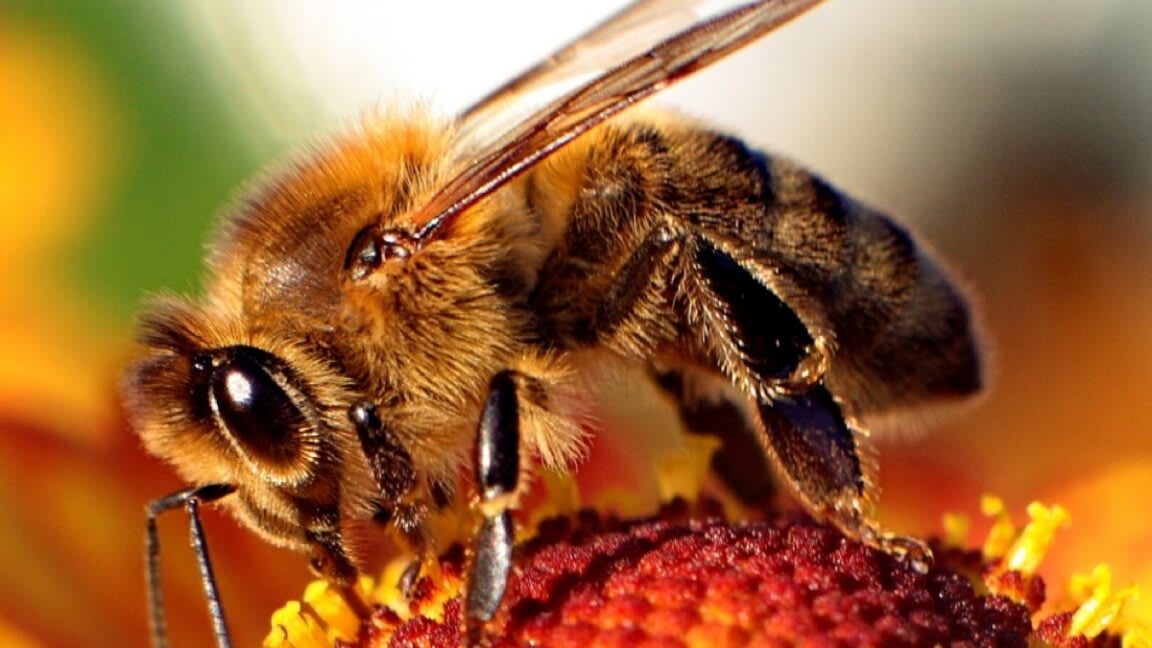
Researchers have discovered that honey bee stingers utilize a sophisticated double-piston valve mechanism to continue injecting venom even after the bee has departed. This study highlights the evolutionary precision of insect defense systems and their unique biological engineering.
The Mechanical Marvel of the Honey Bee Stinger
Recent research published in the Proceedings of the National Academy of Sciences has unveiled the sophisticated mechanical engineering behind the honey bee's defensive apparatus. While it has long been observed that honey bees leave their stingers embedded in the skin of their targets, the precise physical mechanism that allows for sustained venom delivery post-sting remained poorly understood. This study provides a definitive look at how these insects maximize the impact of their defense even after the bee has flown away.
The Double-Piston Mechanism
At the heart of this process is a unique geometric configuration within the stinger. Unlike the muscular contractions seen in spiders—which squeeze venom glands to eject fluid through hollow fangs—the honey bee utilizes a dual-valve system. According to co-author Ramirez-Esquivel, the valves function as "collapsible pistons." This mechanical innovation allows the stinger to operate independently of the bee's main body, effectively acting as an autonomous delivery system for the venom stored in the attached gland.
Comparative Evolutionary Strategies
To understand the significance of this mechanism, one must look at the broader evolutionary context of venom delivery in the Hymenoptera order. While spiders rely on direct muscular pressure, bees, wasps, and ants have evolved specialized stingers designed for piercing and pumping. The honey bee’s adaptation is particularly aggressive, as the barbed nature of the stinger ensures it remains anchored, while the piston-like valves ensure the continued delivery of the toxin. This highlights a clear evolutionary trend toward maximizing defensive efficacy through structural complexity rather than just raw muscular force.
Biological Engineering and Future Implications
This discovery sheds light on the incredible precision of biological micro-engineering. The ability of the stinger to function as an independent, automated pump suggests a high degree of evolutionary refinement. By decoupling the act of stinging from the act of pumping, the honey bee ensures that the victim receives a full dose of the toxin, regardless of whether the bee survives the initial encounter. This strategy is highly effective in defending the hive from vertebrate predators.
Conclusion
The findings by Ramirez-Esquivel and colleagues provide a vital missing piece in our understanding of insect physiology. By identifying the stinger’s valves as collapsible pistons, scientists have clarified how these insects maintain their chemical defense systems post-mortem or post-detachment. This research not only deepens our biological knowledge of honey bees but also serves as a fascinating example of how complex mechanical problems in nature are solved through evolutionary geometry.