Houthis begin revenge: Explosions rock Saudi Arabia hours after MBS bombs Sanaa airport
Source Entity
Latest News: Today's Latest News Headlines from India & World | Hindustan Times | Hindustan Times
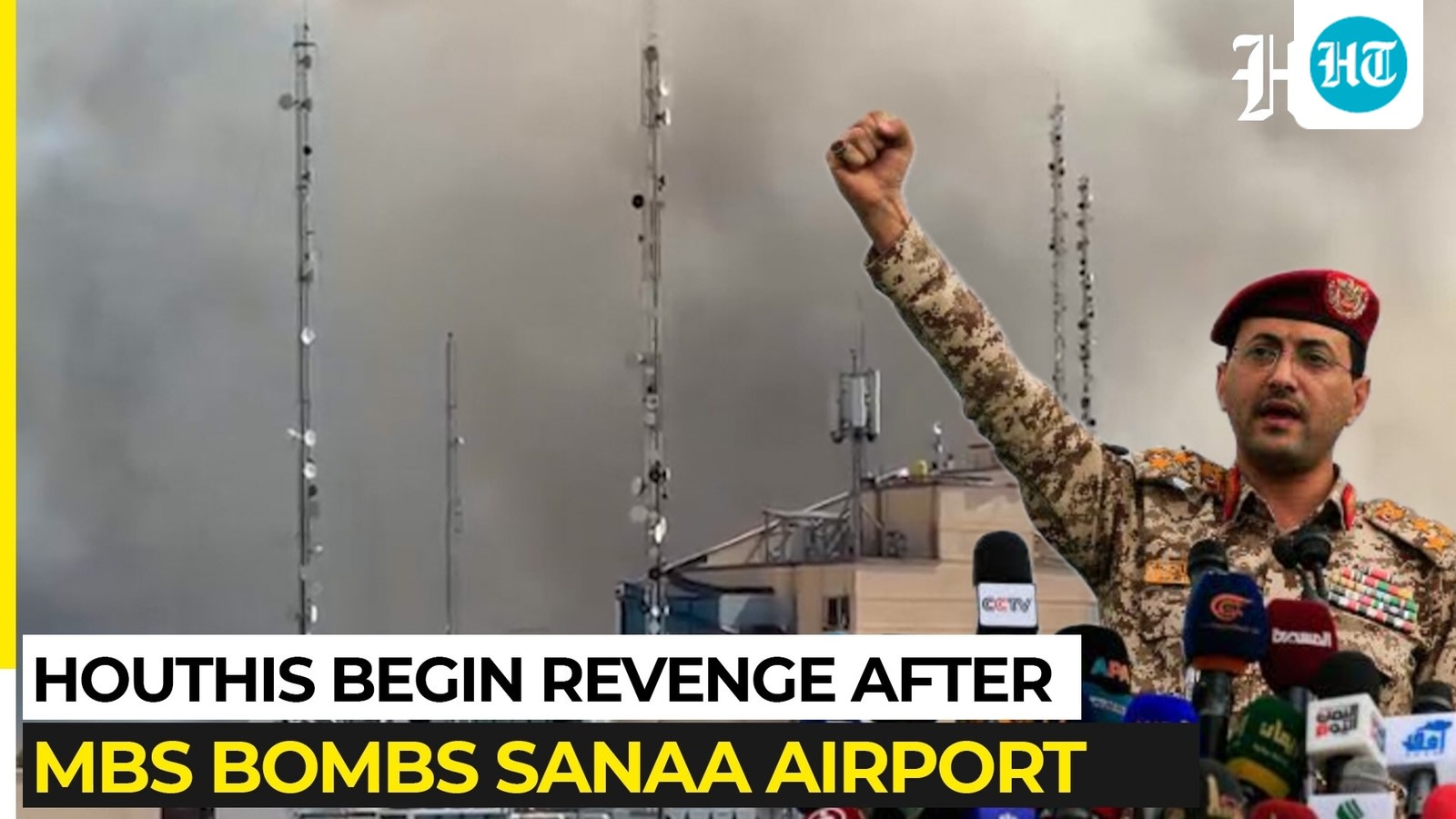
Fresh tensions are gripping the Arabian Peninsula after reports claimed missiles were launched toward Saudi Arabia's Abha Airport following the alleged strike on Sanaa International Airport. The Houthis had earlier accused Saudi Arabia of targeting the runway in Sanaa, while Yemen's internationally recognised government offered a different account of the incident. Reports now suggest multiple missiles were fired toward southern Saudi Arabia, though claims and counterclaims continue to emerge. Could this mark a dangerous new phase in regional escalation after the Sanaa airport controversy? Watch the full report for the latest developments.
Escalation in the Arabian Peninsula: The Sanaa-Abha Cycle
The recent reports of missile strikes targeting Saudi Arabia's Abha Airport, following an alleged attack on Sanaa International Airport, signal a precarious return to high-intensity hostilities between the Houthi rebels and the Saudi-led coalition. This sequence of events—a strike on critical Yemeni infrastructure followed by a rapid retaliatory strike on Saudi soil—highlights the fragile state of the regional ceasefire and the persistent volatility of the conflict in Yemen. The speed of the Houthi response suggests a strategic intent to demonstrate that any perceived aggression against their controlled territories will be met with immediate and asymmetric retaliation.
The Strategic Significance of Sanaa International Airport
At the heart of this latest flare-up is the controversy surrounding Sanaa International Airport. For the Houthis, who control the Yemeni capital, the airport is more than just a transport hub; it is a symbol of sovereignty and a vital lifeline for humanitarian aid and limited commercial travel. A strike on the runway, as alleged by Houthi sources, is not merely a tactical military move but a strategic blow intended to isolate the Houthi-led administration. The conflicting accounts provided by Yemen's internationally recognized government suggest a complex information war, where each side attempts to frame the incident to justify further military action or to garner international sympathy.
Analyzing the Retaliation: Why Abha Airport?
The choice of Abha Airport as a target for the Houthi missiles is deeply calculated. Located in the southwestern highlands of Saudi Arabia, Abha is geographically proximate to the Yemeni border, making it a recurring target for Houthi drones and ballistic missiles. By striking a high-profile military and civilian facility in the south, the Houthis aim to project power deep into Saudi territory, creating a psychological burden on the Saudi populace and government. This 'tit-for-tat' dynamic underscores a pattern of asymmetric warfare where the Houthis utilize low-cost, high-impact missile technology to challenge the superior conventional military might of the Saudi-led coalition.
Geopolitical Context and the Proxy Dimension
To understand this escalation, one must look at the broader geopolitical rivalry between Saudi Arabia and Iran, with Yemen serving as a primary theater for their proxy competition. The Houthis have long received varying levels of support from Tehran, while Riyadh supports the internationally recognized government of Yemen. This conflict is not merely a domestic Yemeni struggle but a struggle for regional hegemony. The recent explosions in Saudi Arabia are a reminder that despite diplomatic efforts to normalize relations between Riyadh and Tehran, the ground-level conflicts fueled by these powers remain highly combustible and prone to sudden spikes in violence.
Implications for Peace Processes and Regional Stability
This cycle of violence poses a severe threat to the fragile peace negotiations mediated by the United Nations. Every missile launch and every airstrike erodes the trust necessary to establish a permanent ceasefire and a political transition in Yemen. The risk is that these isolated incidents could snowball into a full-scale resumption of the war, further exacerbating one of the world's worst humanitarian crises. Furthermore, the instability in the Arabian Peninsula threatens global energy markets and maritime security in the Red Sea, making this local escalation a matter of international concern.
Future Trends: The Era of Asymmetric Escalation
Looking forward, it is likely that the conflict will continue to be characterized by these sudden, sharp bursts of asymmetric warfare. The Houthis have proven their ability to penetrate Saudi air defenses, and they will likely continue to use such capabilities as leverage in future negotiations. We can expect a trend where 'symbolic' targets—like airports and oil facilities—are targeted to force concessions. Unless a comprehensive political settlement is reached that addresses the core grievances of all Yemeni factions, the region will remain trapped in this dangerous loop of strike and revenge.
Summary
In conclusion, the exchange of strikes between Sanaa and Abha is a stark reminder of the unresolved tensions in Yemen. What began as a disputed strike on a runway has quickly evolved into a regional security threat, illustrating how quickly tactical incidents can escalate into strategic crises in the Arabian Peninsula.
Verification Required?