HUMTA promises space in Hyderabad for pedestrians, other road users by 2050; identifies 120 locations for skywalks, FoBs and other infra
Source Entity
India Latest News: Top National Headlines Today & Breaking News | The Hindu
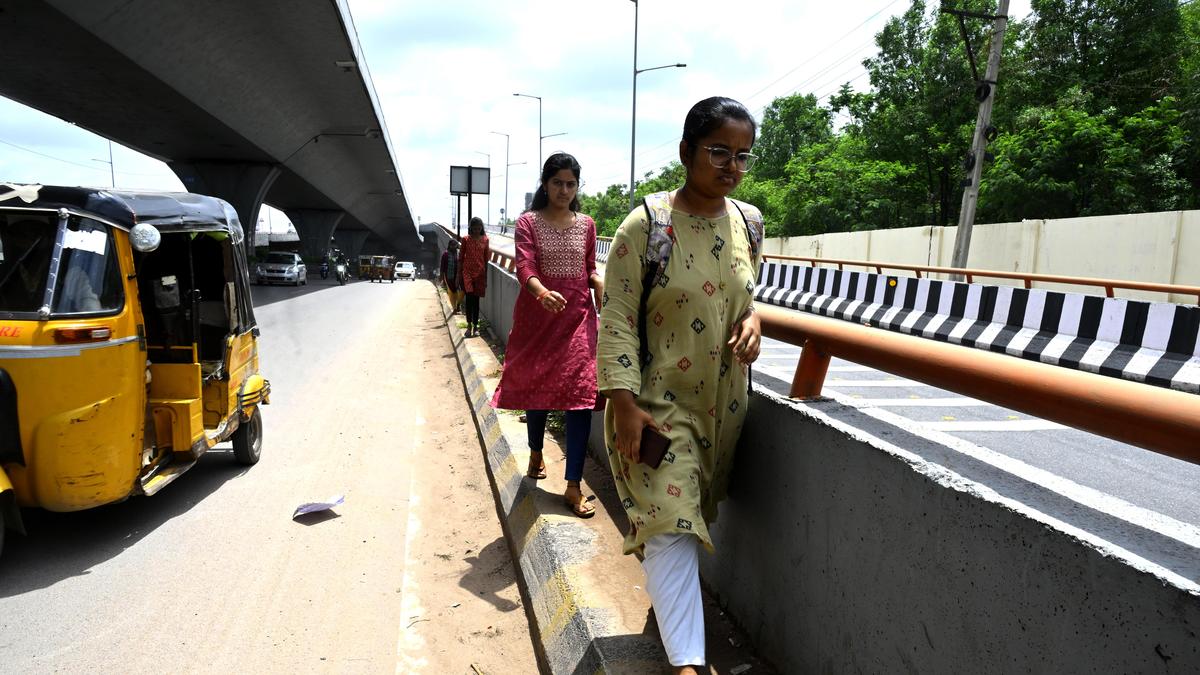
The Hyderabad Unified Metropolitan Transport Authority (HUMTA) has unveiled a long-term plan to make Hyderabad pedestrian-friendly by 2050. The strategy includes the construction of 120 infrastructure projects, including skywalks and foot-over bridges, to improve multi-modal transit connectivity.
Transforming Hyderabad: The Path to a Pedestrian-Centric Metropolis by 2050
The Hyderabad Unified Metropolitan Transport Authority (HUMTA), under the guidance of Managing Director B. Jeevan Babu, has formally unveiled a visionary roadmap aimed at transforming Hyderabad into a pedestrian-friendly city by the year 2050. Announced during the prestigious four-day Indian Roads Congress, this initiative marks a significant shift in urban planning priorities, moving away from purely vehicle-centric development toward a model that prioritizes the safety and mobility of the average citizen.
Mapping the Future: The 120-Location Initiative
At the heart of this long-term strategy is the identification of 120 strategic locations earmarked for the deployment of vital pedestrian infrastructure, including skywalks and Foot over Bridges (FoBs). By systematically addressing these high-traffic nodes, HUMTA aims to mitigate the dangers currently faced by commuters and pedestrians. A flagship example of this commitment is the planned 1-km skywalk designed to seamlessly connect the Secunderabad Railway Station with the local Metro station and three major bus terminals, effectively creating a multi-modal hub that streamlines transit for thousands of daily passengers.
The Comprehensive Mobility Plan (CMP)
The backbone of this transformation is the Comprehensive Mobility Plan (CMP) for 2050, which is currently nearing its final stages of development. Unlike traditional urban planning, which often focuses on road expansion, this plan takes a holistic look at the urban fabric. It encompasses a rigorous assessment of pedestrian infrastructure gaps, demand forecasting, and the integration of walking access to critical public transport systems such as the Hyderabad Metro, MMTS, and bus terminals. By linking land use with activity centers, the authorities hope to create a cohesive environment where transit is not just possible, but convenient.
Addressing Safety and Connectivity
Beyond mere convenience, the initiative places a heavy emphasis on road safety and the reduction of pedestrian-related accidents. By analyzing historical crash data and identifying high-risk zones, the CMP aims to implement targeted infrastructure improvements that protect vulnerable road users. This data-driven approach ensures that investments are prioritized where they are needed most, creating a safer, more predictable environment for everyone navigating the city’s complex streets.
Looking Ahead: Implementation and Impact
With the final report expected to be released within one or two months, the city stands at a critical juncture. The success of this 2050 vision will rely heavily on sustained investment, political will, and the successful execution of the identified infrastructure projects. If implemented as planned, the project could serve as a model for other rapidly urbanizing Indian cities, demonstrating that long-term, human-centric planning is the key to sustainable urban growth in the 21st century.
Verification Required?