We build AI tools to detect oral and breast cancer: IISc Professor Phaneendra
Source Entity
Venkatesh Kannaiah
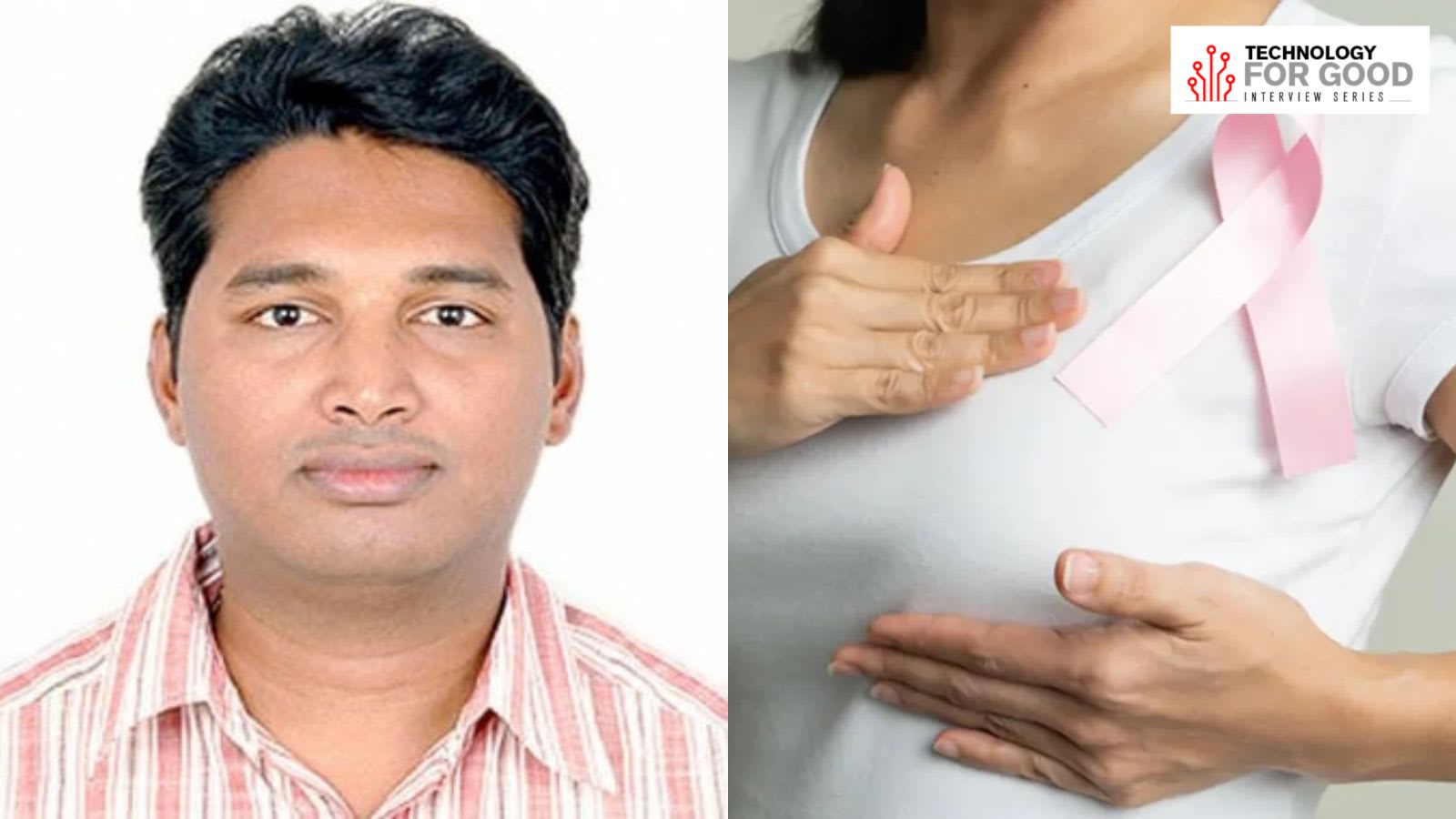
IISc Professor Phaneendra K Yalavarthy is spearheading the development of AI-driven diagnostic tools for oral and breast cancer. Through the TANUH initiative, these technologies aim to enhance early detection of non-communicable diseases across India.
Advancing Healthcare Diagnostics through Artificial Intelligence
In a significant stride for medical technology in India, Professor Phaneendra K Yalavarthy of the Indian Institute of Science (IISc), Bengaluru, is leading critical efforts to integrate Artificial Intelligence into the early detection of non-communicable diseases. As the Chief Project Manager of Translational AI for Networked Universal Healthcare (TANUH), a specialized Centre of Excellence, Prof. Yalavarthy is focusing on developing sophisticated AI tools specifically designed to identify oral and breast cancer. This initiative represents a vital intersection of computational science and oncology, aiming to address some of the most prevalent health challenges through technological intervention.
The Role of TANUH in Universal Healthcare
TANUH operates as a non-profit entity with a clear mandate: the development and deployment of AI-driven diagnostics and decision-support systems. By focusing on non-communicable diseases, the center seeks to bridge the gap in healthcare accessibility across the Indian landscape. The goal is to create scalable, reliable, and efficient tools that can assist medical professionals in making faster, more accurate diagnoses, potentially shifting the paradigm from reactive treatment to proactive early detection.
Academic Foundation and Expertise
The leadership behind this project is rooted in deep academic rigor. Prof. Yalavarthy, a faculty member in the Department of Computational and Data Sciences (CDS) at IISc, brings a robust educational background to his research. Having earned a postgraduate degree in Physics from Sri Sathya Sai University, an M.Sc. in Engineering from IISc, and a PhD in Engineering Sciences from Dartmouth College, his interdisciplinary expertise spans medical imaging, image processing, and Cyber-Physical Systems. This combination of theoretical knowledge and practical engineering is essential for the complex task of training AI models on medical datasets.
Addressing the Diagnostic Gap
The focus on oral and breast cancer is particularly timely. Early detection remains the most effective strategy for improving survival rates in both cancer types. However, diagnostic facilities are often unevenly distributed, particularly in rural or resource-limited settings. By leveraging AI-driven decision-support tools, TANUH aims to decentralize high-quality diagnostic capabilities, ensuring that advanced screening technology is not limited to major metropolitan hospitals but is accessible to a wider demographic across the country.
Future Trends and Impact
As TANUH continues its research and development, the broader implications for the Indian healthcare system are profound. If successfully deployed, these diagnostic tools could significantly reduce the burden on oncology departments by filtering and prioritizing cases through AI analysis. Furthermore, this project serves as a model for how academic institutions can translate high-level computational research into tangible, life-saving healthcare solutions, setting a precedent for future technological advancements in medicine.
Conclusion
In summary, the work being conducted by Prof. Phaneendra K Yalavarthy and the TANUH team at IISc highlights the transformative potential of AI in clinical settings. By focusing on early cancer detection, this initiative is addressing a critical public health necessity. The integration of advanced computational methods into standard diagnostic workflows marks a promising evolution in how India approaches the management and treatment of non-communicable diseases.