Student suicide case: Security deployed at IIT-B campus; faculty march in support of prof
Source Entity
PRIYANKA JAISWAL
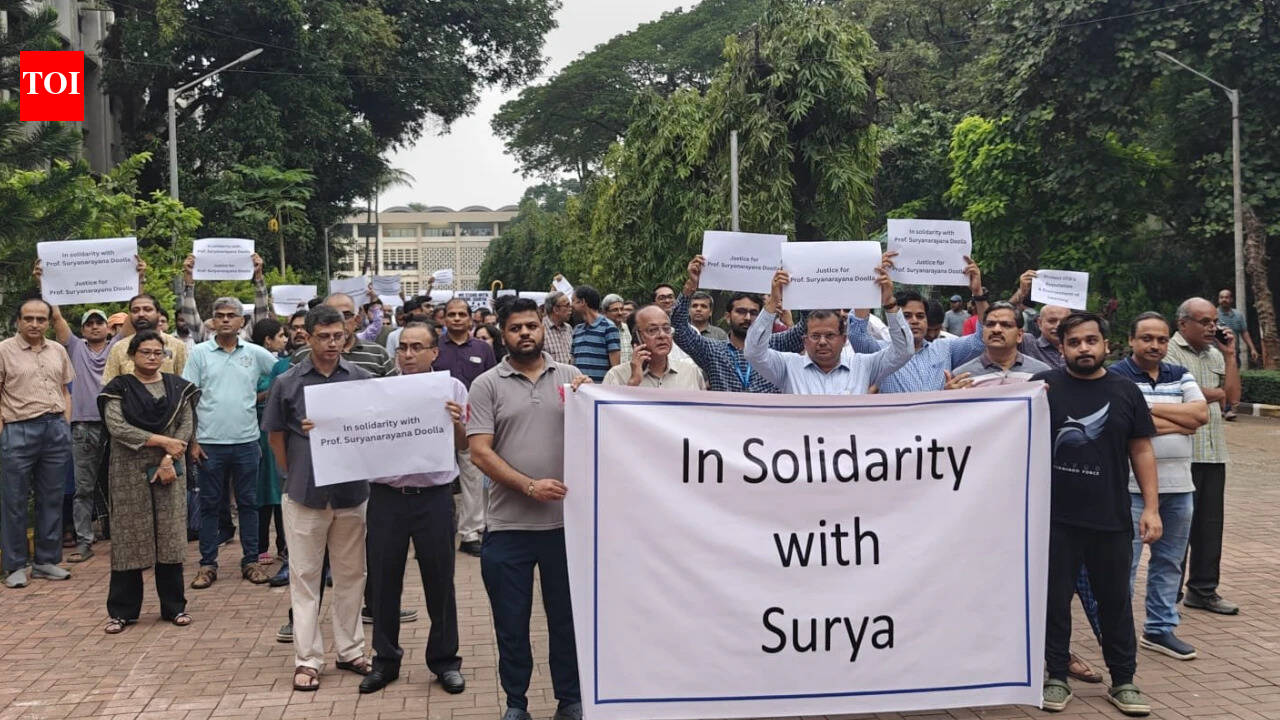
A second-year IIT-Bombay student died by suicide after being caught using AI to answer exam questions. The incident has sparked student protests demanding institutional accountability and better mental health support following multiple recent tragedies on campus.
The Tragic Intersection of Academic Pressure and Mental Health at IIT-Bombay
On the evening of September 18, 2026, a second-year student from the Department of Energy Science and Engineering at the Indian Institute of Technology (IIT) Bombay died by suicide. This tragic event occurred shortly after the student was apprehended for using a mobile device to upload exam questions to an AI platform in search of answers. While the institute has clarified that no formal disciplinary action was initiated against the student, the incident has ignited significant unrest among the student body, highlighting a volatile atmosphere within one of India's most prestigious academic institutions.
Institutional Response and Clarification
Following the incident, IIT-Bombay issued a formal statement addressing the circumstances surrounding the student's actions. The administration emphasized that the student had been caught using a mobile phone during an examination to seek AI-generated assistance. Crucially, the institute maintained that the instructor had engaged in a discussion with the student, and no punitive measures were taken. This clarification appears intended to mitigate allegations of immediate institutional pressure, yet it has failed to quell the burgeoning protests on the Powai campus.
The Growing Crisis of Student Welfare
This tragedy is not an isolated event but rather the third suicide reported at the IIT-Bombay campus within a seven-month period. The recurrence of such incidents has led students to gather in large numbers, demanding a comprehensive probe into the institutional culture. Protesters argue that the focus should not merely be on the mechanics of the exam-hall incident, but on the systemic mental health challenges that students face, which may drive them to resort to desperate measures under academic scrutiny.
The Role of AI in Academic Integrity
The incident brings to light the complex role of generative AI in high-stakes academic environments. As students increasingly leverage technology to bypass traditional testing methods, institutions find themselves grappling with both the integrity of examinations and the psychological state of those who feel compelled to cheat. The student’s decision to use an AI platform suggests a high level of anxiety regarding academic performance, a factor that experts suggest must be analyzed in the context of the intense competitive environment prevalent at premier technology institutes.
Broader Implications and Future Trends
Looking forward, the events at IIT-Bombay raise urgent questions about the future of student support systems. The demand for accountability suggests that the student community is no longer satisfied with administrative reassurances alone. Moving forward, academic institutions will likely face mounting pressure to integrate robust mental health interventions that are proactive rather than reactive. If these institutions fail to address the underlying stressors associated with academic rigor, the cycle of tragedy may continue to persist, necessitating a fundamental shift in how student success and failure are managed.
Multiple Citing Sources