Knowledge Nugget | How will heat stress affect children and elderly?
Source Entity
Raveena Baneta
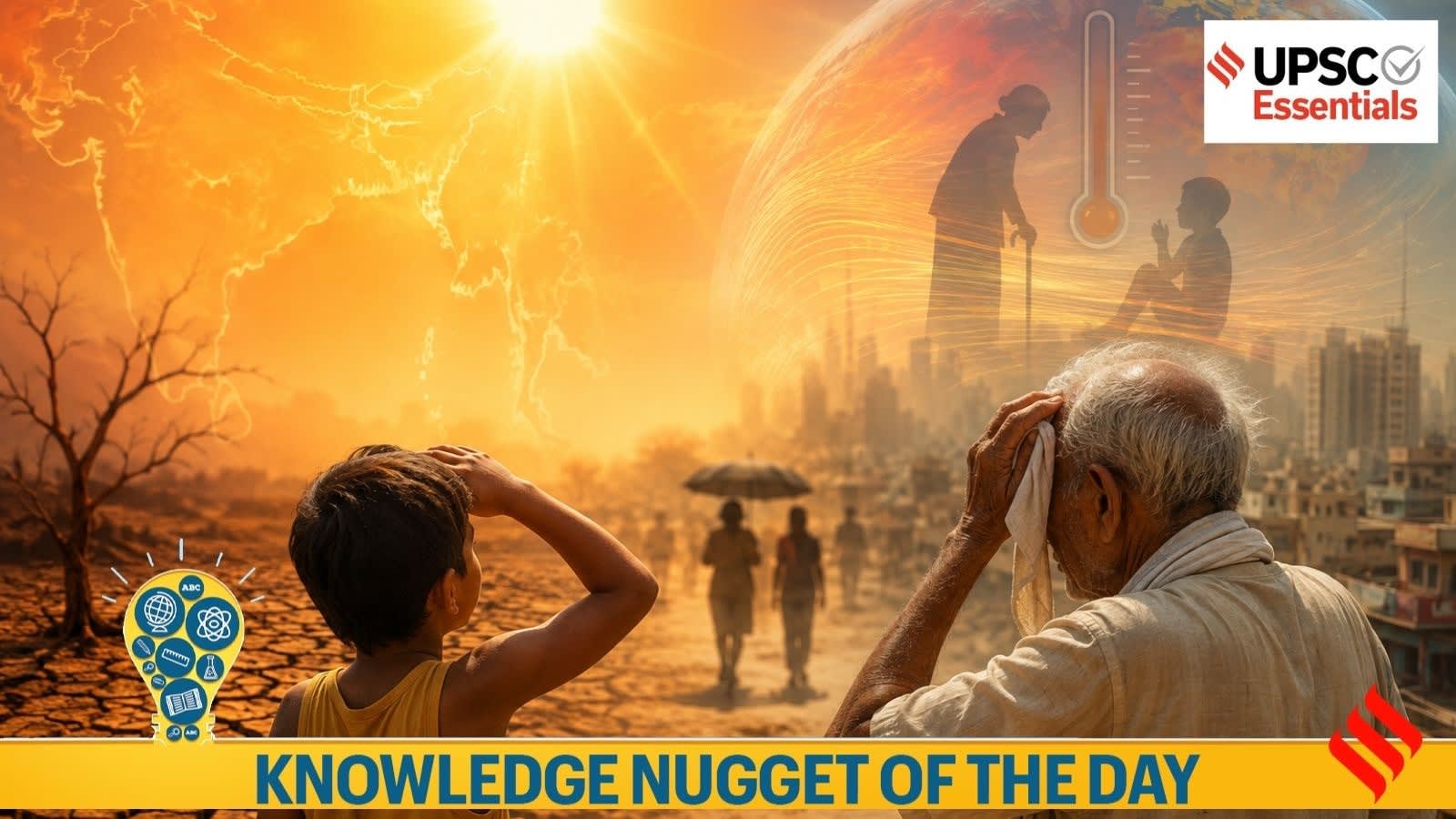
Recent studies reveal that children and the elderly in South Asia face extreme health risks from climate-driven heat stress. Experts urge a shift toward age-specific adaptation strategies to combat the projected increase in dangerous heatwave exposure.
The Growing Threat of Heat Stress on Vulnerable Populations
Recent scientific inquiries have brought to light a critical intersection between global climate change and public health, specifically focusing on the disproportionate impact of heat stress on children and the elderly. As global temperatures continue to climb, the findings indicate that generic public health messaging is no longer sufficient. There is an urgent, evidence-based requirement to transition toward age-specific heat-health adaptation and protection frameworks, particularly within the South Asian context.
The Vulnerability of the Elderly in South Asia
Data indicates that India, China, Pakistan, and Bangladesh collectively house 73% of the world’s older population. This demographic concentration makes the region a focal point for climate-related health risks. Projections suggest that if global warming reaches or exceeds 3°C, these older adults will face sustained, dangerous heat waves that persist throughout both day and night for periods of up to three months. This lack of nocturnal cooling is particularly lethal, as it prevents the body from recovering from daytime heat exposure, significantly increasing the risk of heatstroke and cardiovascular failure.
Physiological Risks to Children
While the elderly face risks associated with pre-existing conditions and reduced thermoregulation, children represent a distinct category of concern. Their physiological immaturity, combined with higher surface-area-to-body-mass ratios and increased physical activity levels, makes them uniquely susceptible to heat-induced illness. The studies underscore that the biological mechanisms required to cope with heat are still developing in children, meaning that rising global temperatures pose a direct threat to their long-term developmental health.
Beyond Generic Warnings
Historically, heatwave management has relied on broad, non-specific public alerts. However, the current research argues that these blanket approaches fail to address the specific needs of vulnerable cohorts. Effective adaptation must be nuanced; it requires infrastructure changes—such as cooling centers and improved urban design—tailored to the mobility and health requirements of the elderly, as well as educational and environmental modifications in schools to protect children during peak heat hours.
Future Trends and Policy Implications
As the world moves toward a potential 3°C warming scenario, the socioeconomic burden of heat stress will likely intensify. Policy frameworks must evolve to prioritize 'heat-health adaptation' as a core component of disaster management. This includes real-time health monitoring for at-risk individuals and the integration of climate-resilient urban planning. The shift from reactive warnings to proactive, age-centric mitigation is not merely a public health preference but a necessary survival strategy for the most densely populated regions of the world.
Conclusion
The nexus of aging populations and escalating heat stress represents one of the most pressing health challenges of the 21st century. By recognizing that children and the elderly require specialized protection, policymakers can better deploy resources to mitigate the human cost of climate change. The evidence is clear: without targeted intervention, the most vulnerable among us will bear the heaviest burden of a warming planet.