US-Iran war brings Air India Group's international carriage down 35%, IndiGo's 15.4%
Source Entity
SAURABH SINHA
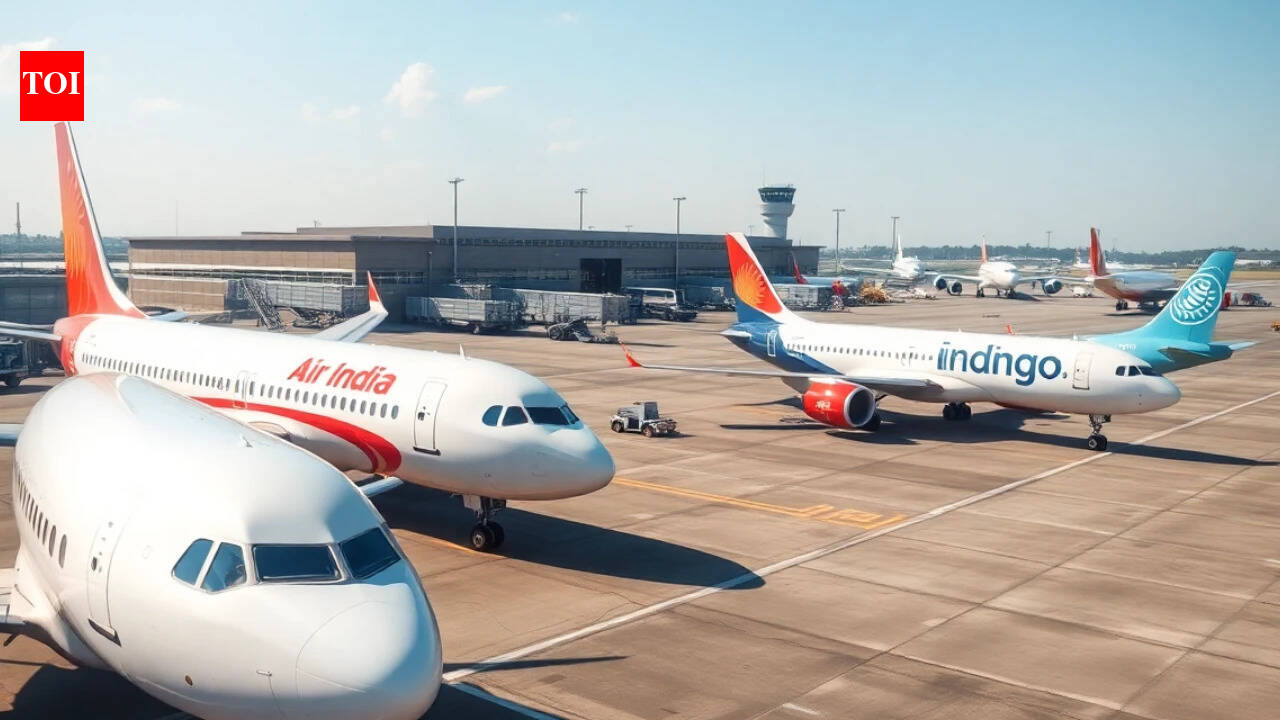
Indian domestic air traffic saw a 4.8% decline in July, totaling 12 million passengers amid broader geopolitical instability. While domestic yearly growth remains slightly positive, international traffic for Indian carriers has been severely impacted by the US-Iran conflict.
The Volatility of India's Aviation Sector: A Mid-Year Assessment
Recent data from the Directorate General of Civil Aviation (DGCA) reveals a complex landscape for India's aviation sector. In July, domestic air passenger traffic experienced a contraction of 4.8%, falling to 12 million passengers compared to 12.6 million in the same month last year. Despite this monthly slump, the broader trajectory for the first seven months of 2026 remains marginally positive, with 98.4 million passengers recorded, a 0.64% increase over the 97.78 million seen in the corresponding period of 2025.
The Dominance of IndiGo Amid Market Headwinds
Within this challenging environment, Gurugram-based IndiGo continues to solidify its market leadership. The airline reported carrying 80.82 lakh passengers during the previous month, maintaining its dominance even as the industry faced lower passenger load factors across the board. Furthermore, IndiGo has managed to sustain the highest on-time performance among scheduled domestic airlines, a critical metric for retaining customer loyalty during periods of operational uncertainty.
Geopolitical Impacts on International Carriage
While domestic fluctuations are often tied to seasonal demand and operational costs, the international segment is currently facing severe exogenous shocks. The ongoing US-Iran conflict has exerted significant pressure on global air travel. From an Indian perspective, the impact has been asymmetric; while Indian carriers suffered a 26% decline in international passenger traffic, foreign airlines have shown resilience or growth. For instance, Emirates reported a 7% increase in carriage to and from India, highlighting a shift in passenger preference toward foreign carriers during periods of regional instability.
Comparative Analysis: Domestic vs. International Performance
The divergence between domestic and international performance is stark. While domestic traffic remains relatively stable with marginal yearly gains, the international sector saw a 10.5% drop in total passenger movement during the April-June quarter. The 26% decline specifically experienced by Indian carriers suggests that homegrown airlines are struggling more significantly with the logistical and safety-related repercussions of the US-Iran situation compared to their global counterparts.
Future Trends and Market Outlook
The aviation sector in India is currently navigating a period of high sensitivity to geopolitical events. As airlines grapple with the dual challenges of domestic demand cooling and international route disruptions, the industry must focus on operational efficiency. The fact that yearly numbers for the first seven months of 2026 remain in positive territory provides a glimmer of stability, suggesting that underlying demand remains intact despite the monthly volatility.
Conclusion
In summary, the Indian aviation industry is in a state of adjustment. While IndiGo maintains strong domestic operational metrics, the sector as a whole is vulnerable to international conflicts that disproportionately affect Indian carriers. Moving forward, the industry's ability to recover will likely depend on the stabilization of the geopolitical climate in the Middle East and the continued resilience of domestic consumer demand.