Rahul, Priyanka Gandhi detained after hours-long anti-CEC protest, released later
Source Entity
The Indian Express
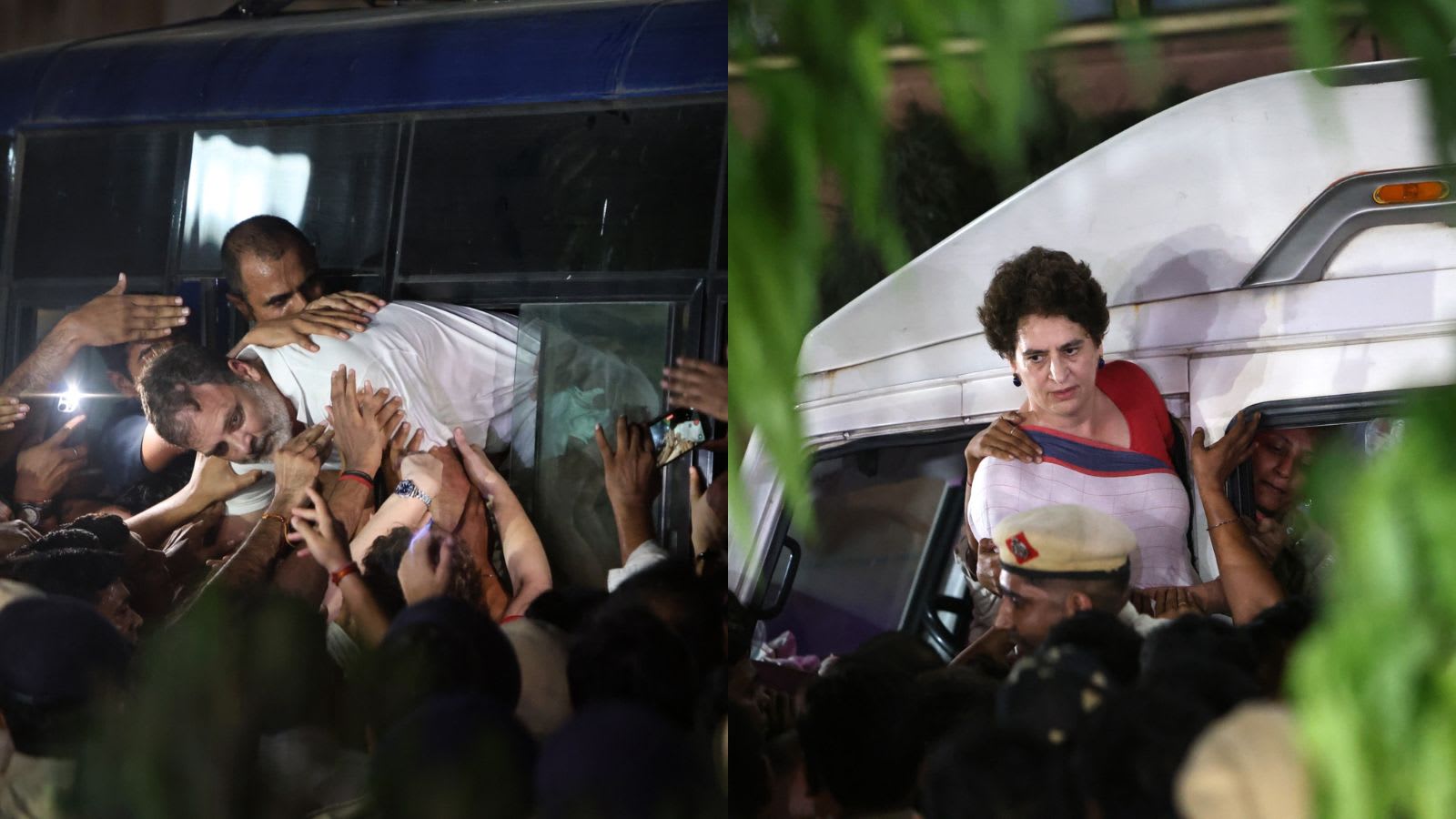
INDIA bloc MPs, led by Rahul and Priyanka Gandhi, staged a protest march toward the Election Commission of India to demand the resignation of Chief Election Commissioner Gyanesh Kumar. The standoff escalated near the NITI Aayog office as police intervened and detained leaders over alleged electoral irregularities.
Standoff at the Election Commission: INDIA Bloc Protests ECI Integrity
On Tuesday, the political climate in New Delhi reached a boiling point as members of the INDIA bloc, spearheaded by Leader of Opposition Rahul Gandhi and Congress MP Priyanka Gandhi Vadra, marched from the Parliament House complex toward the Election Commission of India (ECI) headquarters. The demonstration was aimed at voicing deep-seated grievances regarding the electoral process, specifically targeting the Special Intensive Revision (SIR) exercise and the perceived impartiality of the poll body.
Escalation and Security Response
The march was met with heavy security deployment, including extensive barricading in and around Parliament Street. Law enforcement authorities intercepted the delegation near the NITI Aayog office, effectively preventing them from reaching the ECI headquarters. In response, the opposition leaders staged a sit-in (dharna) on the road, chanting slogans such as "BJP hai CEC hai" and "Democracy not for sale." The visual display included cutouts of Chief Election Commissioner (CEC) Gyanesh Kumar, signaling a direct confrontation between the opposition and the leadership of the electoral institution.
Core Grievances and Accusations
The primary catalyst for this protest appears to be the opposition’s profound distrust in the current ECI leadership. By carrying imagery depicting CEC Gyanesh Kumar in an RSS uniform, the INDIA bloc is attempting to frame the ECI as an extension of the ruling party’s ideology. These accusations of bias, combined with specific concerns over the SIR exercise, reflect a broader pattern of skepticism regarding the integrity of Indian electoral administration, a topic that has become a recurring theme in contemporary Indian political discourse.
The Communication Gap and Institutional Standoff
As the protest intensified, a significant communication breakdown emerged. While the Congress leadership insisted they were present to demand a meeting to discuss alleged electoral irregularities, the Election Commission officially stated that it had received no formal request for such a meeting. This disconnect highlights the deteriorating relationship between the primary opposition coalition and the constitutional body responsible for overseeing the democratic process, leading to a physical standoff near Akashvani Bhawan.
Broader Implications for Indian Democracy
The detention of opposition leaders by police marks a significant escalation in the ongoing tension between the government and the INDIA bloc. When major political parties openly question the neutrality of constitutional authorities, it impacts public trust in democratic institutions. The demand for the resignation of a high-ranking official like the CEC is a rare and extreme measure, underscoring the severity of the crisis as perceived by the opposition. Moving forward, this event suggests a period of heightened friction where electoral oversight will remain a central battlefield for political legitimacy.
Multiple Citing Sources