INDIA bloc lunch at Delhi’s Connaught Place, a hat-trick of SIR protest
Source Entity
Asad Rehman
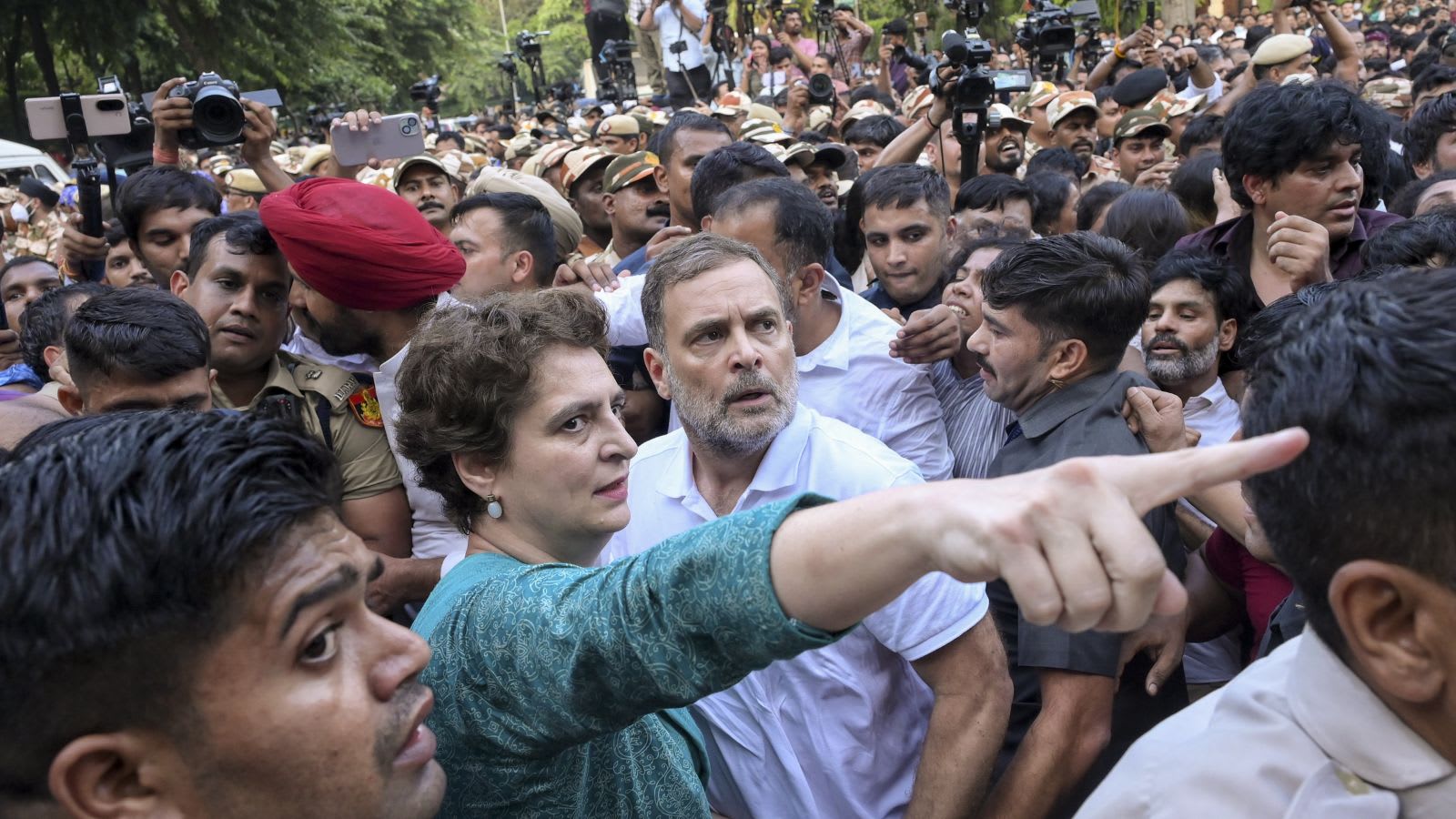
INDIA bloc MPs, led by Rahul and Priyanka Gandhi, held a protest march toward the Election Commission of India to demand the resignation of CEC Gyanesh Kumar. The demonstration, centered on concerns over the Special Intensive Revision (SIR) exercise, resulted in police intervention and the detention of several opposition leaders.
Opposition Escalates Standoff with Election Commission
The political climate in New Delhi reached a boiling point this week as members of the INDIA bloc, spearheaded by Leader of the Opposition Rahul Gandhi and Congress MP Priyanka Gandhi Vadra, staged a high-stakes protest march toward the Election Commission of India (ECI) headquarters. This demonstration, which saw heavy police barricading and security deployment across the Parliament-NITI Aayog corridor, marks a significant escalation in the ongoing friction between the opposition alliance and the central poll body.
The Core Grievances: SIR and Institutional Trust
At the heart of the protest lies the opposition's deep-seated concern regarding the Special Intensive Revision (SIR) exercise. The INDIA bloc has framed the protest as a necessary intervention to protect the sanctity of the electoral process. By targeting Chief Election Commissioner (CEC) Gyanesh Kumar, the opposition is attempting to cast doubt on the neutrality of the ECI, alleging that the current leadership is working in alignment with the ruling party’s interests.
Symbolic Protest and Rhetorical Challenges
During the march, the protesters employed potent political symbolism, including cutouts depicting the CEC in an RSS uniform. Slogans such as “BJP hai CEC hai” and “Democracy not for sale” were aimed at framing the ECI not as an independent constitutional authority, but as an extension of the BJP's organizational structure. This rhetoric is a calculated attempt to mobilize public sentiment against the perceived erosion of institutional independence in India.
Police Intervention and Detention
The march was effectively halted by Delhi Police near the NITI Aayog office. Upon being blocked from reaching the ECI building, the leaders converted the street into a site for a sit-in (dharna). The situation eventually culminated in the detention of participating legislators by the police. This confrontation highlights the increasing difficulty for opposition parties to engage in traditional forms of protest within the capital's high-security administrative zones.
Broader Implications for Indian Democracy
This event is not an isolated incident but part of a broader, long-term trend of eroding trust between the opposition and constitutional bodies. The demand for the CEC's resignation signals that the INDIA bloc is prepared to challenge the legitimacy of the ECI’s future procedural decisions, particularly those involving voter list revisions. Such public confrontations place the ECI in a defensive position, forcing the commission to contend with intense scrutiny from the political class.
Future Outlook and Political Strategy
As the INDIA bloc continues to pressure the election authorities, the political landscape is likely to see more frequent confrontations regarding electoral integrity. The focus on the SIR exercise suggests that the opposition is laying the groundwork for challenging future electoral outcomes by questioning the processes that underpin them. Moving forward, the ECI will face the dual challenge of conducting its administrative duties while navigating a highly polarized environment where its every action is met with suspicion and institutional combat.
Multiple Citing Sources