Protests will continue until CEC Gyanesh Kumar resigns, says Rahul Gandhi
Source Entity
India Latest News: Top National Headlines Today & Breaking News | The Hindu
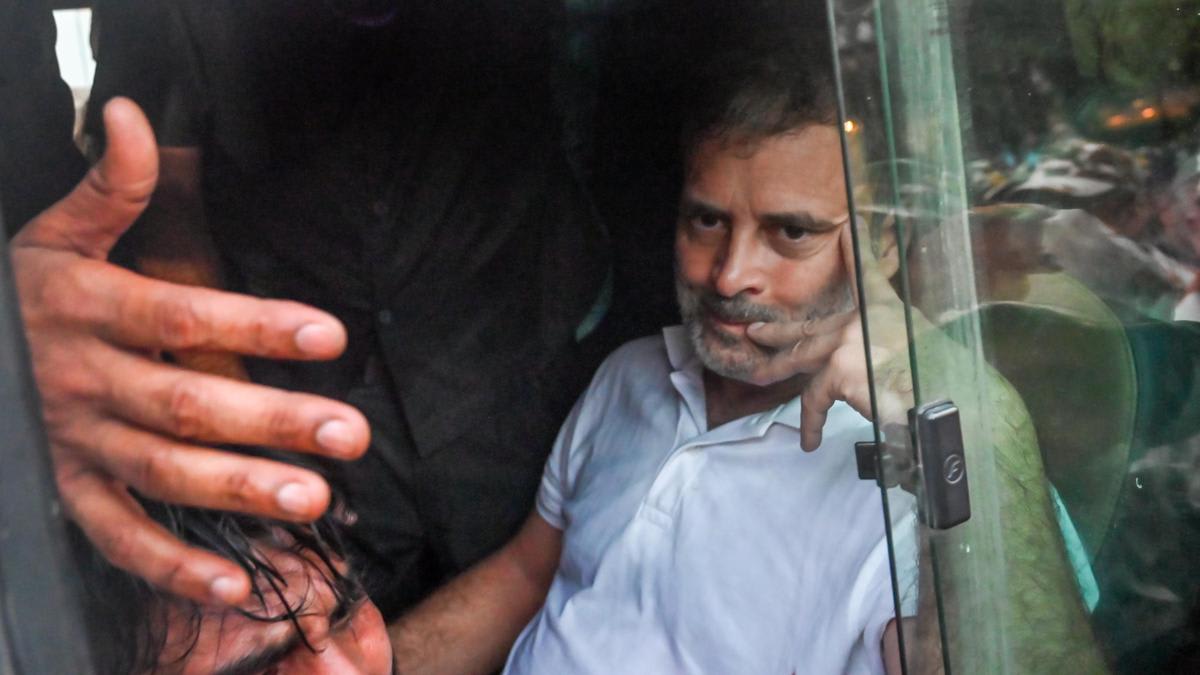
INDIA bloc MPs, led by Rahul and Priyanka Gandhi, staged a protest march toward the Election Commission of India to demand the resignation of CEC Gyanesh Kumar. The demonstration, centered on concerns over electoral processes and the Special Intensive Revision (SIR), resulted in police intervention and the detention of several legislators.
Opposition Escalates Standoff with Election Commission
The political landscape in New Delhi witnessed a significant escalation on Tuesday as leaders from the INDIA bloc, including Leader of Opposition Mallikarjun Kharge and Congress MPs Rahul and Priyanka Gandhi, marched from the Parliament House complex toward the Election Commission of India (ECI). This high-stakes demonstration was aimed at the ECI’s leadership, specifically calling for the resignation of Chief Election Commissioner (CEC) Gyanesh Kumar, signaling a deepening rift between the opposition and the constitutional body responsible for overseeing Indian elections.
The Anatomy of the Protest
As the opposition leaders attempted to reach the ECI headquarters, they were met with heavy security deployment and strategic barricading. Police forces intercepted the marchers in the vicinity of the NITI Aayog office, located on the critical stretch between NITI Aayog and Akashvani Bhavan. Unable to proceed, the parliamentarians staged a sit-in (dharna) on the road. The intensity of the protest was underscored by the use of provocative imagery, including cutouts depicting the CEC in an RSS uniform, reflecting the opposition's narrative that the commission is operating with a partisan bias.
Core Grievances: SIR and Institutional Integrity
The primary catalyst for this protest appears to be the Special Intensive Revision (SIR) exercise, which the opposition has criticized as part of a broader concern regarding the transparency and fairness of current electoral processes. By linking the ECI’s actions to the ruling BJP, the opposition is attempting to frame their protest as a fight for the preservation of democratic norms. Slogans such as “Democracy not for sale” and “Vote chor, gaddi chhod” were central to their messaging, indicating a concerted effort to delegitimize the current administration of the poll panel.
Historical Precedents and Political Strategy
This event follows a long history of tensions between the Indian opposition and the ECI, particularly during periods of intense electoral cycle scrutiny. By taking to the streets, the INDIA bloc is utilizing a classic pressure tactic to force public discourse onto their specific grievances regarding the ECI's neutrality. The direct naming of the CEC in personal social media posts by leaders like Rahul Gandhi highlights a shift toward a more aggressive, personal confrontation strategy against institutional heads.
Police Intervention and Future Implications
The eventual detention of the protesting legislators by the Delhi Police marks a cooling-off point in the immediate standoff but likely sets the stage for further friction in the upcoming parliamentary sessions. The government’s reliance on heavy security measures to block the march underscores the administration's intent to prevent the normalization of mass protests at the ECI doorstep, while the opposition’s persistence highlights their strategic goal to keep questions about the integrity of the electoral process at the forefront of national politics.
Conclusion
The confrontation at Sansad Marg is a stark reminder of the fragile balance between institutional autonomy and political accountability in India’s democracy. As the INDIA bloc continues to question the mechanisms of voter list revisions and electoral management, the ECI faces the dual challenge of maintaining its functional independence while navigating a highly polarized political environment where every procedural decision is subject to intense public and political scrutiny.
Multiple Citing Sources
Verification Required?