'Unusual request': EC explains why it could not meet Rahul Gandhi-led opposition MPs
Source Entity
TRISHA MAHAJAN
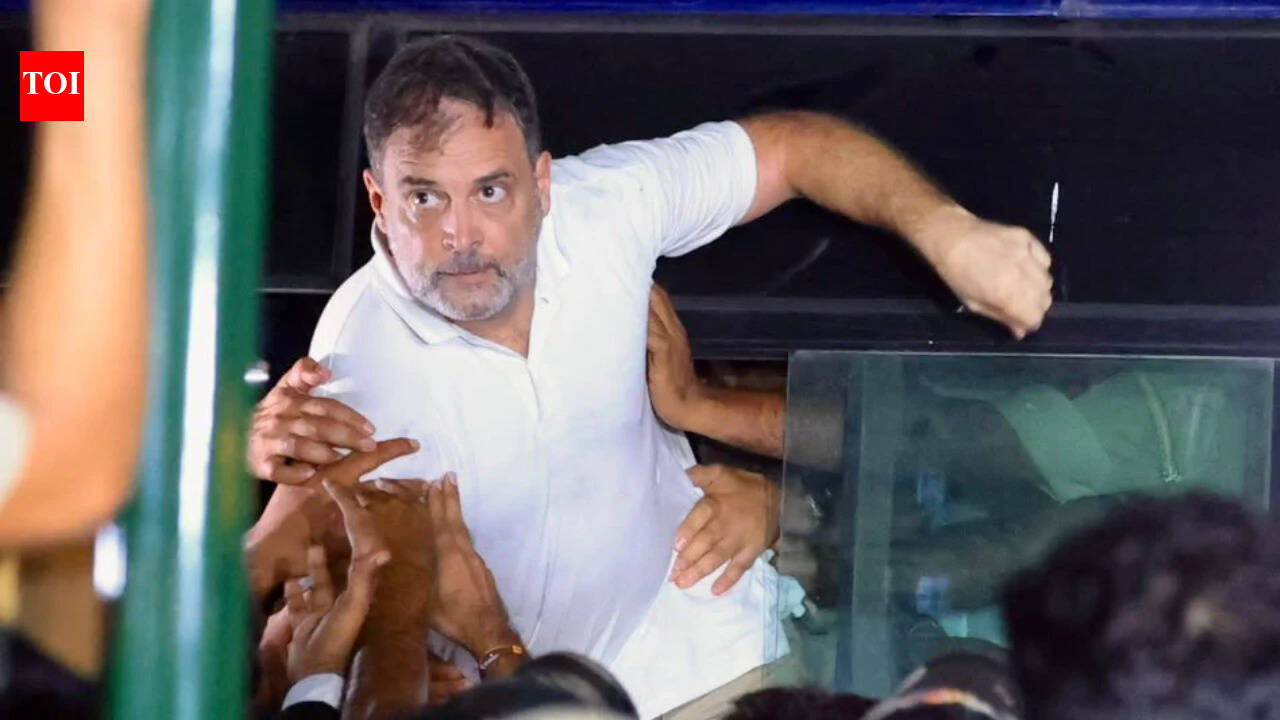
INDIA bloc MPs, led by Rahul and Priyanka Gandhi, staged a protest march toward the Election Commission to demand the resignation of CEC Gyanesh Kumar. The protest, centered on concerns over the Special Intensive Revision exercise, resulted in a standoff and subsequent detention of the leaders.
Tensions Escalate: INDIA Bloc Confronts Election Commission
The political landscape in New Delhi witnessed a significant escalation as members of the INDIA bloc, including prominent leaders Mallikarjun Kharge, Rahul Gandhi, and Priyanka Gandhi Vadra, marched from Parliament House toward the Election Commission of India (ECI). This protest, characterized by high-stakes political theater and heavy security deployment, was triggered by deep-seated grievances regarding the electoral process, specifically the Special Intensive Revision (SIR) exercise.
The Anatomy of the Protest
As the opposition contingent attempted to navigate the path between NITI Aayog and Akashvani Bhavan, they were met with extensive barricading and a formidable police presence. The resulting blockade forced the parliamentarians to stage a sit-in protest directly on the road. The visual messaging was explicit; protesters brandished cutouts depicting Chief Election Commissioner (CEC) Gyanesh Kumar in an RSS uniform, while slogans such as “BJP hai CEC hai” and “Democracy not for sale” echoed through the streets. This direct public challenge to the neutrality of the poll body underscores a growing rift between the opposition and the constitutional institution overseeing Indian elections.
Institutional Deadlock and Procedural Friction
The conflict reached an impasse when the Election Commission responded to the attempt to submit a memorandum. According to the ECI, the failure to secure a formal meeting was due to a lack of adherence to prescribed protocols. The Commission highlighted an "unusual request" from 240 MPs to hold a meeting at the Parliament House Annexe, which the ECI declined in favor of standard engagement procedures. This bureaucratic friction highlights the disconnect between the opposition's demand for immediate, high-level accountability and the Commission's insistence on administrative decorum.
Broader Implications for Electoral Integrity
At the core of this confrontation lies the issue of the Special Intensive Revision (SIR). For the INDIA bloc, the SIR is not merely an administrative update of electoral rolls but a potential tool for manipulation that necessitates the resignation of the CEC. By questioning the impartiality of the ECI, the opposition is effectively signaling a lack of faith in the current electoral machinery. This development is significant as it shifts the political battleground from the legislative floor to the streets, testing the resilience of India's democratic institutions under the strain of partisan polarization.
The Detention and Future Trends
The situation culminated in an eight-hour sit-in inside the Akashvani Bhawan premises, ending in the detention of opposition leaders. This event serves as a bellwether for future political engagements in India. As the opposition continues to leverage public demonstrations to highlight their concerns over institutional capture, the ECI will face increasing pressure to balance its administrative mandates with the necessity of maintaining public confidence. Moving forward, the relationship between the INDIA bloc and the ECI is likely to remain adversarial, setting the stage for continued friction in the lead-up to future electoral cycles.
Multiple Citing Sources