Anti-EC protest | ‘They have entire career lying ahead’: Delhi court grants bail to 17 protesters arrested
Source Entity
Nirbhay Thakur
INDIA bloc MPs led by Rahul and Priyanka Gandhi staged a protest march toward the Election Commission, demanding the resignation of CEC Gyanesh Kumar. The demonstration, which faced heavy police barricading, also addressed concerns regarding the Special Intensive Revision (SIR) of electoral rolls.
Tensions Escalate: INDIA Bloc Challenges Election Commission
The political landscape in New Delhi witnessed a significant confrontation this week as leaders from the INDIA bloc, including Leader of Opposition Rahul Gandhi and Congress MP Priyanka Gandhi Vadra, organized a march toward the Election Commission of India (ECI) headquarters. The protest, which sought to challenge the integrity of the electoral process and demand the resignation of Chief Election Commissioner (CEC) Gyanesh Kumar, underscores a deepening rift between the opposition and the constitutional body responsible for overseeing the nation’s democratic exercises.
The Core Grievances and the SIR Controversy
At the heart of the protest lies the opposition's vocal objection to the Special Intensive Revision (SIR) exercise currently being conducted by the ECI. The INDIA bloc leaders have expressed profound concerns regarding how this electoral revision is being handled, fearing that such processes could undermine the fairness of future elections. By marching to the ECI, the opposition aimed to force a direct confrontation with the Commission regarding these procedural changes, which they argue are being implemented in a manner that favors the ruling party.
Security Measures and Public Order
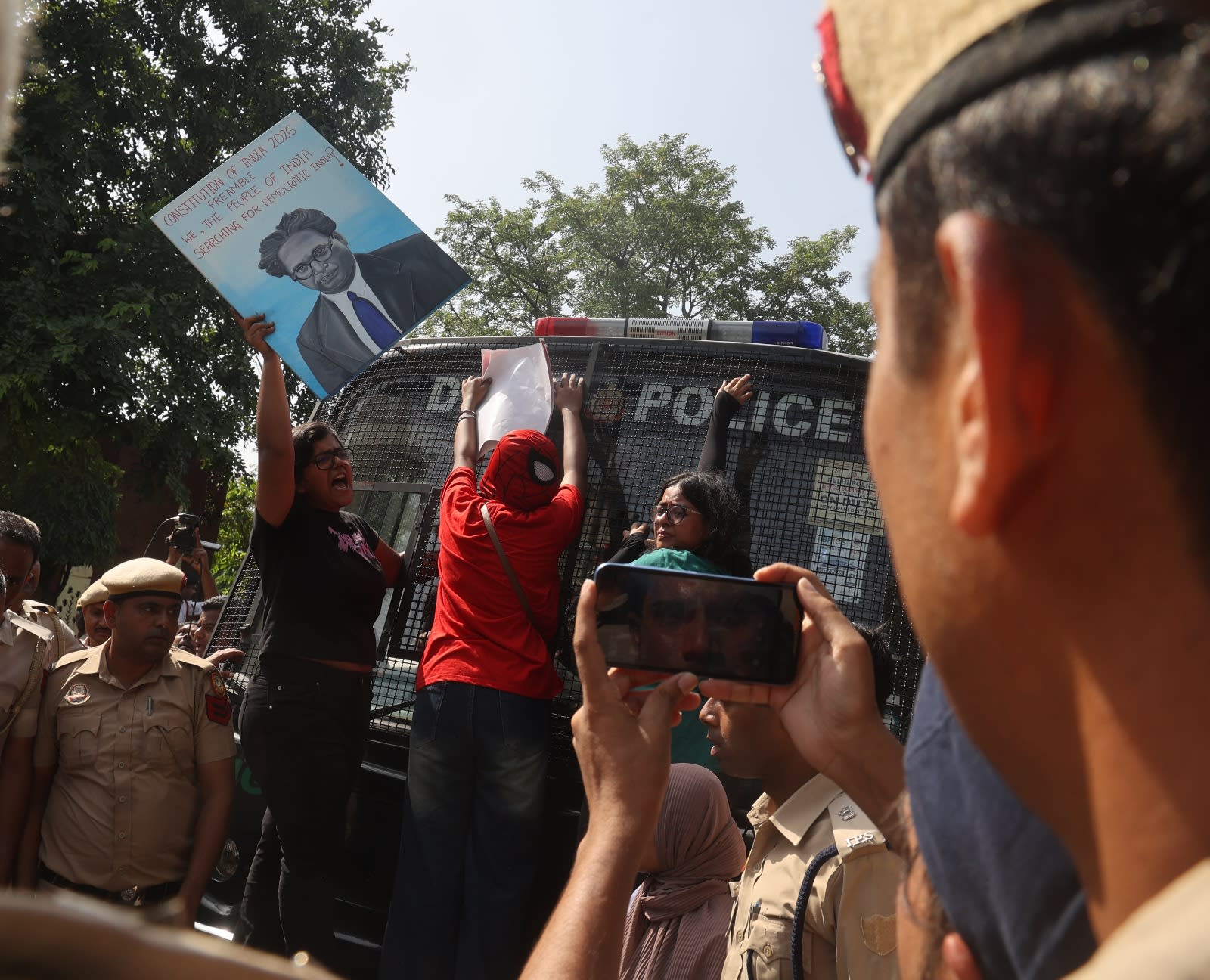
In anticipation of the march, the Delhi Police implemented heavy security deployments and elaborate barricading around the Parliament House complex and the ECI headquarters. The situation reached a flashpoint near the NITI Aayog office and Akashvani Bhavan, where police stopped the procession. Faced with this barrier, the opposition MPs staged a sit-in (dharna) on the road, utilizing visual props—such as cutouts depicting the CEC in specific organizational uniforms—to amplify their slogans of "Democracy not for sale" and "BJP hai CEC hai."
Judicial Intervention and Allegations of Abuse
Parallel to the political protest, a significant legal development occurred involving the arrest of 17 individuals during related demonstrations. In a late-night session at the Patiala House Court, Judicial Magistrate First Class Animesh Kumar granted bail to these individuals, noting their youth and lack of criminal history. Significantly, the court directed the Deputy Commissioner of Police (New Delhi) to investigate allegations that two of the detainees had been subjected to physical abuse while in custody at the Parliament Street police station, adding a layer of human rights scrutiny to the broader political dispute.
Implications for Institutional Trust
This event highlights a critical trend in contemporary Indian politics: the increasing friction between constitutional institutions and the parliamentary opposition. By questioning the neutrality of the CEC and the ECI's administrative decisions, the INDIA bloc is seeking to frame the upcoming electoral cycles as a struggle for institutional integrity. The use of Section 163 of the Bharatiya Nagarik Suraksha Sanhita (BNSS) to restrict movement during these protests suggests a tightening of public order measures in the capital, which may lead to further legal and political challenges regarding the fundamental right to protest.
Future Trends and Political Fallout
As the INDIA bloc continues its campaign, the relationship between the opposition and the Election Commission is likely to remain strained. Future trends suggest that the opposition will continue to leverage both parliamentary pressure and public demonstrations to ensure that the electoral rolls and revision processes remain under intense public and legal scrutiny. The court's intervention regarding the treatment of protesters suggests that the judiciary will play an increasingly pivotal role in mediating these confrontations, potentially setting precedents for how political dissent is handled in the nation's capital moving forward.
Multiple Citing Sources