‘We’re the top seeds!’: Divya Deshmukh exudes confidence as India beat Mongolia for 4th win
Source Entity
Mayank Chaudhary
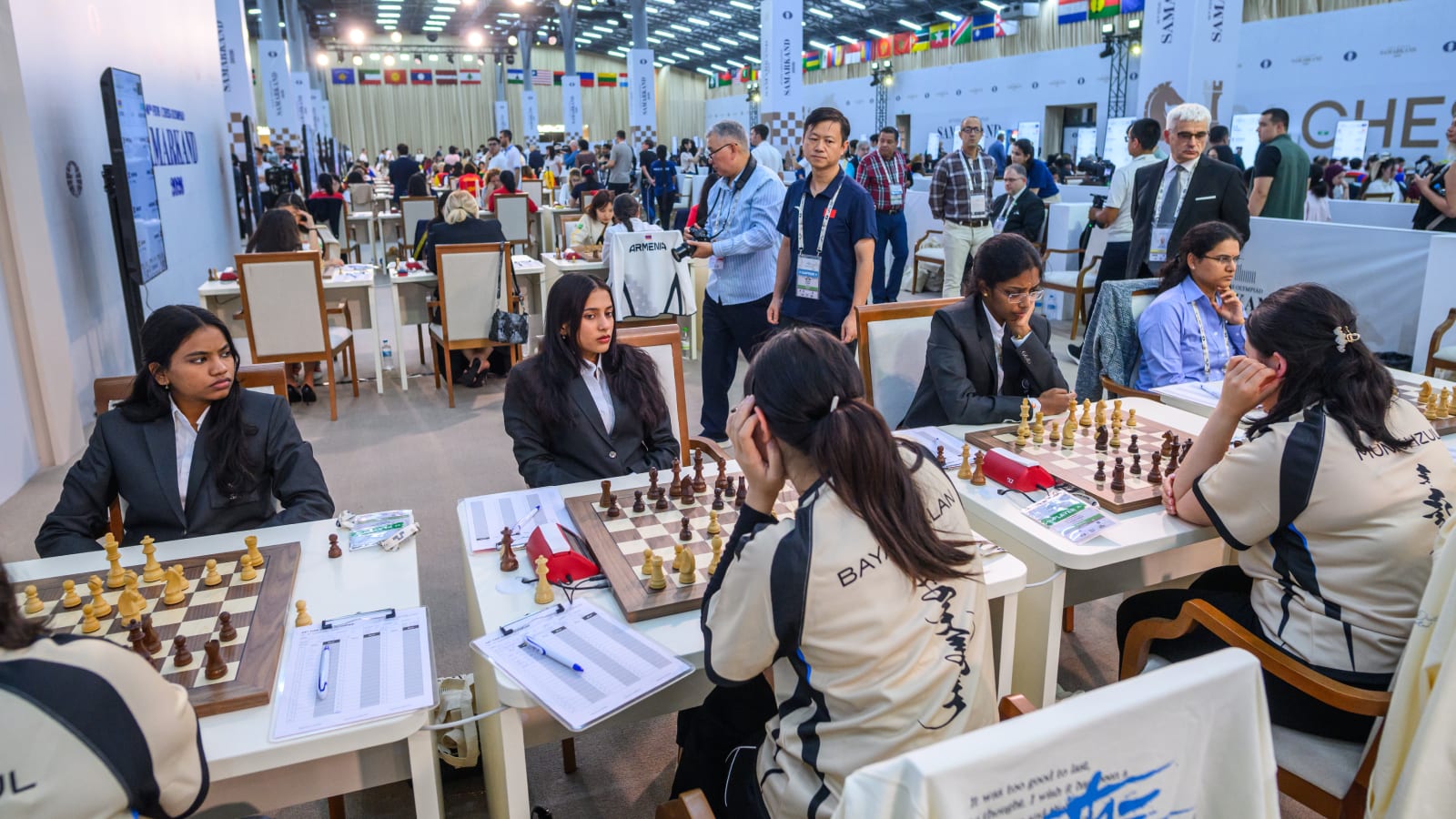
The Indian men's and women's chess teams are maintaining dominant performances at the 2026 Chess Olympiad in Samarkand. Both squads continue their unbeaten streaks, bolstered by strategic lineup decisions and key individual victories from players like D Gukesh, Koneru Humpy, and Divya Deshmukh.
India Dominates the 2026 Chess Olympiad in Samarkand
The 2026 Chess Olympiad in Samarkand, Uzbekistan, has become a showcase of Indian chess supremacy. With both the men's and women's teams demonstrating exceptional form, India has firmly established itself as the team to beat. The women’s team, entering the tournament as the defending champions and top seeds, has maintained an unbeaten run, recently securing a decisive 3.0-1.0 victory over Mongolia to extend their winning streak.
Strategic Depth in the Women's Squad
The strength of the Indian women's team lies in its incredible depth. While veterans provide a steady anchor, the lower boards have been instrumental in securing match points. In the clash against Mongolia, Divya Deshmukh and Savitha Shri B delivered crucial victories on Boards 3 and 4, respectively. This ability to rely on multiple players to close out matches demonstrates a balanced roster capable of absorbing pressure, as seen when veteran Koneru Humpy successfully navigated a difficult encounter against WIM Bat-Erdene Mungunzul to secure a draw.
Tactical Adjustments in the Open Section
In the Open section, the Indian team is making headlines not just for their 3-1 victory against Italy, but for the tactical maturity displayed by reigning world champion D Gukesh. In a move that highlights the team-first mentality, Gukesh requested to play on Board 4. Acknowledging the current form of his teammates, R Praggnanandhaa and Arjun Erigaisi, Gukesh noted that this strategic order maximizes the team's chances of winning the tournament. This decision reflects a sophisticated approach to team composition, prioritizing collective success over individual board prestige.
Redemption and Momentum
The tournament has also served as a stage for individual redemption. Koneru Humpy, having faced setbacks in the Global Chess League, secured a significant victory against Greece’s Stavroula Tsolakidou, effectively avenging her previous losses. Similarly, D Gukesh has returned to winning form, defeating Italy’s Sabino Brunello and reclaiming his status above the 2700 rating threshold. These individual milestones are critical for maintaining the psychological edge required to navigate the grueling rounds of an Olympiad.
Future Outlook and Implications
As the tournament progresses, the synergy between India’s tactical flexibility and individual talent positions them as the clear favorites for the gold medal. The team's ability to remain unbeaten while rotating boards and managing form suggests a high level of preparation and coaching oversight. If India continues to leverage its depth as effectively as it has in the early rounds, they are well-positioned to maintain their dominance throughout the remaining matches in Samarkand.
Conclusion
The performance of the Indian contingent in Samarkand is a testament to the country's growing stature in international chess. By combining the experience of players like Humpy with the strategic adaptability of leaders like Gukesh, India is setting a new standard for team performance. As the rounds intensify, the focus will remain on whether they can sustain this momentum to secure a historic double-podium finish.
Multiple Citing Sources