Dangerous harmonies: Is there a hidden villain in India’s devastating electrical fires?
Source Entity
India Latest News: Top National Headlines Today & Breaking News | The Hindu
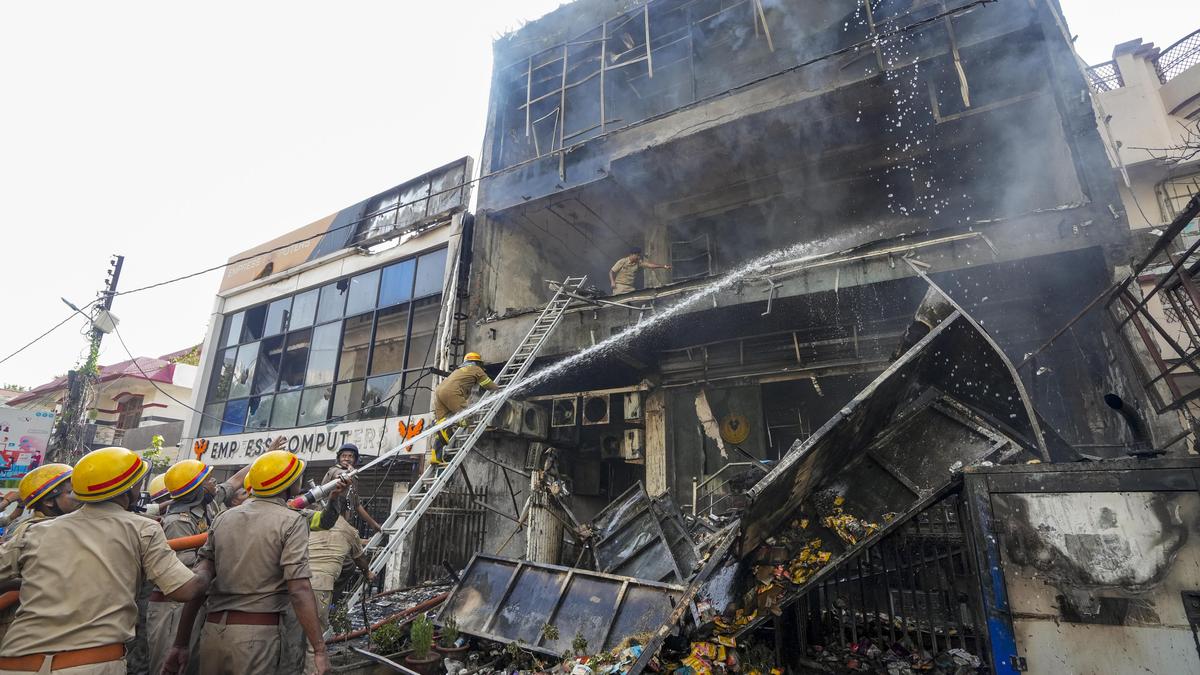
Recent fire tragedies across India, including the Vivek Vihar incident and various hospital fires, highlight a growing crisis linked to electrical failures. Experts point to the oversight of harmonic currents from modern electronic equipment as a critical, unaddressed factor in these devastating events.
The Silent Threat: India's Escalating Electrical Fire Crisis
Recent years have witnessed a harrowing shift in the nature of fire-related tragedies across India. While the nation was historically accustomed to fire incidents in industrial zones or crowded festive gatherings, the current landscape of disaster has migrated into the heart of our neighborhoods and healthcare facilities. The tragic events in Vivek Vihar, East Delhi, on May 3, 2026, which claimed nine lives following an suspected air-conditioner blast or short circuit, serve as a grim reminder of how residential and public infrastructure is failing to keep pace with modern electrical demands.
The Failure of Infrastructure in Healthcare
The vulnerability of India's medical infrastructure has been laid bare by a series of fatal incidents. The tragedy in a Jhansi NICU in November 2024, where 55 infants were crammed into a space designed for 18, highlights not only overcrowding but a catastrophic failure of electrical and safety oversight. Similarly, the loss of life in Amravati due to smoke inhalation and the short-circuit fire at Cuttack’s SCB Medical College reveal that even when fires are contained quickly, the electrical systems—often burdened by life-sustaining equipment—are becoming sources of death rather than healing.
The Hidden Villain: Harmonic Currents
While building codes and safety guidelines are frequently updated, they are failing to account for the modern 'hidden villain': harmonic currents. As India accelerates its adoption of state-of-the-art electronic equipment, these devices often feed harmonic currents back into the power system. These currents can cause overheating in transformers, cables, and distribution panels, leading to insulation failure and, ultimately, spontaneous electrical fires that current standard safety protocols are not equipped to detect or mitigate.
A Shift in Fire Dynamics
The pattern of these fires is alarmingly consistent. Most occur in the early hours of the morning, such as the 3:48 a.m. incident in Vivek Vihar or the 3 a.m. blaze at SCB Medical College. This timing suggests that as electrical loads shift or fluctuate during the night, the stress on aging or improperly designed wiring becomes critical. The prevalence of oxygen-rich environments in medical wards further exacerbates the lethality of these electrical failures, turning a localized short circuit into a mass-casualty event in minutes.
The Path Forward: Regulation and Retrofitting
To curb this trend, regulatory bodies must move beyond generic fire safety codes. There is an urgent need to mandate the installation of harmonic filters and advanced circuit protection devices that can handle the specific electrical signatures of modern electronics. Furthermore, hospitals and residential complexes must undergo rigorous electrical audits that specifically test for harmonic distortion, ensuring that the infrastructure is capable of supporting the high-tech equipment it houses.
Conclusion
India stands at a crossroads where the convenience of modern technology is colliding with the limitations of legacy electrical systems. Unless there is a concerted effort to address the technical complexities of electrical distribution—specifically the role of harmonic currents—the frequency of these devastating neighborhood and hospital fires will likely continue to climb. Protecting lives requires a sophisticated, data-driven approach to electrical engineering that acknowledges the realities of our modern, energy-intensive world.
Verification Required?