Villages Wiped Out: Aerial Video Shows Devastating Aftermath Of Nepal Floods
Source Entity
NDTV News Search Records Found 1000
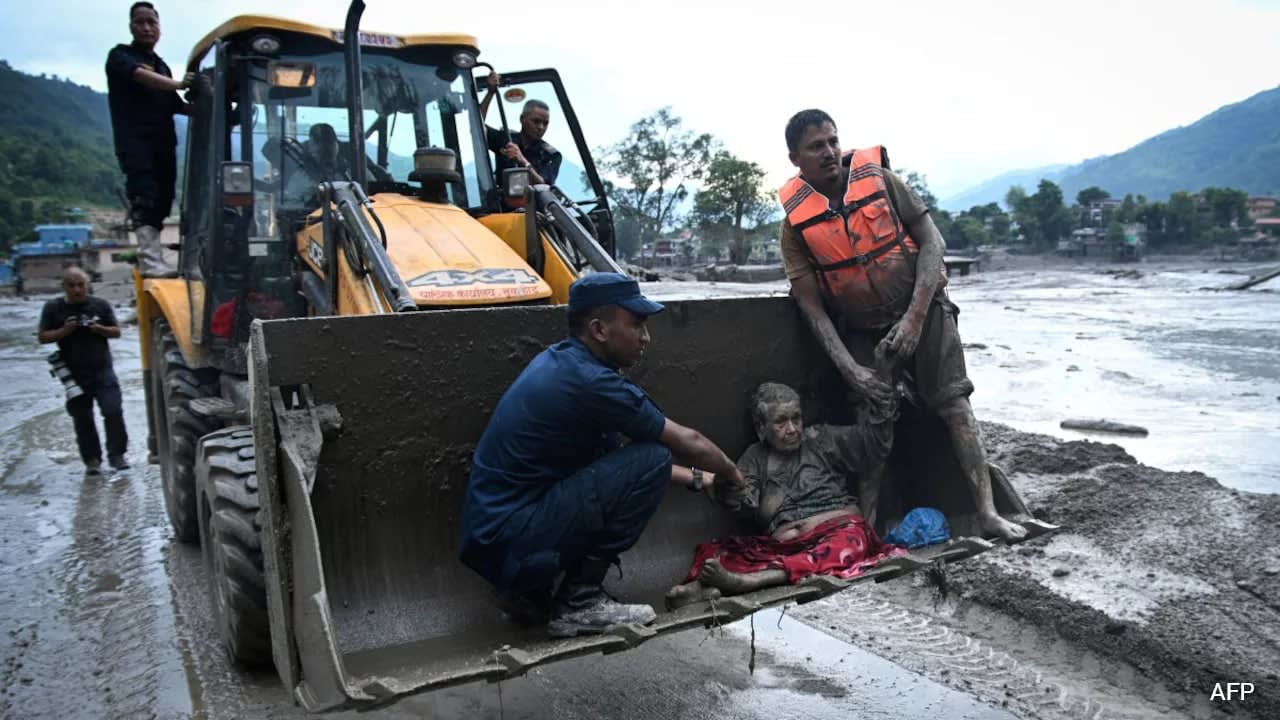
Northern India faces a dual crisis involving high-alert flood warnings following devastating flash floods in Nepal and civil tension in Uttar Pradesh's Rae Bareli district. Authorities are managing both the environmental threat to riverine regions and the social fallout from the desecration of an Ambedkar statue.
Crisis Management in Northern India: Floods and Civil Unrest
Environmental Threat: Cross-Border Flash Floods
A significant environmental crisis is unfolding as flash floods in Nepal, occurring approximately 200 kilometers north of the Indian border, have triggered high-alert protocols across the states of Uttar Pradesh, Bihar, and Uttarakhand. The disaster, which has already resulted in dozens of fatalities and left nearly 400 tourists—including 105 Indian nationals—missing, poses a severe risk to downstream regions. The geological connectivity between Nepal’s mountain valleys and India’s river systems means the impact is far-reaching.
The Mechanics of the Flood Risk
The primary concern for Indian authorities involves the rising water levels in major rivers, specifically the Ghaghara, Rapti, Gandak, and Kosi. The situation is exacerbated by the opening of barrage gates in Nepal to manage the surge, which directly increases the inflow into these channels. The Trishuli river, which integrates the flow from the Bhote Koshi river originating in Tibet, is a critical conduit feeding into the Gandak and Narayani rivers, creating a potential for rapid inundation in northern Bihar and parts of Uttar Pradesh.
Social Instability in Rae Bareli
Simultaneously, the state of Uttar Pradesh is grappling with localized civil tension in the Baburiha village of the Rae Bareli district. On the night of August 25, 2026, unknown miscreants desecrated a statue of Dr. B.R. Ambedkar by smearing it with mud and soot. The incident has sparked significant public anger, as residents and followers of Dr. Ambedkar view the act as a direct affront to social harmony and the memory of a foundational figure in Indian democracy.
Administrative Response and Public Order
In response to the tension in Baburiha, local law enforcement acted with urgency. The Additional Superintendent of Police (ASP) and the Circle Officer (CO) of Unchahar arrived on the scene to engage with the aggrieved villagers. By offering assurances of a swift and transparent investigation, authorities managed to stabilize the situation. Police deployment remains in effect as a precautionary measure to prevent further escalation while the search for the perpetrators continues.
Broader Implications and Future Outlook
The convergence of these two events highlights the multifaceted challenges facing northern India. From a disaster management perspective, the dependency on cross-border cooperation regarding barrage management is vital for mitigating the impact of climate-driven flash floods. Simultaneously, maintaining social cohesion in rural districts is essential for internal stability. Future trends suggest that as climate volatility increases, the necessity for robust, real-time communication between Nepal and India regarding water management will become even more critical to protecting lives in the Gangetic plains.
Multiple Citing Sources
Verification Required?