The unfulfilled solar promise of India and Germany
Source Entity
India Latest News: Top National Headlines Today & Breaking News | The Hindu
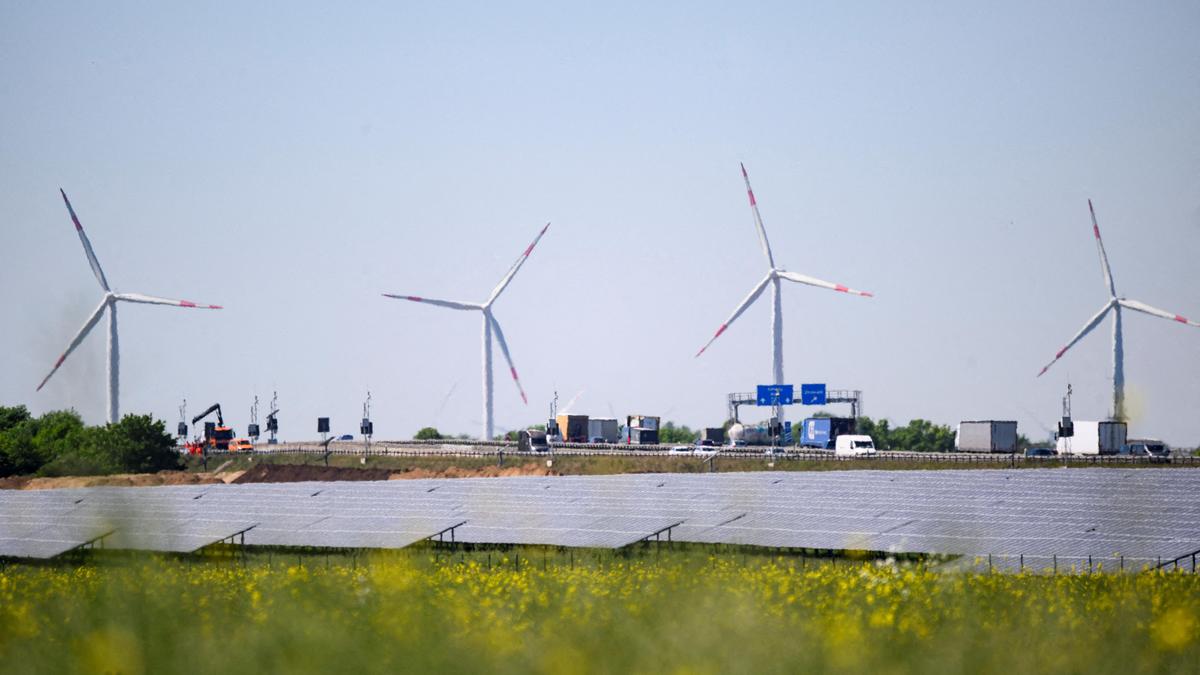
Three years after both countries signed a landmark agreement to facilitate the migration of Indian solar technicians to Germany, not a single such technician has made the journey; the experience exposes a wider disconnect between ambitious labour mobility agreements and the realities of skill development, labour market demand and the aspirations of India’s emerging green workforce
The Gap Between Diplomacy and Delivery: The India-Germany Solar Labor Crisis
Three years ago, India and Germany entered into a landmark agreement designed to bridge the gap in green energy expertise by facilitating the migration of Indian solar technicians to Germany. On paper, the partnership was a strategic masterstroke: Germany, grappling with an aging workforce and an aggressive energy transition (Energiewende), needed skilled labor to install and maintain solar infrastructure. India, conversely, possesses a rapidly growing pool of renewable energy technicians and a desire to export professional services. However, the stark reality—that not a single technician has made the journey—exposes a profound failure in the execution of bilateral labor mobility agreements.
The Friction of Skill Certification and Standardisation
One of the primary drivers behind this failure is the systemic disconnect between Indian vocational training and Germany's rigorous certification standards. Germany's labor market is heavily regulated, often relying on a highly structured apprenticeship system and formal certifications (such as the Meister qualification) that are not easily mirrored in the Indian education system. While Indian technicians may possess the practical experience and technical proficiency required for solar installation, the absence of a streamlined, mutually recognized accreditation framework creates an insurmountable bureaucratic wall. Without a standardized process to map Indian skills to German professional requirements, the 'landmark agreement' remains a symbolic gesture rather than a functional pipeline.
Labor Market Realities and Economic Aspirations
Beyond certification, the failure highlights a misalignment between the perceived demand in Germany and the actual aspirations of India's emerging green workforce. For many Indian technicians, the incentive to migrate is not solely based on the existence of a job, but on the total quality of life, including language barriers, integration costs, and the competitiveness of the offered wages relative to the rising opportunities within India's own booming solar sector. As India aggressively expands its own renewable capacity to meet net-zero goals, the domestic demand for solar expertise is surging. This creates a scenario where the most skilled workers may prefer the stability and growth of their home market over the challenges of migrating to a foreign regulatory environment.
The 'MoU Syndrome' in International Relations
This situation is a textbook example of what critics often call 'MoU Syndrome,' where governments sign Memorandums of Understanding (MoUs) to signal political alignment and diplomatic goodwill without establishing the necessary operational infrastructure. The India-Germany agreement focused on the intent to move labor but failed to address the mechanics of movement—such as visa streamlining, language training, and the creation of a dedicated recruitment agency. When high-level diplomatic goals are not supported by granular, ground-level implementation strategies, the result is a policy vacuum where ambitious targets are set but never met.
Broader Implications for the Global Green Transition
The failure of this specific migration corridor has broader implications for the global energy transition. The shift to renewables is not merely a technological challenge but a human capital challenge. If leading economies cannot figure out how to mobilize skilled labor across borders, the pace of the global energy transition may slow. This case suggests that future agreements must move beyond simple 'mobility' and toward 'integrated training,' where technicians are trained under a dual-certification system from the outset, ensuring they are 'plug-and-play' assets for the destination country's economy.
Conclusion: A Blueprint for Future Labor Mobility
In summary, the unfulfilled promise of the India-Germany solar agreement serves as a cautionary tale for international labor diplomacy. It underscores that the willingness of two nations to cooperate is insufficient if it is not accompanied by a rigorous alignment of educational standards and a deep understanding of worker motivations. For future green energy partnerships to succeed, the focus must shift from the quantity of agreements signed to the quality of the pathways created. Only by solving the 'last mile' of certification and integration can the world hope to mobilize the workforce necessary to combat the climate crisis.
Verification Required?