Beyond the border: How India is building firepower to strike targets 1,000km away
Source Entity
DHRUV YADAV
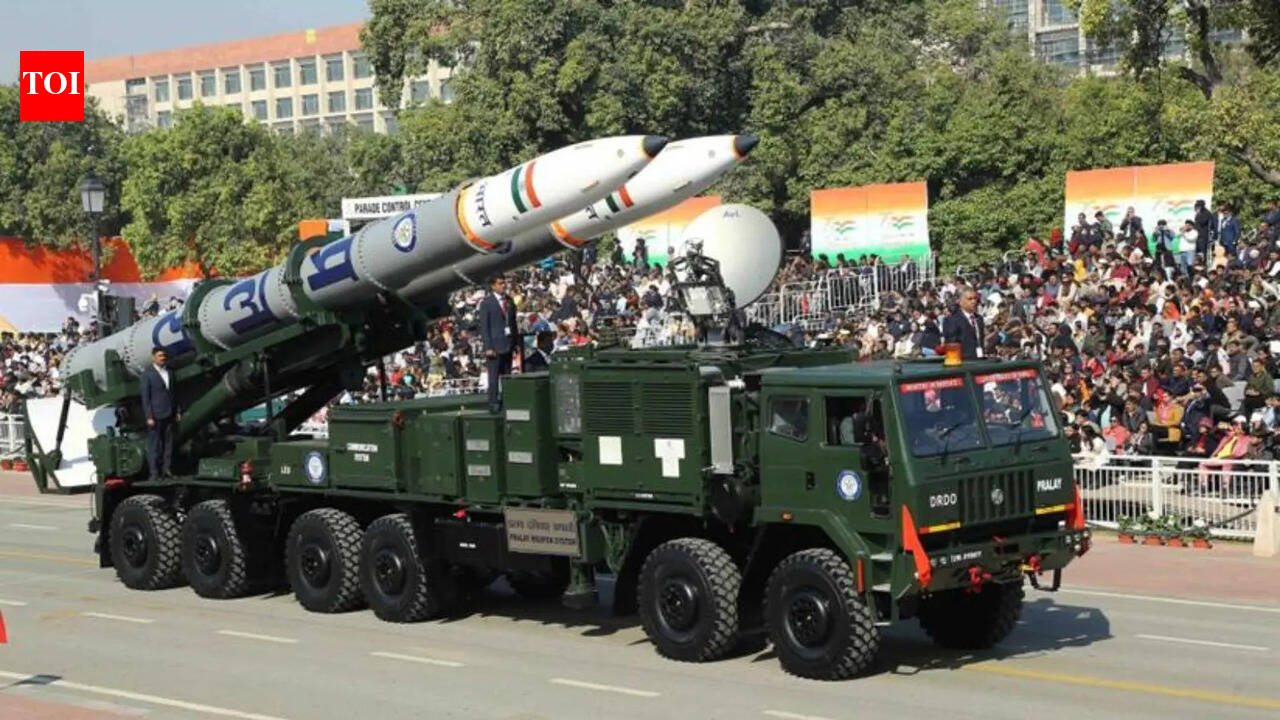
India's military is enhancing long-range strike capabilities for future conflicts. New weapons and drone technology are increasing engagement distances significantly. These advancements allow for precise strikes deep within enemy territory. India aims to control escalation and dictate conflict resolution terms. This modernization drive ensures a continued combat edge in the region.
Strategic Shift: India's Pursuit of Long-Range Precision
India is currently undergoing a fundamental shift in its military doctrine, moving from a primarily defensive posture to one characterized by proactive deterrence. The development of firepower capable of striking targets 1,000km away represents a critical evolution in the nation's security architecture. By extending its engagement distance, India is not merely adding to its arsenal but is fundamentally altering the risk calculus for any potential adversary in the region. This capability ensures that high-value targets deep within enemy territory can be neutralized without requiring a full-scale ground invasion, thereby providing a more flexible and scalable response to security threats.
The Technological Engine: Drones and Precision Munitions
At the heart of this modernization drive is the integration of cutting-edge drone technology and advanced missile systems. The move toward 1,000km strike capabilities suggests a reliance on long-endurance unmanned aerial vehicles (UAVs) and precision-guided munitions that can maintain accuracy over vast distances. This technological leap allows for "surgical strikes" that minimize collateral damage while maximizing impact. The synergy between satellite intelligence and long-range weaponry enables the military to identify and strike targets in real-time, reducing the window of opportunity for enemies to relocate assets or launch preemptive strikes.
Controlling the Escalation Ladder
One of the most significant implications of this capability is the ability to control the escalation of a conflict. In traditional warfare, the transition from a border skirmish to a total war is often rapid and uncontrolled. However, by possessing the ability to strike deep into enemy territory with precision, India can signal its resolve and capabilities without necessarily escalating to a full-scale war. This "calibrated response" allows the Indian leadership to dictate the terms of conflict resolution, forcing adversaries to consider the cost of aggression against the certainty of a retaliatory strike on their own strategic depth.
Regional Power Dynamics and the Combat Edge
Historically, regional conflicts in South Asia have been characterized by territorial disputes and limited border engagements. The introduction of 1,000km strike capabilities changes this dynamic by erasing the safety buffer that adversaries previously enjoyed. By ensuring a continued combat edge, India is positioning itself as the dominant security provider in the region. This shift is not only about offensive capability but about establishing a credible deterrent that prevents conflict from starting in the first place, as the perceived cost of provocation becomes prohibitively high for opposing forces.
Integration into Modernization Frameworks
This push for long-range firepower is not an isolated project but part of a broader modernization drive across the Indian Armed Forces. The integration of these weapons into a network-centric warfare framework means that long-range strikes are supported by multi-domain awareness—combining naval, aerial, and cyber intelligence. This holistic approach ensures that the 1,000km reach is not just about distance, but about the intelligence-led application of force. The modernization drive reflects a long-term vision to reduce dependency on foreign imports and foster domestic defense production, aligning with national strategic goals of self-reliance.
Future Trends in Strategic Engagement
Looking ahead, the trajectory of India's military development suggests a further move toward autonomous systems and hypersonic capabilities. As the 1,000km threshold becomes the new baseline, the focus will likely shift toward reducing the time-to-target and increasing the stealth of these delivery systems. We can expect to see a greater emphasis on swarm drone technology and AI-driven targeting, which will further enhance the precision of deep-strike missions. This evolution will likely prompt a regional arms race, as neighboring states attempt to develop counter-measures, such as advanced missile defense systems, to mitigate India's newfound reach.
Conclusion: A New Era of Deterrence
In summary, India's investment in long-range strike capabilities is a strategic imperative designed to ensure national security in an increasingly volatile geopolitical environment. By combining advanced drone technology with precision firepower, India has effectively extended its operational reach, allowing it to protect its borders by projecting power far beyond them. This capability provides the Indian state with the necessary leverage to manage crises, deter aggression, and maintain a decisive military advantage in the region.