New Zealand PM recalls seeing Indians paid in coins during 90s visit, praises PM Modi for transformation
Source Entity
Latest News: Today's Latest News Headlines from India & World | Hindustan Times | Hindustan Times
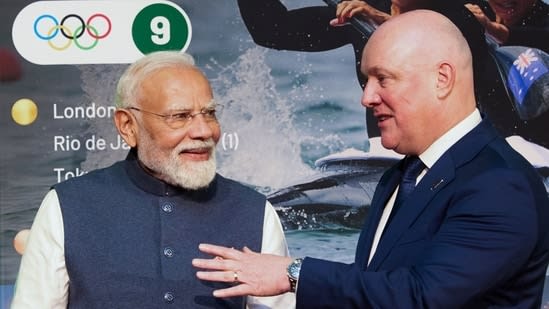
New Zealand and India announced Saturday a "strategic partnership" encompassing defence and security, during a landmark visit by Prime Minister Narendra Modi.
A New Era of Diplomacy: India and New Zealand's Strategic Pivot
The announcement of a "strategic partnership" between India and New Zealand during Prime Minister Narendra Modi's landmark visit marks a significant evolution in the bilateral relations of these two distant yet increasingly aligned nations. By formalizing cooperation in defense and security, both countries are signaling a shift from a relationship primarily based on trade and cultural exchange to one centered on geopolitical stability and mutual security interests. This partnership is not merely a diplomatic formality but a calculated move to strengthen ties within the broader Indo-Pacific framework.
From Coins to Capital: Analyzing the Economic Transformation
One of the most poignant moments of the visit was the New Zealand Prime Minister's recollection of visiting India in the 1990s and seeing workers paid in coins. This anecdote serves as a powerful narrative device to illustrate India's meteoric economic rise. In the early 1990s, India was emerging from a period of closed-market policies, initiating the landmark 1991 economic reforms that liberalized trade and attracted foreign investment. The transition from a struggling agrarian economy to a global hub for technology, pharmaceuticals, and services is the "transformation" praised by the New Zealand leadership. This recognition validates India's trajectory as a global economic powerhouse and enhances its leverage in diplomatic negotiations.
The Strategic Shift Toward Defense and Security
The decision to encompass "defence and security" within their strategic partnership is the most critical component of this announcement. Historically, India and New Zealand have maintained cordial relations, but security cooperation has remained minimal. By elevating the relationship to a strategic level, both nations are acknowledging the volatile nature of contemporary maritime security and the need for coordinated efforts to maintain a "free and open Indo-Pacific." For New Zealand, India represents a stabilizing force in Asia; for India, New Zealand offers a reliable partner in the South Pacific, extending India's reach and influence in the region.
Geopolitical Implications in the Indo-Pacific
This partnership must be viewed through the lens of the wider geopolitical competition in the Indo-Pacific region. As global powers vie for influence, the alignment of democratic nations becomes paramount. New Zealand's willingness to deepen security ties with India suggests a strategic diversification of its security partnerships. This move aligns with a broader trend where middle powers are seeking to build a network of resilient partnerships to ensure regional stability, reducing over-reliance on any single superpower while enhancing collective security mechanisms.
Economic Synergy and Future Trade Prospects
Beyond security, the emotional and political goodwill generated by this visit is likely to translate into tangible economic gains. The contrast between the 1990s and today suggests a massive untapped potential for New Zealand exports—particularly in agriculture and dairy—to enter the burgeoning Indian middle-class market. Conversely, India stands to benefit from New Zealand's expertise in sustainable farming and specialized technology. The "strategic" nature of the partnership provides the political cover and momentum necessary to negotiate more favorable trade terms and investment treaties.
Predicting Future Trends in Bilateral Relations
Looking forward, it is expected that this strategic partnership will manifest in joint military exercises, intelligence sharing, and increased cooperation in counter-terrorism. We can anticipate a rise in educational exchanges and professional mobility, as the recognition of India's transformation encourages more New Zealand firms to view India as a primary destination for investment. The relationship is likely to move toward a Comprehensive Economic Partnership Agreement (CEPA), mirroring India's strategic approach with other key partners in the region.
Conclusion
In summary, the visit by Prime Minister Modi has successfully bridged the gap between historical perception and current reality. By contrasting the "coins" of the 1990s with the strategic capabilities of the present, the New Zealand Prime Minister has acknowledged India's ascent on the world stage. The resulting strategic partnership in defense and security formalizes a shared vision for a stable Indo-Pacific and lays the groundwork for a multi-dimensional relationship that transcends traditional trade, positioning both nations as key stakeholders in the future of global security.
Verification Required?