PM hails resilience of people affected by Partition; BJP blames Congress leaders for country’s division
Source Entity
India Latest News: Top National Headlines Today & Breaking News | The Hindu
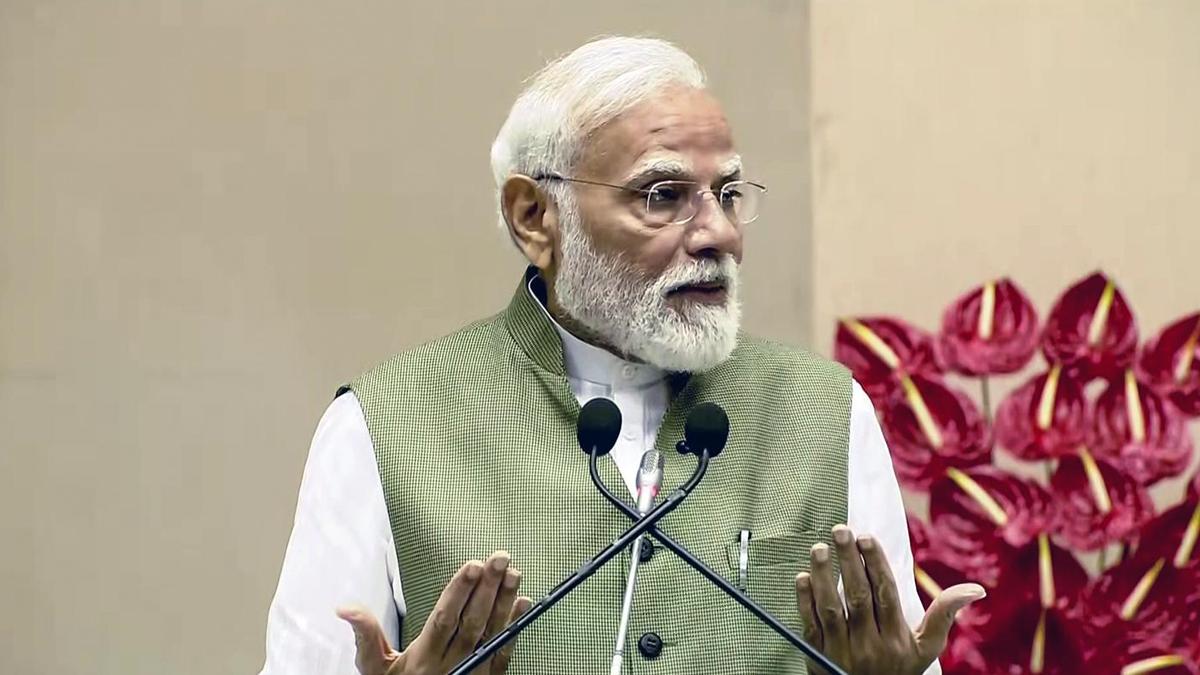
Vice-President C P Radhakrishnan and PM Narendra Modi marked Partition Horrors Remembrance Day by honoring survivors and reflecting on the tragedy. While the leadership emphasized national resilience, the BJP used the occasion to criticize the Congress party's historical role in the division.
Reflecting on the Partition: A Legacy of Struggle and Resilience
On August 14, 2026, India observed Partition Horrors Remembrance Day, a solemn occasion dedicated to acknowledging the profound trauma and displacement caused by the 1947 division of the Indian subcontinent. Vice-President C P Radhakrishnan, speaking at the University of Delhi, underscored that this day is intended not to incite bitterness, but to ensure that the monumental suffering and sacrifices of the era are not forgotten or relegated to mere footnotes in history textbooks.
The Importance of Historical Truth
Vice-President Radhakrishnan’s address, delivered at a seminar hosted by the Centre for Independence and Partition Studies, emphasized the necessity of educating younger generations about the realities of 1947. By framing the Partition as one of the most dehumanizing chapters in national history, the Vice-President advocated for a more comprehensive historical narrative. He argued that the magnitude of the catastrophe—which saw millions uprooted and countless lives lost—demands a deeper, more nuanced understanding than what is traditionally provided in standard academic curricula.
Resilience and National Progress
In tandem with these academic reflections, Prime Minister Narendra Modi paid tribute to the survivors of the Partition. His message focused on the remarkable resilience of those who, despite losing everything, managed to rebuild their lives from scratch. The Prime Minister’s emphasis on the 'strength of the human spirit' highlights a shift in focus from the tragedy itself to the subsequent contributions of refugees to India’s growth and development over the decades.
Political Dimensions and Historical Responsibility
However, the observance also carried significant political weight. The Bharatiya Janata Party (BJP) utilized the day to revisit the political origins of the Partition, explicitly blaming the Congress leadership and the Nehru-Gandhi family for the division of the country. This rhetoric suggests that the BJP views the remembrance not just as a historical exercise, but as an opportunity to challenge the political legacy of its primary opposition, accusing them of prioritizing political power over national unity.
Future Implications and Social Cohesion
As the nation continues to commemorate this day, the tension between historical mourning and current political discourse remains evident. The goal of preserving 'harmony and brotherhood,' as highlighted by the Prime Minister, faces the challenge of deeply polarized views on the events of 1947. Moving forward, the balance between honoring the victims and using history to shape contemporary political identity will likely remain a central theme in Indian public life.
Conclusion
Partition Horrors Remembrance Day serves as a complex intersection of national memory, academic inquiry, and political strategy. Whether viewed through the lens of individual survivor resilience or the ideological critiques of political parties, the events of 1947 continue to exert a powerful influence on modern Indian society, prompting ongoing debates about how the country should remember its most painful origins.
Verification Required?