40 years ago August 14, 1986: Border areas resolution
Source Entity
The Indian Express
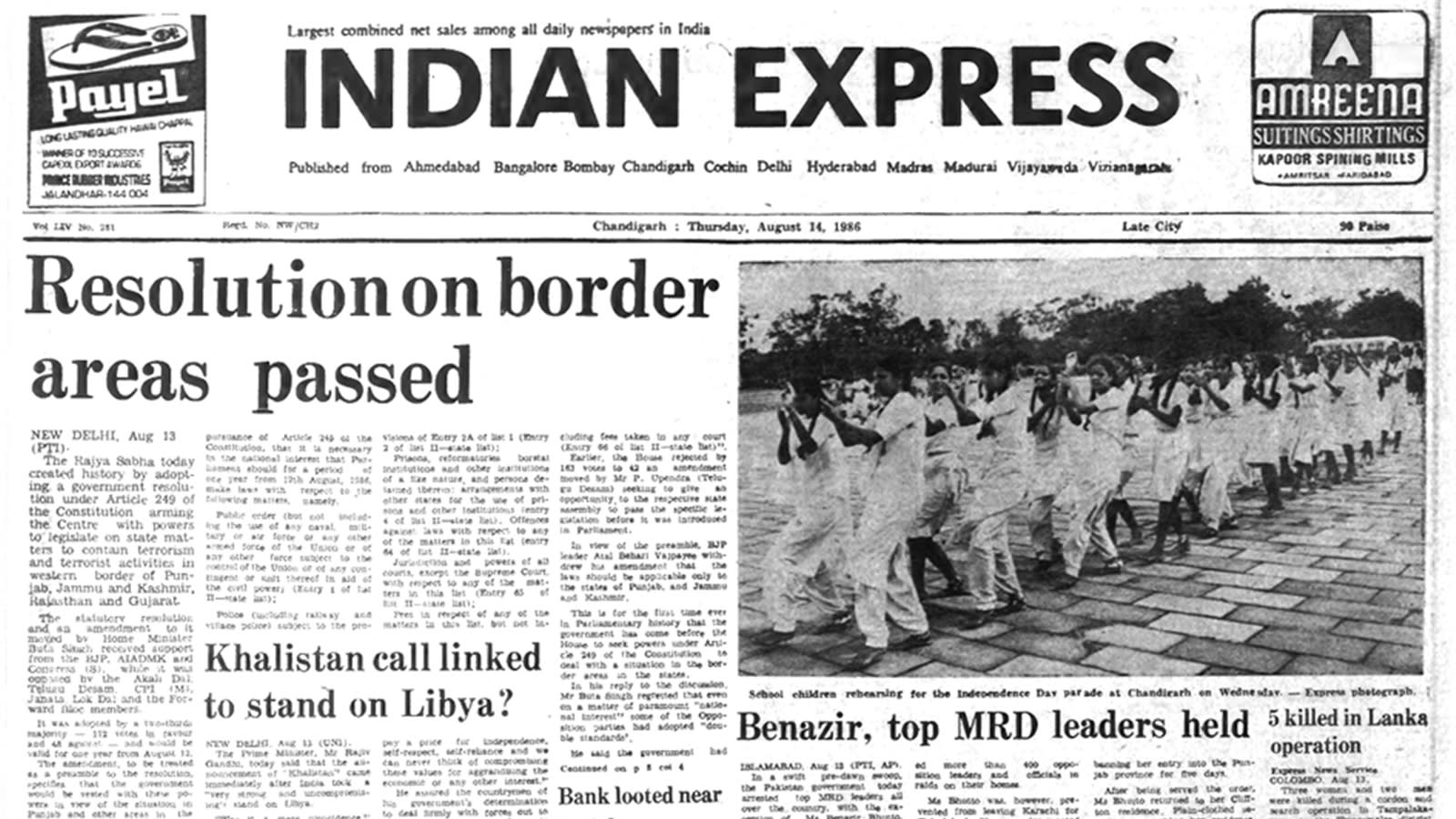
On August 14, 1986, the Rajya Sabha invoked Article 249 to grant the Centre legislative authority over state matters to combat terrorism in border states. This historic move followed regional instability and geopolitical tensions, including concerns over potential external influences like Libya.
The 1986 Constitutional Watershed: Article 249 and National Security
On August 14, 1986, the Indian Rajya Sabha reached a pivotal constitutional milestone by invoking Article 249 to address the escalating threat of terrorism. This provision, which allows Parliament to legislate on subjects traditionally reserved for the State List, was deployed to empower the Union government to take direct action in the border states of Punjab, Jammu & Kashmir, Rajasthan, and Gujarat. This move underscored the gravity of the internal security challenges the nation faced during the mid-1980s.
Parliamentary Dynamics and Political Polarization
The resolution, moved by then-Home Minister Buta Singh, sparked intense debate within the Upper House. The legislative path to adoption reflected the deep political fractures of the era. While the government secured the necessary two-thirds majority with support from the Congress (S), BJP, and AIADMK, it faced significant resistance from a coalition of opposition parties, including the Akali Dal, Telugu Desam, CPI (M), Janata, and Lok Dal. This opposition highlighted the delicate balance between maintaining national security and preserving the federal structure of the Indian Constitution.
Geopolitical Context and External Influence
The timing of this legislative intervention was deeply intertwined with emerging geopolitical anxieties. Prime Minister Rajiv Gandhi explicitly linked the volatile calls for "Khalistan" to international developments, specifically noting that these separatist announcements followed India’s firm stance against Libya. This suggests that the government viewed the domestic insurgency not merely as a local grievance, but as a phenomenon potentially susceptible to external manipulation or influence.
Implications of the One-Year Mandate
By capping the validity of this special legislative power at one year, the Rajya Sabha signaled that such an encroachment on state autonomy was intended as an extraordinary, temporary measure. This limitation reflects the constitutional caution inherent in Article 249, which is designed to be a scalpel for national crises rather than a permanent tool for centralization. It forced the government to prove the necessity of its actions within a strict timeframe.
Historical Legacy and Future Trends
Looking back, the 1986 resolution stands as a testament to the challenges of managing internal security in a diverse federal democracy. The reliance on Article 249 demonstrated the state's capacity to adapt its legal frameworks to meet existential threats. The trends established during this period—balancing federalism with the need for a unified national security apparatus—continue to inform contemporary debates on how the Indian state navigates the intersection of regional autonomy and central oversight in volatile border regions.