Egg prices fall 20% as Tamil Nadu bird flu stalls exports; feed costs up 50%
Source Entity
TOI BUSINESS DESK
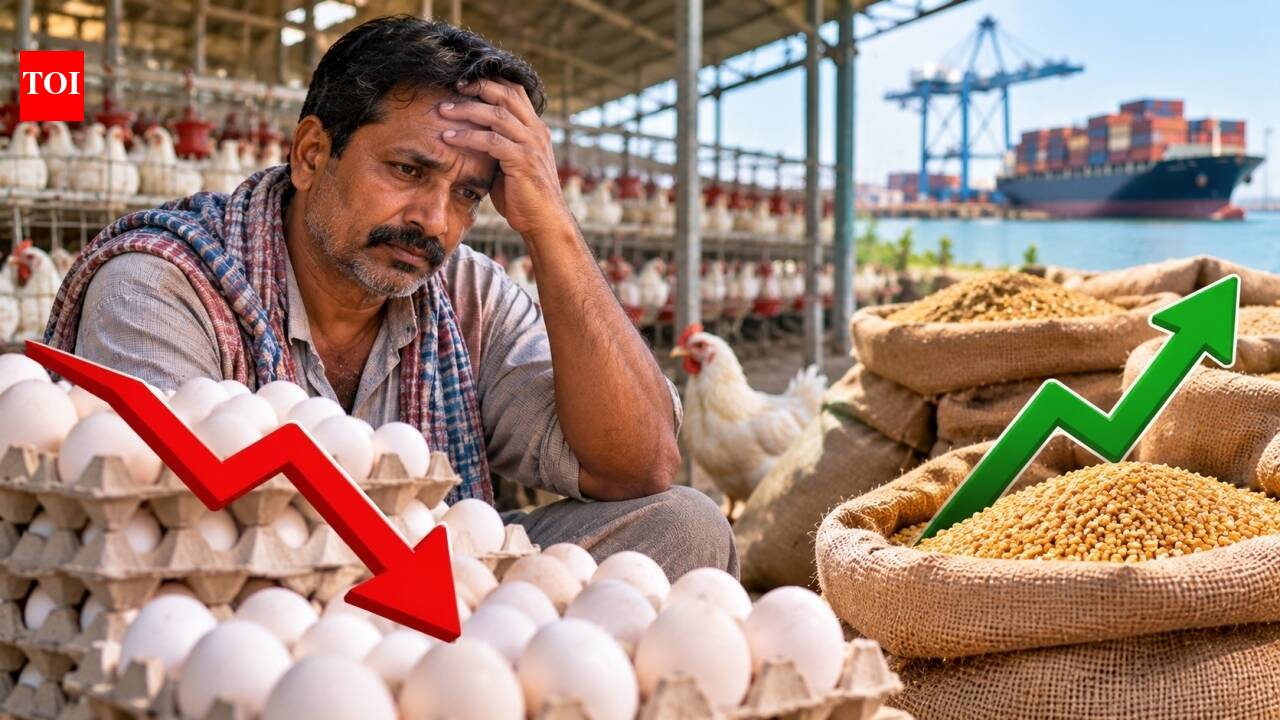
Poultry farmers in India are facing a dual crisis as egg prices plummet due to bird flu-related export stalls while feed costs soar. Simultaneously, Karnataka farmers are protesting against integration companies to enforce government-mandated rearing costs.
The Dual Crisis Gripping India's Poultry Sector
The Indian poultry industry is currently navigating a period of significant volatility, characterized by a sharp decline in domestic egg prices and a concurrent surge in operational overheads. Reports indicate that egg prices have plummeted by as much as 20% in just over a week. This downturn is primarily attributed to the emergence of bird flu, which has effectively stalled exports from Tamil Nadu—a state that serves as the cornerstone of India’s egg export market, accounting for over 90% of total outbound shipments.
The Squeeze on Profit Margins
While market prices for eggs are falling, poultry farmers are simultaneously battling a severe inflationary trend regarding input costs. The essential components of poultry feed, specifically maize and soybean meal—alongside broken rice and millets—have seen price increases ranging from 30% to 50% compared to the previous year. This creates a classic 'cost-price squeeze,' where the cost of production is rising exponentially while the market value of the end product is collapsing, leaving farmers with critically thin or non-existent profit margins.
Labor and Regulatory Unrest in Karnataka
Beyond the macroeconomic pressures of feed costs and export stalls, there is significant friction between independent farmers and large integration companies. In Karnataka, the Poultry Farmers Welfare and Development Association recently held protests at Freedom Park, demanding that integration firms adhere to a state-mandated minimum rearing cost of ₹10 per kg. Farmers report that despite a government directive issued seven months ago, many companies continue to pay the legacy rate of ₹6.20 per kg, ignoring the official adjustment.
Historical Context and Governance Challenges
This standoff highlights the ongoing struggle to enforce agricultural policies in a decentralized market. The plea submitted to Chief Minister D.K. Shivakumar underscores the farmers' reliance on state intervention to protect them from the market dominance of large-scale integrators. Historically, the transition from traditional farming to integrated models has often left small-scale producers vulnerable to price manipulation, making the implementation of government-fixed rearing costs a vital survival mechanism for the sector.
Future Trends and Implications
Looking ahead, the stability of the Indian poultry industry will depend on two critical factors: the containment of the avian influenza outbreak to restore export confidence and the successful arbitration between farmers and integration companies. If feed prices remain elevated, the industry may see a wave of consolidation, as smaller farms struggle to absorb the 50% increase in input costs. Without a resolution to the rearing cost dispute, the sustainability of the domestic supply chain remains at risk, potentially leading to long-term supply shortages even after the current bird flu crisis abates.
Conclusion
The convergence of disease-driven export bans and escalating feed costs represents a systemic shock to the poultry sector. As farmers in Karnataka continue to push for fair compensation, it is clear that the industry requires a more robust regulatory framework to bridge the gap between production costs and market realities, ensuring that the burden of economic volatility does not fall solely on the shoulders of the producers.